Matchamango
Matchamango takes its cue from a drink pairing ripe mango with matcha. Creamy coconut milk follows the fruit and green tea impression, while tobacco and seaweed give the finish warmth and saltiness.
#538 · 2026-11-08
Fragrance Overview and First Impression
Laboratorio Olfattivo's Matchamango takes its cue from a drink pairing matcha with mango. Its Japanese distributor introduced it as a new release for 2026. The central contrast is easy to grasp: ripe fruit sweetness meets the green bitterness associated with powdered tea. Coconut milk adds a smooth, creamy middle, while tobacco and seaweed bring warmth and saltiness to the later impression. The name suggests a playful fruit-and-tea pairing, but those base notes make the composition more varied than a simple sweet mango scent.
The Japanese distributor lists the materials in three stages: top, body and base. Mango and cardamom appear at the top; matcha tea, coconut milk and jasmine form the body; seaweed, tobacco and Cashmeran appear at the base. A product description from the brand was not available to confirm that structure. A note list is also a guide to the design rather than a guarantee that every wearer will perceive the same sequence or intensity. It does, however, give useful points to follow from fruit through tea and cream to a warmer, saline finish.
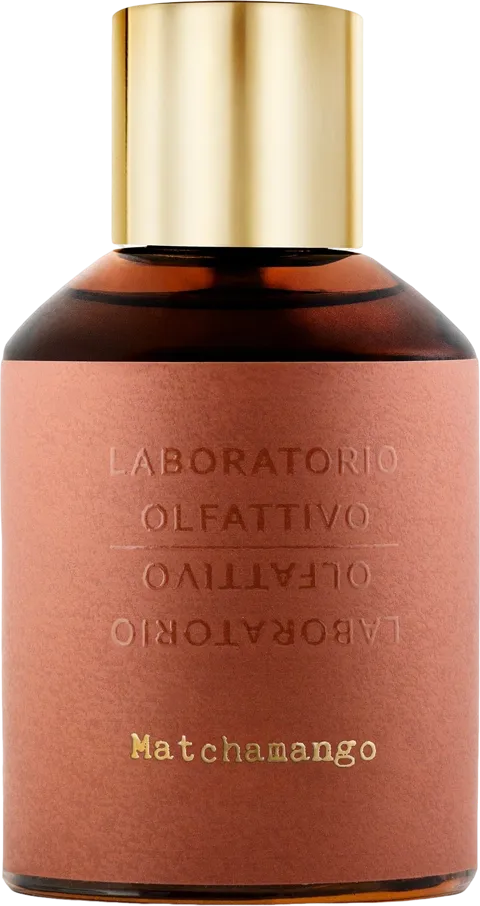
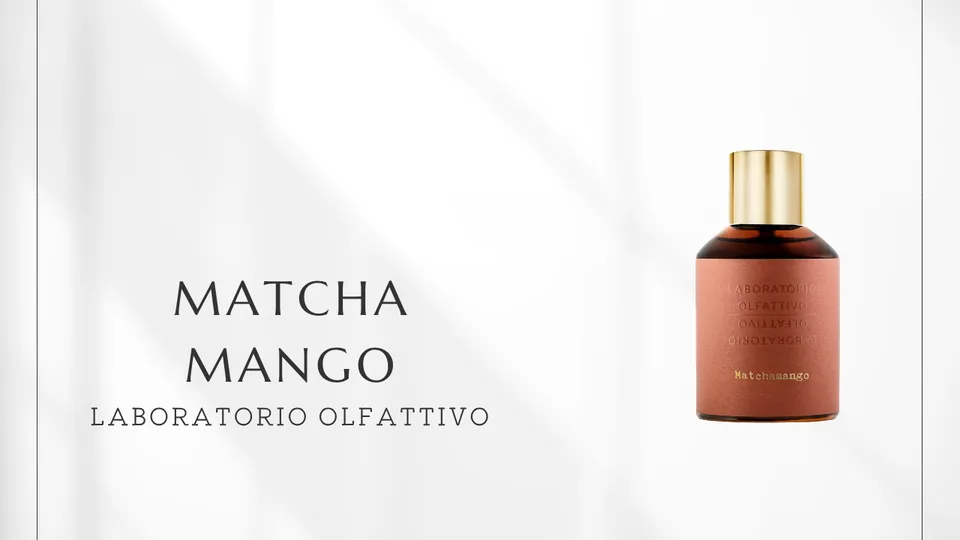
Domestic listings show 30mL and 100mL sizes. The bottle has the round-shouldered shape shared across Laboratorio Olfattivo's fragrances. Its wrapped label carries the brand name on the upper half and, below a dividing line, the same name upside down in mirror lettering, while the perfume name is set in typewriter-style type. In the same Extreme Collection, Amberbomb, Oud in White and Vanagloria pair a black label with a black cap. Matchamango combines amber glass with a reddish-brown, terracotta-toned label, and its cap and name are gold. The shared shape looks strikingly different through colour alone.
Matchamango suits someone who loves matcha and wants to try it paired with fruit. The opening mango may attract attention first, yet the important choice is whether the matcha bitterness, creamy middle and saline finish also suit the wearer.
Perfumer, House and Creative Background
Julien Rasquinet is credited as the perfumer of Matchamango by the Japanese distributor and other listings. The starting point was matcha and mango, a drink pairing that is drawing wide popularity right now, and the idea was to turn that pairing into a fragrance. The Japanese distributor calls Matchamango “a bold cup”, likening it to a drink in which ripe Alphonso mango is set against the bitterness and greenness of matcha. The first sip corresponds to the opening, where mango sweetness meets matcha bitterness. Coconut milk then brings a sweet, smooth texture, and the warmth of tobacco and the salt of seaweed remain at the end. The composition traces the experience of drinking a cup from the first sip to the last.
Laboratorio Olfattivo was introduced by its distributor as an Italian house founded in 2009. Its name suggests an olfactory laboratory. On its official site, the house places research, fine materials and the art of perfumery at the centre of its identity, describing a space where perfumers' ideas can become scents. That broad approach helps explain why a drink pairing could serve as the starting idea for a perfume, though it is a statement about the house rather than a documented account of this fragrance's production.
The distributor adds the term Aromaspace beside the mango note and identifies the cardamom as coming from Guatemala. The available material does not establish a detailed process behind the mango term. Those labels are less useful to a wearer than the contrast they are meant to help express: ripe fruit set against the green, bitter character of matcha.
In Japan, Matchamango had its advance launch at Salon de Parfum 2026, the fragrance event that opened at Isetan Shinjuku on 7 October 2026, and went on sale nationwide on 30 October. The distributor writes that the aim was a scent as blissful as the real drink, yet one that lasts far longer. A drink ends with the last sip; as a fragrance, the same cup can be worn for much longer.
Scent Analysis
Mango and cardamom form the listed top stage. Mango supplies the impression of ripe, soft fruit, while cardamom introduces a light aromatic spice. Together they make a vivid opening without reducing the idea to fruit sweetness alone. Matcha tea then adds green bitterness to the ripe mango impression. The distributor specifies Alphonso mango, whereas the note recorded in the supplied fact-check is Mango. The more specific fruit wording remains an attributed part of the distributor's description rather than a separate confirmed note.
Matcha tea changes the direction of the heart by introducing a green, gently bitter counterpoint to the fruit. Coconut milk smooths that contrast with creamy sweetness, and jasmine adds a floral facet. Someone imagining a sweet matcha dessert may attend to a different side of the composition from someone looking for the dryness of tea leaves. If matcha is the reason for trying Matchamango, smelling how clearly it emerges on skin is especially useful.
Seaweed, tobacco and Cashmeran are listed in the base. The seaweed facet suggests salt and moisture; tobacco contributes warmth after the fruit and creamy accord. Cashmeran can lend a soft woody texture, though the available descriptions do not show how prominent it is in this fragrance. The distributor presents a movement from sweetness toward bitterness and saltiness. There is no verified measurement of how quickly that change happens on skin, so the note structure is best used as a set of things to notice.
Comparison and Positioning
For another treatment of matcha, Le Labo's Thé Matcha 26 is a useful comparison. Both fragrances put matcha in view, but Matchamango joins it to ripe fruit and coconut milk. Thé Matcha 26 pairs its matcha accord with fig, vetiver and bitter orange. Someone seeking a creamy, fruity contrast to tea may prefer to try Matchamango first; someone drawn to fig and vetiver alongside matcha has a clearer reason to explore Thé Matcha 26. These are differences in the listed compositions, not a claim that the two smell identical on skin.
Miu Miu Fleur de Lait offers another comparison through its pairing of mango and coconut milk. Matchamango adds matcha, cardamom and seaweed to that pairing, while Fleur de Lait brings in osmanthus. For fruit sweetness with green bitterness and a saline facet, try Matchamango; for mango and coconut milk with a floral accent, try Fleur de Lait.
Mango provides a different point of comparison with Hermès's Un Jardin sur le Nil. That fragrance uses a green mango impression alongside lotus and sycamore. Matchamango starts from a riper fruit idea and adds matcha and coconut milk. The contrast is therefore between a green mango setting and a sweeter, creamier one that later takes on bitterness and salt. For ripe fruit moving toward tea, Matchamango is the more relevant trial; for green mango with lotus, Un Jardin sur le Nil offers the other direction.
Buying Guide
The Japanese distributor lists 30mL at ¥20,900 and 100mL at ¥41,800, including tax. It markets the fragrance domestically as an extrait de parfum. Another retailer uses a different concentration label, and the relationship between those terms has not been established. The label alone therefore cannot settle how long the fragrance lasts or how far it projects. Check the current size, price and product description with the seller when purchasing.
The main reason to test it before choosing a size is the change in character across its listed materials. An appealing mango opening does not show whether the green bitterness of matcha or the salty seaweed facet will be equally welcome. Someone specifically seeking matcha should give that part of the composition time to appear on skin. Someone who usually finds simple fruit scents too sweet may appreciate the contrast, while a wearer who wants an uninterrupted mango impression may find the later notes decisive.
Wearing Experience and Impressions
Matchamango is worth trying when fruit sweetness sounds appealing but a green, bitter or saline counterpoint matters too. The drink inspiration is approachable; the listed tobacco and seaweed take the fragrance beyond a straightforward sweet beverage impression. The supplied material does not establish a product-specific recommendation for season, time of day or clothing. Those choices are better made after seeing which facet comes forward on the wearer's own skin.
One brief wearer comment described a strong mango opening followed by coconut, without a noticeable matcha note. A single response cannot define general reception, but it highlights a useful question for anyone drawn by the tea in the name. Reliable product-specific figures for longevity and projection were also unavailable. Following the fruit at the start, the creaminess in the middle and the warmth and salt at the end gives a more useful picture than judging the perfume from its opening alone.