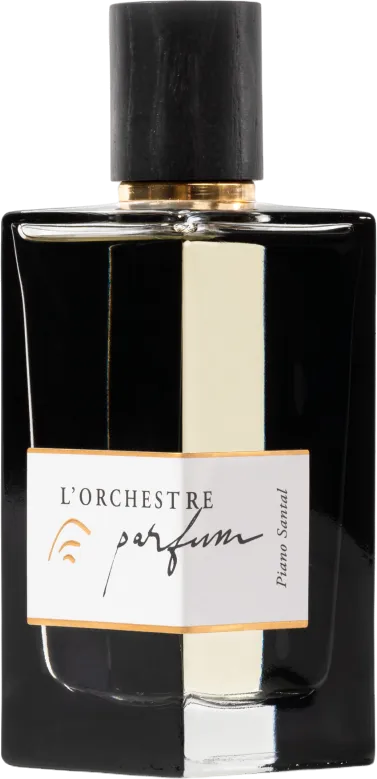
Piano Santal
Piano Santal sets sandalwood and cedar beside warm milk and white musk. Jean Jacques composed the fragrance and Edouard Ferlet interpreted its dream of waking inside a piano through music.
#519 · 2026-10-20
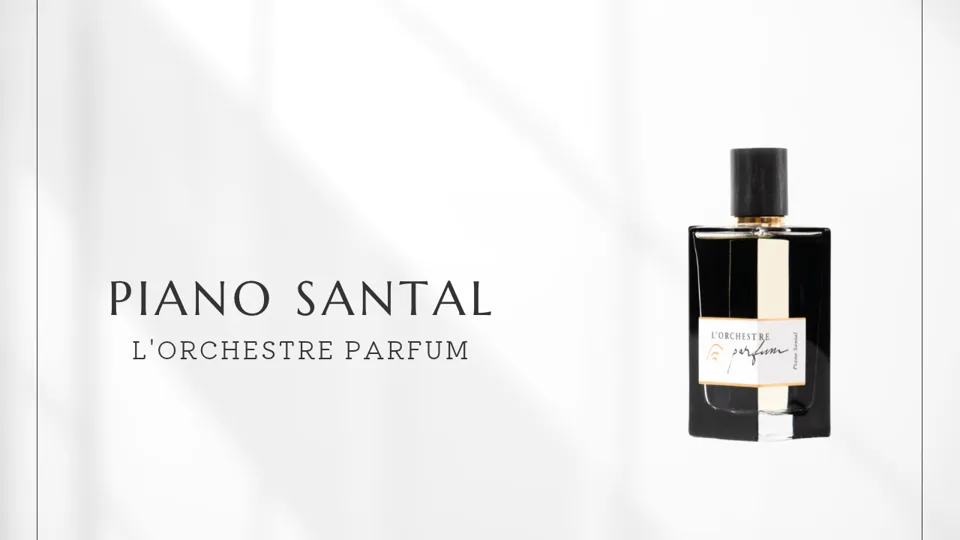
Fragrance Overview and First Impression
Piano Santal by L'Orchestre Parfum brings sandalwood and cedar together with warm milk and white musk. The woods suggest a dry structure, while the milk and musk add a softer sense of fabric and skin. Its official setting is a dream of waking inside a piano: white sheets and sleepy skin appear in a surreal space surrounded by wood.
The whiteness in this story belongs to the sheets, milk, and musk. It does not establish the colour or design of the bottle. The fragrance imagines a person's warmth within a large wooden space rather than reproducing the literal smell of a piano. That contrast between scale and closeness gives the composition its distinctive idea.
The official French product page lists sandalwood, cedar, white musks, heated skin, bergamot, ambroxan, warm milk, and cumin as principal notes. This is a set of key notes rather than a timetable of top, heart, and base. A useful first test is to notice how the woody and milky textures meet on skin.
Perfumer, House, and Creative Background
Jean Jacques composed the perfume. L'Orchestre Parfum introduces him as a perfumer with a passion for music. Pianist Edouard Ferlet was responsible for the musical interpretation. Their roles are distinct: one made the scent, while the other responded to the same dream through music.
Ferlet began playing piano at seven and has worked across classical music and jazz. The music associated with Piano Santal is labelled 62 BPM. The reason for that particular tempo is not stated, but the presence of a musical interpretation is a concrete part of the house's approach to making a fragrance.
Founder Pierre Guguen has described working with perfume by day and playing in a band by night. He experimented with presenting a song and a scent at the same time. Guguen has also called Piano Santal especially close to him and described feeling protected by its milky, woody character. That is his personal response, rather than a promised effect for every wearer.
The house has explored the smells of instrument materials with craftspeople, including guitar wood, trombone brass, and the leather of a kora. Those observations express a broader creative method; they do not mean that the materials appear in Piano Santal's formula. They do show why a perfumer and a pianist can have separate, meaningful roles in the same work. The house also supports Démos, a programme that widens children's opportunities to learn music.
Scent Analysis
Sandalwood and cedar form the woody centre. The English product description presents the sandalwood as white, and together with cedar it gives the fragrance its woody core. Warm milk rounds that core so the impression goes beyond dry wood, while white musk supports the softness and links the wood and the milk. Seen this way, the milk and musk add more than sweetness: they bring the closeness of fabric and skin into a setting surrounded by wood. Both the dry wood and the soft warmth are worth checking on skin.
Heated skin is also listed among the principal notes. It ties directly to the white sheets and sleepy skin in the fragrance's story. Sandalwood and cedar suggest a space enclosed by wood, while milk, musk, and skin bring the person inside it closer. The gap between a wide wooden space and the fabric and skin nearby is what makes the composition interesting.
Bergamot and ambroxan are key notes as well, so it pays to test the whole composition on skin rather than choosing on wood and milk alone. For the spice, the French and English product descriptions use different names, and the English one says caraway. It reads more naturally as an accent beside the wood and milk than as the defining smell.
Piano Santal is described through key notes, without a pyramid that times each stage. When trying it, start with the woody sandalwood and cedar, then notice the warmth of the milk, the softness of the white musk, and the hint of skin around them. Whichever of these feels strongest shapes your impression of this white dream.
Comparisons and Positioning
Even among sandalwood-centred fragrances, the materials around the wood change its character. Santal Blanc by Van Cleef & Arpels shares Piano Santal's creamy sandalwood. In Santal Blanc, fig milk and smooth musk create a pure white impression. Piano Santal instead layers cedar and warm milk, moving toward a dream surrounded by wood and the warmth of skin. Whether you are drawn to the whiteness of fig milk or to the pairing of wood and warm milk is a useful way to choose.
Sacred Wood by Kilian Paris also puts sandalwood first and adds a milky texture. Here, carrot seed, amyris, copaiba balm, and myrrh are joined by a milky, malt-like steam. Where Piano Santal depicts white sheets and warm skin, Sacred Wood offers sandalwood with resins and spice. Both are milky woods, but the materials beside the wood differ.
Sunny Side Up by Juliette Has A Gun is another comparison built on sandalwood with a milky softness. It pairs lactonic and coconut milk effects with iris and jasmine sambac. For a brighter scent with flowers and coconut milk, Sunny Side Up is the choice; for warm milk, white sheets, and a dream enclosed by wood, Piano Santal is the candidate.
Buying Guide, Price, and Suitability
The official Piano Santal product page offers 15 mL and 100 mL sizes. The 15 mL item also appears in the house's The Roadies range. It is a size of the same named perfume, not established evidence of a different concentration or formula. The smaller format is practical for an initial skin trial or carrying the fragrance; the larger one is an option once its character is familiar.
The official site displays US$50.40 for 15 mL and US$216.00 for 100 mL. The product listing says delivery is limited to Europe. In Japan, NOSE SHOP sells the 15 mL for ¥9,900 and the 100 mL for ¥34,100 (as of October 2026). Check prices, shipping terms, and availability on the official site before ordering. The outer boxes use FSC Mixed material, including wood fibre from certified forests and recycled content; this is a packaging policy shared across the house.
Piano Santal is worth trying if you want sandalwood with a milky softness rather than wood alone. A skin test can reveal whether the cedar's dryness, the musk's clean texture, or the milk's roundness is most prominent to you. Reports of projection and longevity vary, making a trial in a familiar setting more useful than an assumed number of hours.
Wearing Experience, Settings, and Reception
Autumn and winter are the first seasons to consider, on days when you want the scent of wood and warm milk. Try it with a knit or a jacket; a calm evening suits it too. Buyers have said a light application works on weekdays, so when people are close indoors, adjust the amount and check how far it spreads. Trying it in different settings makes it easier to find the way it works for you.
Some wearers praise the creamy sandalwood and soft musk; others find the woody aspect different from what they expected. Impressions of longevity also range from short to long. Those reports are individual experiences, so the most useful decision comes from observing the fragrance on your own skin and in the places where you would wear it.
Piano Santal's appeal lies in the way it places fabric and skin close to a large imagined space of wood. It is a candidate for someone who likes a woody centre but also wants a softer, warmer surrounding texture. The dream may invite the first test; the balance of wood, milk, and musk on skin decides whether it belongs in a collection.