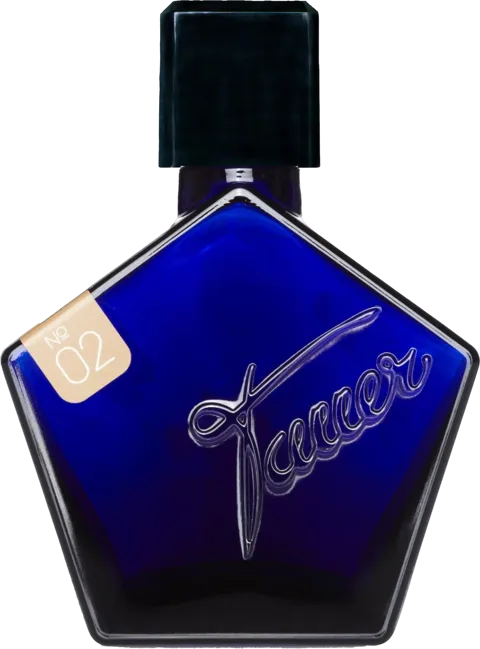
02 L'Air du Désert Marocain
Dry amber, warm spices, and woods evoke air moving through a Moroccan night. Coriander and cumin lead toward cistus, jasmine, cedarwood, vetiver, and an ambergris accord.
#547 · 2026-11-17
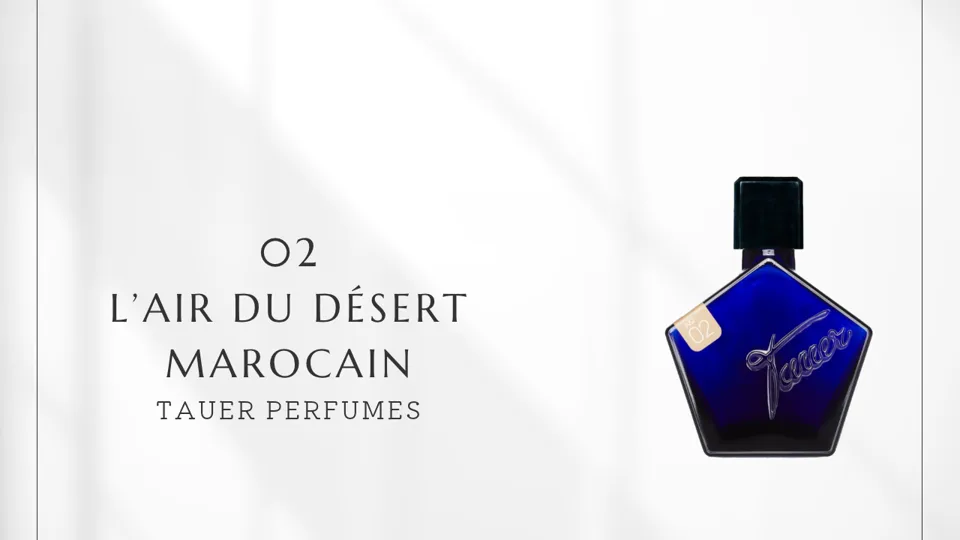
Fragrance Overview and First Impression
Tauer Perfumes' 02 L'Air du Désert Marocain places warm spices and woods inside a dry amber setting. The house evokes warm air moving through a Moroccan night, dry hills, distant spice, smoke, and trees. Stones still hold the day's heat after sunset. That meeting of cooler air and lingering warmth gives the fragrance its character.
The house calls it dry amber, woody spicy, and resinous. Sweetness is present as warmth rather than as a heavy sugary layer. Spices and a green edge open the composition; floral and resinous notes follow; woods and an ambergris accord form the base. It is worth smelling beyond the first burst of spice to find the dryness that remains.
Andy Tauer mixed the first batch in 2005. The current 50 ml product is labeled Eau de toilette intense. The concentration name alone is a poor guide to how much presence it will have on a particular person's skin. Its desert image is specifically tied to the hours after sunset, when the air tightens while stone retains heat.
Perfumer and House Background
Andy Tauer is the perfumer behind Tauer Perfumes. The Swiss house describes its fragrances as handcrafted since 2005. Looking back on this perfume, he called the first batch he mixed in 2005 Batch 001. That account places it near the beginning of the house's history. It does not tell us whether today's formula is identical to that early batch.
The house's handwork also extends to its packaging. It says its bottles are made by hand in Spain, Bakelite caps are made in Switzerland, and labels are produced in Germany before being applied in Zurich. The perfume itself is made by hand in Switzerland. Those production details are concrete; the desert story belongs to the scent's imagery rather than to an assumed meaning of the bottle's color or shape.
In that imagery, spice and smoke seem distant across dry hills. Air cools after sunset, yet stone keeps its warmth. The tension between dryness and heat matches the amber impression at the center of the fragrance. It is a sensory setting, not a claim about where the perfume was composed or where its ingredients were grown.
Scent Analysis
The official structure has top, heart, and base stages. Coriander, cumin, and petitgrain form the top. Coriander and cumin point toward warm spice, while petitgrain introduces a greener, clearer edge. The result suggests spice moving through dry air rather than sweetness arriving all at once. How a wearer responds to cumin is an especially useful point to test.
Cistus / rock rose and jasmine form the heart. Cistus brings a resinous sense of depth, while jasmine adds a floral texture that softens the transition from the spices. The jasmine listing does not turn the whole perfume into a sweet floral bouquet. Here it sits within a dry amber structure.
Cedarwood, vetiver, and an ambergris accord make up the base. Cedarwood and vetiver suggest dry wood and earth; the accord gives the finish warmth and a more continuous feel. An accord is a constructed scent impression, so its name does not establish that natural ambergris was used. Together these notes carry the composition from spice through flower and resin toward woods and amber.
Warmth and dryness remain in balance throughout. Hills, smoke, and heat stored in stone are the house's images for the fragrance as a whole, rather than literal descriptions of individual ingredients. The woody dryness keeps the amber from feeling simply sweet, leaving room for both the cooler night air and the heat beneath it.
Comparisons and Positioning
Serge Lutens' Ambre sultan offers another amber fragrance connected with Morocco. L'Air du Désert Marocain expresses the dry air of a desert night through cumin, coriander, and woods. Ambre sultan draws on a memory of amber resin encountered in Marrakesh, with labdanum, benzoin, and vanilla shaping a thicker resinous impression. Choose the Tauer for dry spice and wood, or Ambre sultan for resin and vanilla richness.
Cistus provides a point of comparison with État Libre d'Orange's Rien. Both place it near the center, but the Tauer pairs it with jasmine and moves toward dry amber and woods. Rien brings leather and iris together with black pepper and incense, giving its darkness a sharper edge. The Tauer suits a warm desert atmosphere; Rien suits someone who wants leather and incense to speak more forcefully.
État Libre d'Orange's Spice Must Flow shares amber and cumin with the Tauer. L'Air du Désert Marocain moves toward dry woods and resins, while Spice Must Flow brings cinnamon, ginger, and rose into a brighter floral spice. Choose the Tauer for dry woods and a quieter night mood, or Spice Must Flow for a more vivid mix of flowers and spice.
These three comparisons clarify the direction of the Tauer fragrance. Its identity lies in the way warm spice leads into dry woods and amber. For someone who already owns a rich, sweet amber, that drier arrangement offers a distinct reason to try it.
Buying Guide
The current 50 ml product is Eau de toilette intense. A Japanese retailer has displayed the 50 ml bottle at ¥36,300 including tax; price and availability can change. The house also lists the fragrance in a five-sample discovery set. Sampling gives time to follow the opening spices through the heart and into the woody base before choosing a bottle.
The first moments of cumin and coriander are only part of the experience. Cistus and jasmine add texture, while cedarwood and vetiver shape the finish. Someone drawn to dry spice may still find the later amber warmer than expected. Conversely, a wearer who avoids very sweet amber may appreciate the wood's dryness. Comparing the early and settled stages on skin makes that choice clearer.
A solid perfume with a related name has also been listed, but it is a different product format from the 50 ml liquid fragrance. Check which format was sampled before buying. The record of a first batch mixed in 2005 likewise does not establish the formula history of a bottle sold today. The current product's scent should guide the decision.
This is a strong candidate for people who enjoy dry spices and resins and want an amber fragrance for cooler evenings. Anyone expecting a light floral or a heavily sweet amber should sample it first. Some wearers describe substantial projection, making the amount applied relevant in close indoor settings.
Wearing Experience and Settings
Cool autumn and winter evenings are its clearest setting. Warm spice and dry amber stand out against cooler air, especially during an evening out where there is some space around the wearer. A wool jacket or substantial knit suits that weather and mood. In a crowded room, a smaller application leaves more room for the fragrance to settle.
Wearers have described a shift from dry spice and wood toward a later sweetness. Some also find that it lasts well and projects strongly, though skin and dose affect the result. Testing how far it carries after settling is more useful than relying on a fixed performance claim. It helps determine whether the fragrance fits the place in which it will be worn.
Hot, humid daytime weather can make it feel harder to wear for some people. If trying it in warmer conditions, the temperature, setting, and amount used all matter. Its desert is not simply a picture of midday heat: cooler air arrives while the stones remain warm. That contrast gives the dry spice and amber a particularly fitting place on an autumn or winter night.