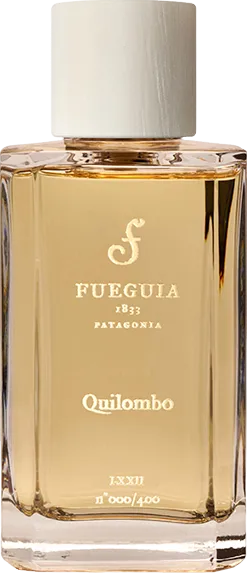
Quilombo
FUEGUIA 1833's Quilombo is a creamy gourmand with a scorched-milk impression, vanilla pod, and sugar cane. Released in 2016, it pairs that sweetness with the house's story of freedom and resistance.
#546 · 2026-11-16
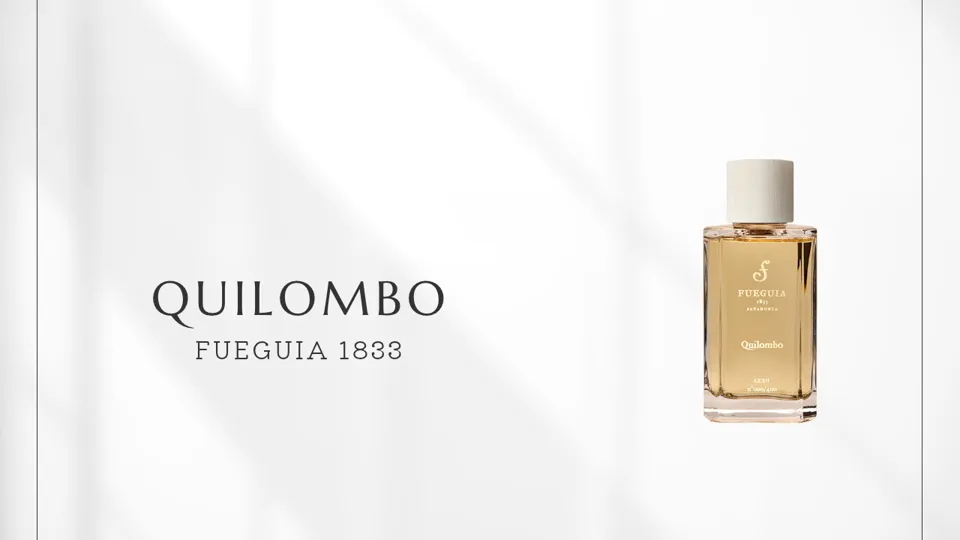
Fragrance Overview and First Impression
FUEGUIA 1833's Quilombo centres on a sweetness that suggests scorched milk. Vanilla pod and sugar cane add to that impression, giving the fragrance a creamy, dessert-like character. The house calls its main family gourmand and its secondary family lactonic. The milky texture is therefore as important to the description as the sweetness itself.
The house compares the scent to homemade dulce de leche, a caramel-coloured milk cream made by simmering milk and sugar. Think of milk becoming thicker and warmer rather than a glass of fresh milk. Quilombo appeared in the Destinos collection in 2016. Its name also carries the house's account of a wish for freedom and a spirit of resistance. That story sits beside a fragrance whose immediate character is gentle, rich, and sweet.
Creator and House Background
FUEGUIA 1833 began in Buenos Aires in 2010. Quilombo joined its Destinos collection in 2016. According to the Japanese official description, Quilombo is a word of African origin for the places where enslaved people secretly gathered. The Argentine description shows what such a place looked like: people who escaped colonial Brazil took refuge in land surrounded by labyrinthine rivers and impenetrable forest. The house links the name to the way African drums became a foundation of South American music, and speaks of roots, freedom, and resistance; its Japanese text describes Quilombo as a prayer for freedom that quietly lived on under oppression. The house says the fragrance reflects the rhythms and dances of the society that lived in that land of rivers and forest, and connects with the flavours of cupuaçu, a South American fruit, and dulce de leche.
Quilombo's perfumer is Julian Bedel, the founder of FUEGUIA 1833. Speaking about his fragrance work for the house, he calls himself a scent artist. Bedel has described learning from music and painting as well as from collecting, distilling, and analysing plants. He has also discussed a connection between musical chords and fragrance construction. Those remarks offer context for the house without becoming a claimed design explanation for Quilombo.
The house suggests layering Quilombo with Muskara Apis and Mbucuruyá. Layered together, the three have been likened to a pound cake with dried fruit. That is a description of wearing them together, separate from Quilombo's own listed notes. Smelling Quilombo alone first gives its milk and vanilla character room to come through.
Scent Analysis
Quilombo's official structure assigns roles to three parts of a chord and lists four more notes under Melodía. Tonic, dominant, and subdominant are roles, not top, middle, and base stages. They do not say which note appears first or which lasts longest on skin.
Vanilla pod holds the tonic role and helps shape the fragrance's warm, edible sweetness. Pampa milk is dominant, carrying the creamy, scorched-milk impression. Sugar cane is subdominant and adds another layer of sweetness. Together, they point toward the thick texture and cooked-milk quality that distinguish Quilombo from a light, fresh milk scent.
The first three Melodía notes are vanilla, benzoin, and ambergris. Vanilla appears here as well as in the chord, while benzoin suggests warm resin. The ambergris note does not establish the use of natural animal-derived material.
Jasmine is the fourth Melodía note and adds a floral element. These four notes are listed separately from the chord, not as a sequence of changes over time.
Wearers have described the milk impression as clean and pleasantly sweet. Another wearer found the continuing sweetness tiring. Those accounts show why time on skin matters when trying a gourmand fragrance. The listed notes alone cannot tell anyone exactly how long Quilombo will last or how far it will project.
Comparisons and Positioning
Chabaud Maison de Parfum's Lait Concentré Eau de Toilette also centres on milk. Quilombo evokes scorched milk with vanilla and sugar cane; Lait Concentré Eau de Toilette pairs a condensed-milk impression with unsweetened coconut and restrained caramel. Choose Quilombo for cooked-milk sweetness, or Lait Concentré Eau de Toilette for milk with coconut and a lighter caramel accent.
Commodity's Milk Expressive also places milk at the centre. Quilombo pairs scorched milk with the sweetness of milk cooked down. Milk Expressive pairs a cold milk accord with warm marshmallow, toasted sesame, and mahogany. Both explore sweetness through milk, but they put its temperature to different uses. Choose Quilombo for a cooked, creamy sweetness; choose Milk Expressive for the contrast between cool milk and warm marshmallow.
Kilian Paris's Black Phantom Memento Mori shares a sugar-cane theme with Quilombo. Quilombo sets that sweetness against milk and vanilla. Black Phantom Memento Mori brings it together with rum, coffee, and sandalwood, giving bitterness and an alcoholic impression a larger part. Quilombo fits a wish for creamy sweetness; Black Phantom Memento Mori fits a wish for coffee bitterness and rum alongside it.
Buying Guide
In Japan, Quilombo is offered as 30 mL and 100 mL Perfume, plus an 8 mL Pura Esencia. Official Japanese prices are ¥37,400 for the 30 mL Perfume (I-XXV), and ¥63,800 each for the 100 mL Perfume (I-XXV) and the 8 mL Pura Esencia (I-XXV). Check current availability on the official site when buying. Perfume and Pura Esencia differ in product name and size; for a first purchase, choosing by size and format is the surest approach.
Try Quilombo on skin if you want to bring a sweet milk fragrance into regular wear. Its scorched-milk character may feel comforting in cooler weather. Anyone who finds continuing sweetness heavy should allow time after the first application before choosing a size. That is more useful than assuming the first few minutes represent the whole experience.
The Japanese product page warns that a specification change can make the cap on the delivered item differ from the pictured cap. If appearance is part of the purchase decision, check the details of the item being sold.
Wearing Experience and Occasions
Cool autumn and winter days are a sensible first setting for Quilombo's cooked-milk and vanilla sweetness. It can sit naturally with time spent indoors or a relaxed outing in a sweater or wool coat. A quiet afternoon or evening is another possible setting. These are suggestions based on the fragrance's character, since the official product pages do not prescribe a season or time of day.
A retailer suggests summer wear. In summer, try a small amount in a cool indoor setting and check how the lactonic sweetness feels on your skin. A creamy scent that feels comfortable on a cool day can feel different as the temperature and setting change.
Some wearers find its milk note graceful and pleasantly sweet. Others recall sugar, browned caramel, or condensed milk, while one found the sustained sweetness too much. These are personal impressions, not an official sequence of scent stages. Quilombo's name carries a story of freedom and resistance; the choice to wear it still rests on whether its cooked-milk sweetness feels right to you.