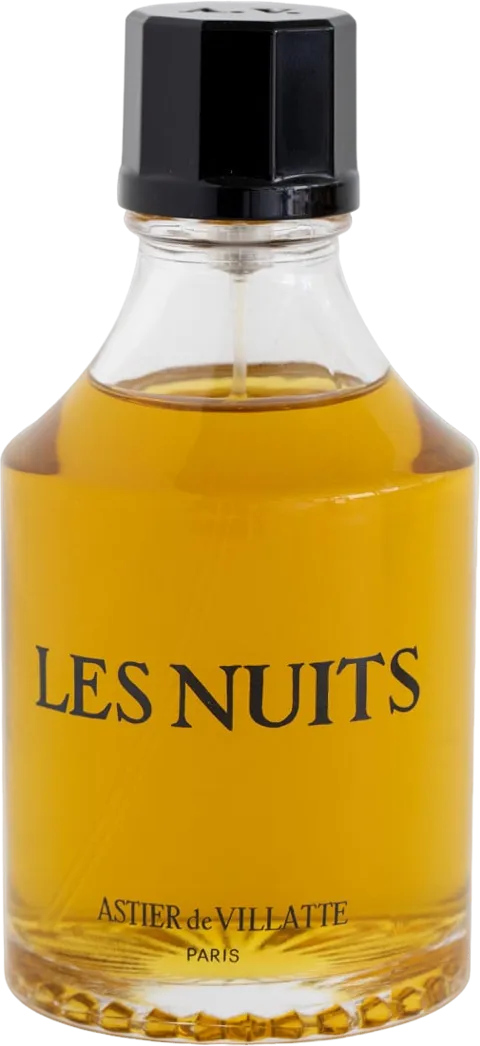
Les Nuits
Astier de Villatte's Les Nuits takes scent left in a travel bottle linked to George Sand as its starting point. Rich rose meets earthy, woody patchouli and iris with a dry, powdery texture.
#522 · 2026-10-23
Fragrance Overview and First Impression
Astier de Villatte's Les Nuits brings together a full rose, earthy and woody patchouli, and iris with a dry, powdery texture. The three notes offer distinct ways to experience the fragrance. Rose gives it floral breadth, patchouli adds a sense of earth and wood, and iris leaves a softer, drier impression. The question for a prospective wearer is how these textures sit together on the skin.
Les Nuits appeared in 2022 as one of three fragrances associated with different historical settings. The house places its story at the home of the nineteenth-century French writer George Sand in Nohant. On a hot summer night in 1838, Sand and the composer Frédéric Chopin walk in the garden until dawn. This is the setting of the perfume's story, not a statement that hot weather is its preferred wearing condition.
The scent's other point of departure is a small travel bottle linked to Sand. Astier de Villatte says that fragrance remaining at the bottom inspired perfumer Dominique Ropion. The available account does not establish an exact match between that trace and the finished perfume. It does explain why a piece of personal history, rather than a general idea of a rose garden, sits behind Les Nuits.
Perfumer, House, and the Story Behind the Scent
Dominique Ropion is named by Astier de Villatte as the perfumer of Les Nuits. The scent left in the travel bottle linked to George Sand provided the starting point for his work. That account connects the current fragrance with the historical object, while leaving the degree of resemblance between the two scents open.
Sand is the writer at the center of the house's narrative. The imagined walk through her garden at Nohant provides a setting for the perfume's floral richness and its earthier, woody undertone. It remains a scene in the product story; the account does not establish that every detail took place on a single documented night.
Astier de Villatte was founded in 1996. The house describes handcrafted ceramics in Paris, along with its work in printing, publishing, and fragrance. A ceramic object, a printed page, and a perfume use different materials, but each gives the house a way to make a story tangible. Its historically themed fragrances belong within that wider practice.
Le Dieu Bleu, concerned with ancient Egypt, and Artaban, concerned with ancient Rome, share the three fragrance project with Les Nuits. Les Nuits turns to nineteenth-century France. Their connection is a narrative premise, not a shared list of notes. The rose, patchouli, and iris described for Les Nuits remain the basis for understanding this particular scent.
A Closer Look at the Scent
The official product description names Turkish rose, damascena, patchouli, and iris. It does not arrange them into top, heart, and base stages. Their contrasting textures are more useful than an assumed sequence when considering the fragrance.
Turkish rose, damascena provides the rich floral center. It suggests soft petals and a generous rose character. Someone expecting only the sweetness of a rose may notice the contrast created by the darker materials around it.
Patchouli is described by the house as earthy and woody. It gives the rose depth and a grounded character that differs from the flower's fullness. How strongly its earthy side appears can vary on skin, so it is worth noticing after the first floral impression.
Iris adds woody, powdery accents. Its dryness differs from floral sweetness and gives the composition another surface to feel. Some wearers enjoy rose and iris together; others find the powderiness especially noticeable.
The house does not say that rose must appear first or that patchouli and iris arrive at fixed later points. Comparing the scent soon after application and again after some time can reveal which texture remains most prominent for an individual wearer. The narrative refers to an opulent trail, but that phrase is not a measured projection figure. At least one wearer has described a scent that stays close to the skin, making a personal trial more useful than an assumed strength.
Comparisons and Positioning
Frédéric Malle's Portrait of a Lady offers a comparison through Turkish rose and patchouli. Both perfumes use that pairing, while Les Nuits also emphasizes woody, powdery iris. Portrait of a Lady surrounds its rose with blackcurrant, incense, and sandalwood. Someone drawn to a dry iris texture may prefer trying Les Nuits first; someone looking for fruit and incense around rose may turn to Portrait of a Lady.
Diptyque's Eau Rose Eau de Parfum provides a second rose comparison. Damask rose matters to both scents, but the supporting materials lead in different directions. Les Nuits combines rose with earthy patchouli and powdery iris. Eau Rose Eau de Parfum brings centifolia rose together with chamomile, lychee, and artichoke. The choice is between rose with earth and dry powder, and a rose pairing with fruit and other plant notes.
For someone particularly interested in iris, CHANEL's LA PAUSA is another point of reference. Both can be considered through their powdery character, but Les Nuits places iris beside rose and patchouli. LA PAUSA centers iris pallida, with pink pepper and vetiver shaping its character. Les Nuits makes sense when rose is wanted alongside iris; LA PAUSA is the choice to explore when iris itself should take the lead.
These comparisons show the particular balance of Les Nuits. Rose remains prominent, while earth, wood, and powder are all part of the decision. Shared materials alone do not make fragrances interchangeable: what surrounds each note changes the result. Trying the patchouli and iris together is the clearest way to decide whether this is the rose perfume to choose.
Buying Guide
Les Nuits is offered in 10 mL, 30 mL, and 100 mL sizes. The smaller size provides a way to test the fragrance on skin before considering a larger bottle. The official 30 mL product is a spray and is listed at 58 × 58 × 93 mm. Checking the exact size on the product page matters when choosing among the separate listings.
The English product name uses Eau de Parfum, while the Japanese official listing uses a different concentration label. The available material does not settle whether those labels indicate a difference in formula or concentration. A buyer should check the particular product listing rather than infer a scent difference from the names alone. Prices and availability can change, so current details belong to the seller's live listing.
A skin test should go beyond the first rose impression. Patchouli's earthiness and iris's powdery finish may decide whether the perfume feels comfortable over time. The pairing may appeal to someone who wants both rose and iris, while a wearer sensitive to a heavy powdery effect may find a small initial application more informative. A cooler evening is a practical setting for that first test, rather than an official seasonal rule.
Wear, Setting, and Impressions
Wearers have praised the rose and iris combination, and some have found the powderiness or weight difficult. That variation makes the skin test especially useful. One person may focus on the floral breadth; another may notice the dry iris most strongly. Checking which aspect remains after the opening gives a better basis for choosing than the historical story alone.
A cool autumn evening is a reasonable first occasion to try Les Nuits. A light jacket or knit suits that setting, and the cooler air may make it easier to judge how the richer textures feel. This is an editorial suggestion based on the reported powderiness and weight, not a season prescribed by the house. The hot summer night in the official narrative has a different purpose. In warm weather, the same small application can be tested on skin before deciding to wear it more widely.
One wearer has described the fragrance as remaining close to the skin. Experiences of projection and duration vary, so neither a room-filling trail nor a fixed number of hours should be assumed. A trial can show whether Les Nuits works best as a scent enjoyed nearby and whether rose, patchouli, or iris becomes the lasting impression.
The trace of scent in Sand's travel bottle gives Les Nuits its unusual beginning. The finished fragrance is a rose shaped by earthy wood and dry powder. Its appeal comes into focus when the wearer finds out whether that powdery iris feels as welcome as the rose.