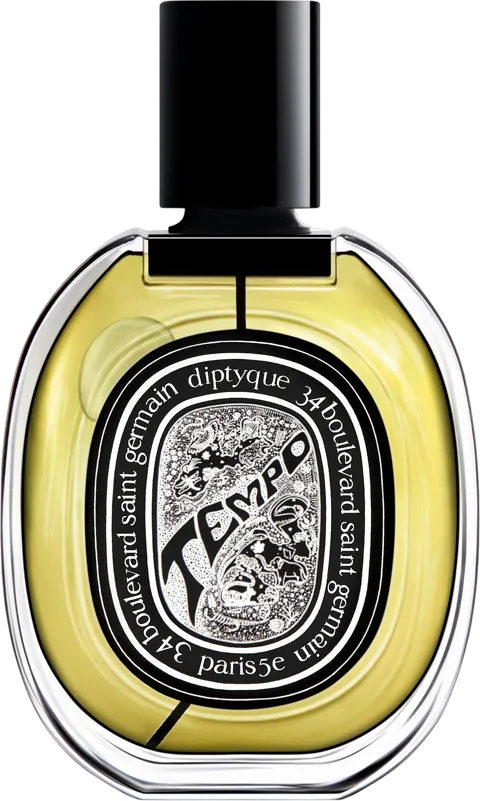
Tempo
Diptyque's Tempo centers on patchouli's woody and earthy sides. Mate, clary sage, and violet appear alongside it as key notes, giving the fragrance a broader plant-inspired setting.
#520 · 2026-10-21
Fragrance Overview and First Impression
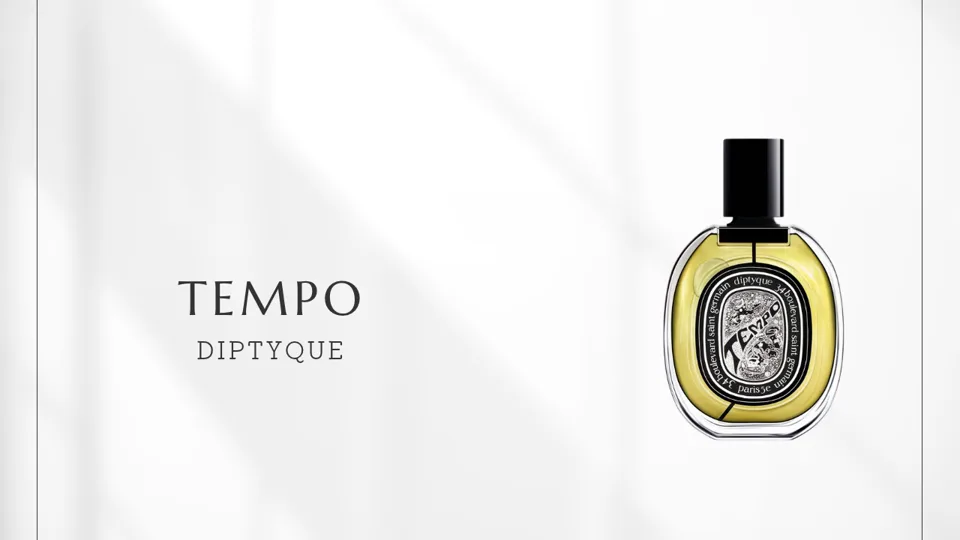
Diptyque's Tempo is an eau de parfum built around patchouli. The material can suggest polished wood and damp earth at once. Those two impressions, rather than a single fixed image of patchouli, are the reason to spend time with this fragrance on skin. A wearer looking for dry wood may notice something different from one drawn to its enveloping earthy side.
Diptyque lists patchouli, mate, clary sage, and violet as four key notes. Patchouli is the central idea, while the other names widen the plant-inspired setting. The product story also mentions violet leaf as something that brings out patchouli's character. That wording does not replace violet in the official four-note list.
Patchouli oil may smell woody, yet it comes from aromatic leaves rather than timber. The plant is known as nilam in Indonesia. Remembering that leafy source makes Tempo's wood and earth feel like related sides of the same material.
Perfumer, Brand, and Creation
Multiple sources credit Olivier Pescheux with involvement in Tempo's creation and describe work with Diptyque's creative team. The official product pages consulted do not name an individual perfumer, and the available accounts do not divide specific tasks among the contributors. The finished fragrance gives a firmer way to understand the result: patchouli is allowed to be both woody and earthy.
Diptyque tells its fragrances through words and images as well as scent. Tempo's story is an homage to the patchouli associated with the 1960s. The house describes an elegant woody side and an enveloping earthy side. Those ideas become useful when they direct attention back to the smell itself.
Tempo was reported as a 2018 release marking fifty years since Diptyque's first perfume in 1968. Diptyque's US and French sites say Tempo uses three extracts taken from a single patchouli essence. What each extract is and how it was obtained have not been disclosed. The French description's phrase “en trois temps” corresponds to the musical expression “in three beats,” which reads as a play on the name Tempo.
Scent Analysis
Patchouli lies at the center of Tempo. Diptyque describes its elegant woody quality alongside an earthy, enveloping one. A woody label alone can sound dry, yet the earthier aspect gives this fragrance a different kind of depth. Its oil comes from leaves, a detail that makes the range of impressions all the more striking.
Mate and clary sage are named beside patchouli in the official list. Mate may suggest dry tea leaves, while clary sage points toward a herbal character, but the list does not establish when either appears or how strongly it is smelled. On skin, the useful question is how any green or herbal impression sits beside patchouli's wood and earth.
Violet is the fourth official key note. The product story separately refers to violet leaf in relation to patchouli. These details invite attention to floral and leafy possibilities without proving a fixed progression or a particular intensity. Patchouli remains the anchor for understanding the fragrance.
The four notes form a parallel list, with no official top, middle, and base assignment. Likewise, the phrase “en trois temps” does not describe a three-tier pyramid; it points to three extracts of one patchouli showing different faces. Following how the woody and earthy impressions feel on one's own skin is more useful than trying to force the perfume into a prescribed sequence.
Comparisons and Positioning
The three perfumes compared here all place patchouli at their center. With that material held constant, the differences come from what each one pairs with it. Tempo sets patchouli's wood and earth beside mate, clary sage, and violet.
Chanel's Coromandel is a useful comparison because patchouli matters in both perfumes. Coromandel combines it with vanilla and benzoin in an amber expression. Tempo places its patchouli beside mate, clary sage, and violet. Someone looking for sweet amber has a reason to try Coromandel; someone more interested in patchouli's earthy and woody sides has a reason to try Tempo.
Le Labo's PATCHOULI 24 also gives patchouli a central place in its name and story. Its description emphasizes birch's smoky, leather-like impression, followed by vanilla. That smoky direction makes it a different choice from Tempo's focus on wood, earth, and accompanying plant notes. Choose PATCHOULI 24 to investigate smoke and leather; try Tempo for the contrast between patchouli's woody and earthy faces.
Frédéric Malle's Monsieur also puts patchouli at the heart of its composition. It pairs a high concentration of patchouli with mandarin, rum absolute, and incense, while Tempo surrounds its patchouli with mate, clary sage, and violet. Choose Monsieur for a generous patchouli layered with rum and incense; try Tempo for patchouli's woody and earthy sides set among tea-like and herbal notes.
Buying Guide
The product confirmed in the source material is Tempo Eau de Parfum in a 75 mL bottle. Diptyque's Japanese site displayed a price of ¥31,460 in October 2026; current pricing and availability should be checked with the retailer. The house describes the glass bottle and paper box as recyclable.
Testing Tempo on skin gives its patchouli time to show more than a first impression. Notice whether its woody aspect feels comfortable and whether its earthier side suits the situations in which you would wear it. Coromandel offers a sweeter amber comparison, while PATCHOULI 24 offers a smokier one. For a fragrance to wear around people at close range, checking its presence on your own skin is especially useful.
Wearing Experience and Opinions
A cool autumn day is a sensible starting point for trying Tempo. One account connects its earthiness with a sweater in autumn, and some wearers also suggest winter. A substantial knit or wool outer layer fits that setting naturally. Wearing the fragrance from daytime into the evening gives enough time to notice its character without assuming a fixed development for everyone.
Some users also imagine it working in the rainy season, though autumn is the first choice here, with winter as another option. Herbal character can be appealing to one wearer and intrusive to another. In hot daytime conditions or a job that brings people close together, testing the fragrance's reach and character first can help.
Reports of longevity vary. Some describe a later phase that stays close to the skin, while others experience a longer or shorter overall wear. The most useful conclusion is personal: smell the woody, earthy, and herbal sides on skin, then decide whether their balance belongs in the settings where you plan to wear Tempo.