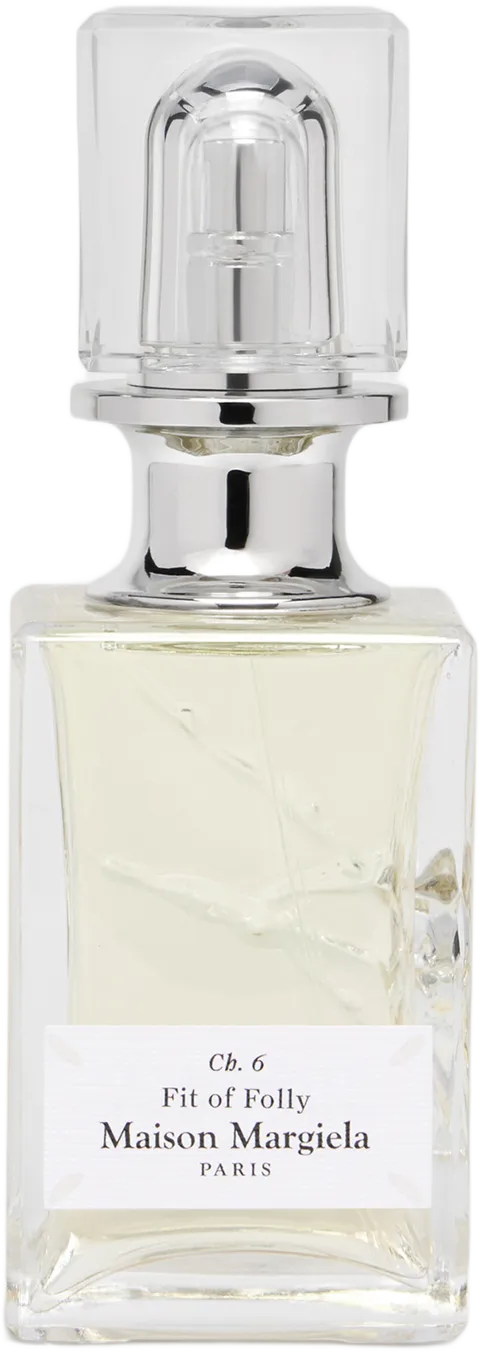
Fit of Folly
Fit of Folly contrasts dark patchouli with clear mineral musks, then adds the warmth of ambery wood. These opposing textures express the complicated sense of release behind Maison Margiela's sixth Scentsorium chapter.
#507 · 2026-10-08
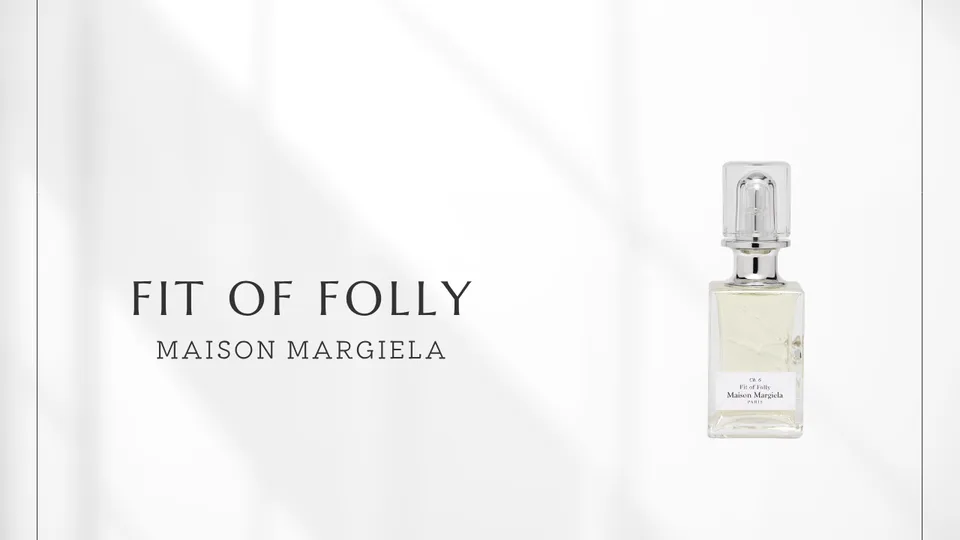
Fragrance Overview and First Impression
Maison Margiela places Fit of Folly in Chapter 6 of Scentsorium, a collection that expresses contrasting emotions through fragrance. The chapter concerns folly and the release that can come from surrendering control. Dark patchouli meets mineral musks described as cool and clear. Ambery wood adds warmth, keeping the composition from resting entirely in either darkness or brightness.
Scentsorium assigns six emotional themes to six olfactory chapters. Fit of Folly closes that sequence. Its official note pyramid supplies a top, heart, and base, while the description of its key materials speaks of patchouli and mineral musk in a continuing exchange. The pyramid gives a framework; the exchange explains why the central contrast may seem to return rather than simply pass.
Official product classifications include Ambery Woody and Fougere Musky, with the latter appearing at different levels of the category hierarchy on different regional pages. More useful to the wearer is the relationship among patchouli's depth, the musk's clarity, and the wood's warmth. The Scentsorium bottle takes its shared form from an old crystal drinks decanter. Deliberate damage in the design refers to the passage of time.
Perfumers, Maison, and Making of the Fragrance
Suzy Le Helley and Philippe Paparella are the two officially credited perfumers. Le Helley described pushing patchouli toward a more abstract, textural expression. Paparella spoke of the tension between softness and abstraction and of musks becoming unexpectedly mineral. Their comments illuminate different sides of the same material contrast, without assigning separate sections of the finished formula to either person.
The chapter's idea of folly is more complex than unrestrained excitement. Its story concerns letting go of the urge to control each moment. The fragrance gives that idea physical form by bringing patchouli's darkness into contact with mineral musk's clarity. Neither material simply cancels the other.
The brand describes several patchouli extractions building an evolving structure, with mineral musk bringing clarity. In an interview, a representative of the fragrance business said the team spent 18 months working toward an expression that reduced patchouli's earthy and camphor-like facets. That account explains the creative ambition; it does not specify the extraction procedure for an individual listed note. Glassmaker Pochet du Courval produced the collection's decanter-inspired bottle, which also has a mirrored metal collar and labels embossed with a pattern associated with the house's fabrics.
Scent Analysis
Calabrian Bergamot Heart Essence is the official top note. It places a citrus material at the entrance to a composition that soon turns toward the listed Musks and wood. The listing does not tell us exactly how it will rise from a particular person's skin or how many minutes it will remain prominent. Give the opening time to connect with the heart before deciding which side of the fragrance is most noticeable.
The heart lists Musks and Sandalwood Essence. Musks can give this part of the structure a soft, skin-adjacent quality, while sandalwood supplies rounded woody warmth. The official heart note is named Musks; Mineral Musks belongs to the description of the fragrance's key materials. Keeping those labels distinct makes it easier to read the formal pyramid alongside the broader creative account.
Patchouli Essence, Ambery Wood Accord, and Vetiver Heart form the listed base. Patchouli provides a deep, darker reference point. Ambery wood brings warmth, while vetiver can suggest a drier line of wood and root. The perfumers' stated aim includes reducing patchouli's earthy facets and giving amber woods a mineral direction. These materials therefore do more than sit beside one another: they change how warm, dark, and clear the base may feel.
The brand describes a looping motion created by the continued exchange of patchouli and mineral musk. That idea sits beside, rather than replaces, the top-heart-base structure. One moment may draw attention to the darker material and another to a cooler sense of clarity, with ambery warmth between them. Which impression comes forward on skin is the most interesting question to take into a personal trial.
Comparisons and Positioning
Diptyque's Tempo offers a useful patchouli comparison because its official account also mentions multiple extractions. Tempo combines patchouli with mate, clary sage, and violet and looks toward the patchouli culture of the 1960s. Fit of Folly instead puts its patchouli in a continuing exchange with clear mineral musk. The choice is between different surrounding textures and stories, rather than a measured claim that the two smell alike.
Frédéric Malle's Monsieur. also lists patchouli and musk. Its official description brings a large amount of patchouli together with mandarin, rum, incense, and cedar. Someone interested in the weight added by rum and incense may begin there. Fit of Folly is the more relevant official description for someone who wants to examine patchouli against clear musk and warm wood.
Le Labo's PATCHOULI 24 uses patchouli in a setting where smoky birch leather and vanilla come forward. That makes smoke and sweetness the useful comparison points. Fit of Folly emphasizes the colder clarity of mineral musk against the warmth of ambery wood. A shared patchouli note can lead to markedly different choices when the other materials are considered.
Buying Guide, Price, and Suitability
The Japanese official listing describes the 75 mL product as Parfum with a stated fragrance concentration of 30 percent. It displayed a price of ¥62,700 on October 7, 2026. The European official listing offers 30 mL and 75 mL choices. Availability, sizes, and prices should be checked with the seller at the time and in the region of purchase.
Regional official pages use both Parfum and Eau de Parfum for a 75 mL item carrying the same product code. The wording does not establish whether the formulas are identical or different. When shopping across regions, checking the product code and capacity alongside the name is more useful than assuming that the concentration terms settle the question.
A skin trial should focus on whether the dark patchouli and clear mineral musk feel convincing together. Notice the citrus opening, then allow the musks and sandalwood at the heart and the patchouli-led base to become apparent. Someone drawn to the bottle may also want to examine its shared decanter shape and deliberate break-like detail in person. The fragrance and its object are both substantial parts of the choice.
Wear, Settings, and Responses
Autumn and winter evenings are a sensible first setting to consider. Patchouli and warm ambery wood suggest a comfortable fit with a cool-weather dinner or a more formal outing. A wool jacket or substantial knit belongs naturally to those occasions. In daytime heat or a crowded space, test how far the fragrance carries from your skin before deciding how to wear it. These are practical suggestions, not an official seasonal prescription.
Some wearers describe a warm, spicy impression whose character seems to change repeatedly. Others emphasize a cool, sharp mineral aspect or find the whole composition difficult to resolve. A moderate sense of projection appears among user responses, but the available material does not establish a fixed number of hours of wear. Let the balance on your own skin guide the decision more than any single account.
The word folly might suggest only heat and force, yet this fragrance may also read as quiet. Patchouli supplies depth, mineral musk brings clarity, and ambery wood returns warmth. Whether that movement remains pleasing over time is the most useful final test.