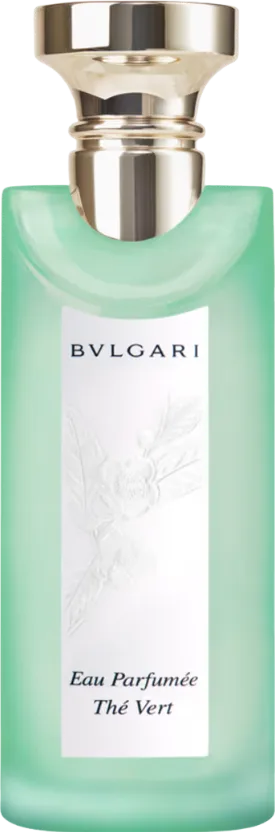
Eau Parfumée Thé Vert
A 2025 eau de toilette that revisits Bvlgari's 1992 tea-fragrance origin through natural green tea, airy neroli petals, and sparkling bergamot. The episode follows its three versions, 350 ml gift story, and quiet spring-summer wear.
#445 · 2026-08-07
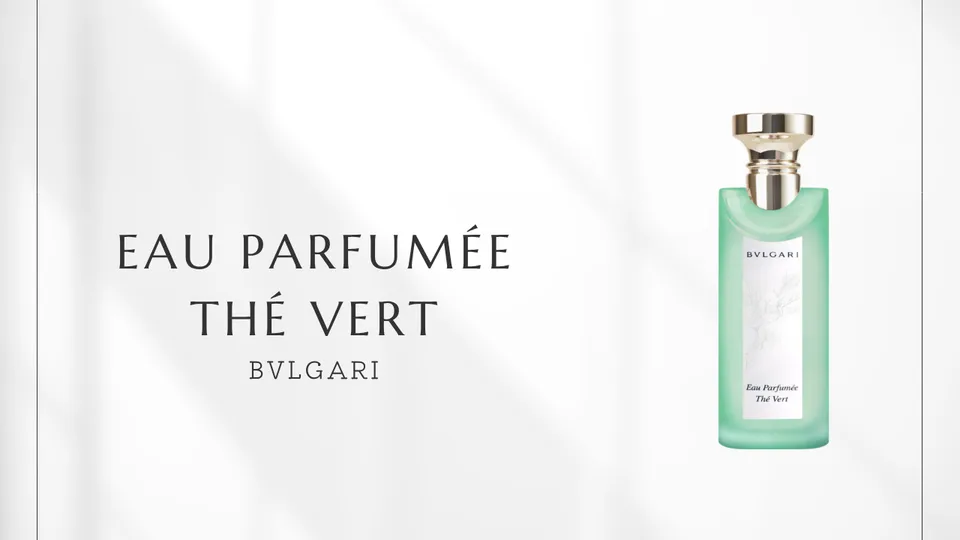
Basic Information and First Impression
Bvlgari's Eau Parfumée Thé Vert is a citrus-aromatic eau de toilette renewed in 2025. Its lineage begins with the house's first fragrance in 1992, which Bvlgari describes as the world's first tea fragrance. The current subject is the new EDT with natural green-tea extract, not the earlier eau de cologne.
The first impression is not sweet matcha dessert or lemon tea. Crushed young leaves, dry tea, airy white neroli, and fine bergamot sparkle create a pale celadon atmosphere. It feels cool, light, and close to skin, with the texture of frosted glass and thin botanical paper.
The formula is described as 94 percent natural origin under ISO 16128. Core sizes include 75 ml and 150 ml, with a 350 ml signature presentation in selected markets. Natural-origin percentage is a formulation index and does not itself mean allergen-free or universally gentle.
Perfumer, Brand Background, and Creation Story
Jean-Claude Ellena grew up in the fragrance world of Grasse and entered raw-material work at a young age. From 2004 to 2016 he served as the in-house perfumer of Hermès, creating fragrances including Un Jardin sur le Nil and Terre d'Hermès. He is known for using carefully chosen materials, transparency, and empty space to suggest light, wind, and memory.
The 1992 original did not rely on a tea extract. Ellena used materials including Hedione and beta-ionone to construct the impression and stillness of tea rather than copying a beverage literally. The 2025 EDT contains natural green-tea extract, turning the same subject into a different material question after thirty-three years.
Bvlgari was founded in Rome in 1884 by Sotirio Bulgari. The first Thé Vert began as a 350 ml gift for important jewelry clients. Demand carried it into general sale, allowing a private boutique gesture to become an influential reference in tea perfumery.
Detailed Scent Analysis
The current official structure is not divided into top, middle, and base. It presents three parallel key notes: Green Tea Extract, Neroli Petals Accord, and Bergamot Essence. The following sequence describes how their proportions are commonly perceived on skin without assigning new official roles.
At first, bergamot brings bitter citrus light and a fine sparkling speed. Young tea leaves and white neroli are already beside it, so the opening does not become juicy lemonade. The three ideas appear together rather than entering as separate stages.
As the citrus slows, dry green tea and airy neroli petals move forward. The tea suggests crushed leaves and the astringency left after steam fades, not a sugary matcha latte. Neroli sits between thin white petals and clean soap; on some skin it becomes round and creamy, while on others it feels more powdery.
Late in the wear, dry tea and white-floral traces move closer to skin. Some wearers perceive soft wood or musk, but those are not part of the official key-note list. Reports often place longevity around three to six hours, with moderate presence early and a quieter trail later.
Comparison and Positioning
Elizabeth Arden Green Tea shares bright citrus and green-tea freshness. Green Tea leans toward lemon, mint, and the easy familiarity of a lightly sweet drink; Eau Parfumée Thé Vert is drier, with young leaves, white neroli, and more empty space.
Giorgio Armani Privé Thé Yulong combines green and black tea with more contrast, smoke, and depth. This fragrance stays paler and closer to young leaves and white petals. Thé Yulong suits someone seeking tea shadows, while the current subject favors quiet, light-green wear.
Nishane Wulong Chá is a more expansive citrus tea with greater fruit sweetness, projection, and persistence. Eau Parfumée Thé Vert is restrained and dry, making it easier to keep close to the wearer. The choice is between strength and fruit on one side, and white space on the other.
Buying Guide, Price, and Recommendation
Japanese prices reported for the current release are ¥21,340 for 75 ml and ¥32,780 for 150 ml. The 350 ml signature size varies by market and timing. Prices, formats, and availability should be checked with the official store or an authorized retailer at the time of purchase.
Resale and parallel-import listings may mix the 1992 Eau Parfumée au Thé Vert eau de cologne, the 1996 Extrême, and the 2025 Eau Parfumée Thé Vert eau de toilette. The old cologne is remembered for sharper transparency, Extrême for deeper spice and wood, and the current EDT for natural green tea and rounded neroli. Concentration wording and the frosted 2025 bottle are more useful than size alone.
The new bottle recalls a Roman column in pale frosted glass. A beige-gold cap carries a crackled celadon-like pattern, while embossed botanical drawing appears on hemp-derived paper. Rome, tea culture, and plants meet through texture rather than a literal teacup image.
When testing, wait beyond the first bergamot flash and observe the tea-to-neroli ratio after thirty minutes. The fragrance will read differently for someone seeking the old version's sharpness, someone wanting unsweetened tea, or someone sensitive to white soap and powder.
Real-World Wear, Scenes, and Reputation
Spring and summer days are the most natural setting, with bright early autumn, morning routines, offices, hotels, quiet cafes, museums, lunches, and travel also fitting its close-range character. White shirts, natural linen, pale gray, and celadon-green clothing echo its visual restraint.
Positive responses describe it as transparent, elegant, calming, and easy in warm weather. Critical responses find it too pale for the price, more soapy or powdery than expected, less sharply transparent than the old version, or short-lived. The same lightness can feel refined or insufficient.
Start with two or three sprays and resist adding more immediately. Check the young leaves and neroli after thirty minutes and the distance of the trail after three hours. It is not a literal preservation of the 1992 liquid, but a new answer to the same tea question. The best test is a quiet day that reveals whether its thirty-three-year-old idea belongs in everyday life.