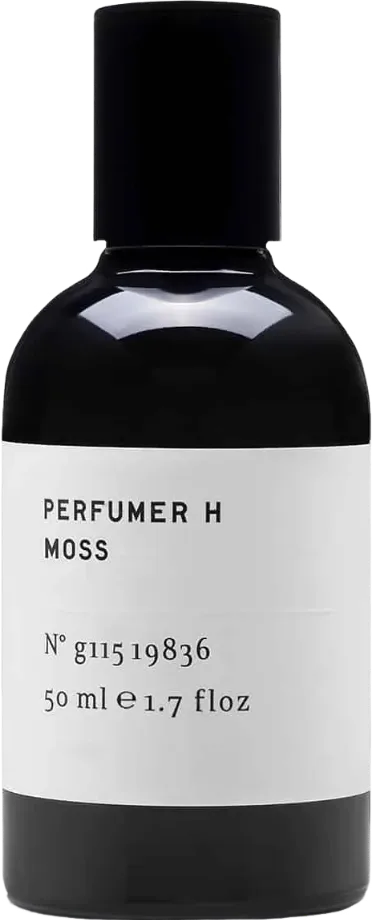
Moss
Perfumer H Moss is a cool fougère moving from bitter grapefruit through lavender and pine needle to moss and vetiver. The fragrance links Lyn Harris’s dawn-lit view of nature with restrained projection, handcrafted vessels, and practical wear in cool air.
#435 · 2026-07-28
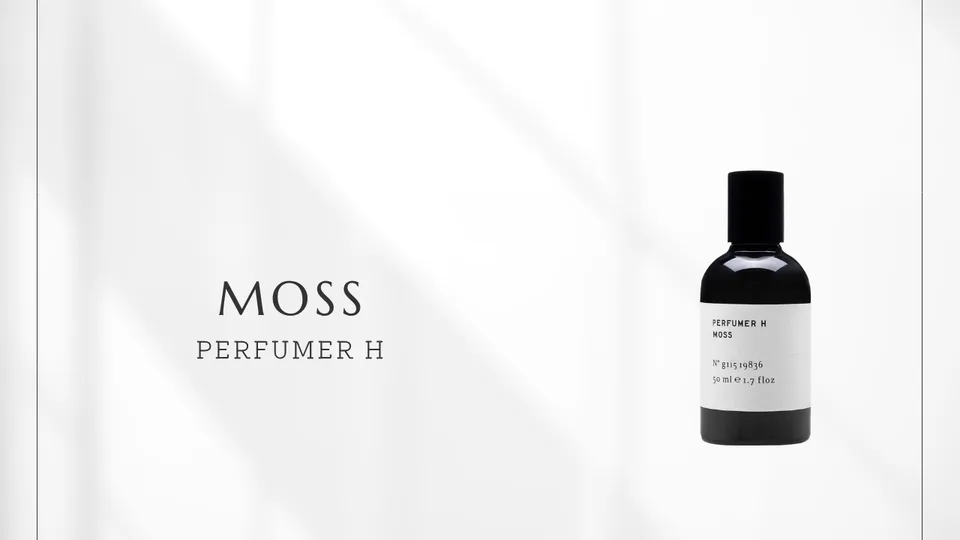
Fragrance Basics and First Impression
Perfumer H's Moss is an Eau de Parfum for people who want quiet green space lit by morning rather than a dark, heavy moss accord. The house places it in the Fern Family and describes it as a cool, androgynous fougère. Several fragrance databases agree on a 2016 release, although the current brand pages do not state a launch year.
The name may suggest a damp, shadowed floor. The fragrance instead opens with bitter grapefruit and mandarin, moves through lavender and pine needle, and settles toward tree moss and vetiver. It lets the view open before the moss gains depth. Sweetness and smoke remain restrained, and the overall weight is light to medium.
Perfumer, Brand, and Creative Background
The perfumer is Lyn Harris. Raised in Scotland and Yorkshire, she trained in Grasse and developed her craft at Robertet. She co-founded Miller Harris in 2000, left in 2013, and established Perfumer H in London in 2015.
Harris does not reproduce nature as a botanical inventory. She rebuilds it through memories of place, season, light, and air. In Moss, grapefruit, lavender, and pine needle keep the forest floor open to the cool air of dawn.
The brand extends that approach into its vessels. Michael Ruh hand-blows the 100ml glass bottles, which are offered in several colors and show natural variations. The UK presentation uses a glass funnel for refilling, while the 50ml format is a conventional spray and the 100ml format supports travel-spray use. Perfumer H also carries Moss candles, incense, and potpourri. The incense is handmade by a traditional Japanese maker, with a separate formula that moves the forest atmosphere from skin into a room.
Detailed Scent Analysis
The house does not publish a fixed top-heart-base pyramid for Moss. It is more useful to follow a change in focus within one continuous forest.
**Opening — Bitter Citrus Light**
At first, bitter grapefruit peel provides a cool edge. Sicilian bergamot adds clear brightness, while Italian mandarin zest rounds the opening without turning it into sweet juice. The effect resembles pale morning light entering the trees.
**Heart — Lavender and Conifer Air**
French lavender and Siberian pine needle then become more apparent. The lavender supports the fougère structure without becoming a sweet barbershop accord. Pine needle adds chilled bark, green needles, and open woodland air as the citrus begins to recede.
**Drydown — Moss, Roots, and Skin Warmth**
Tree moss and Haitian vetiver form the drydown's damp wood and dry-root depth. Amber adds a trace of skin warmth. The official note list also names sea moss, but its material form is not explained, so it should not be treated as literal seaweed or salt air. Projection tends to settle closer to the skin rather than fill a large room.
The transition is gradual. Bitter citrus, aromatic needles, moss, and roots remain part of the same landscape. Anyone expecting a dense, dark moss may find it light, but that illuminated quality is the fragrance's defining choice.
Comparisons and Positioning
Aesop's Hwyl shares conifers, vetiver, and a contemplative forest mood. Hwyl centers darker cypress, frankincense, resin, and smoke. Moss places cool grapefruit and lavender ahead of damp tree moss. Choose Hwyl for dry wood and meditative smoke, or Moss for bright air over a mossy floor.
Le Labo's Baie 19 also offers green air and patchouli that can be worn in an urban setting. Baie 19 is built around petrichor, ozone, and rain striking dry ground. Moss uses pine needle, lavender, and tree moss to evoke a forest at dawn rather than rainfall itself. Choose Baie 19 for abstract rain and earth, or Moss for a clearer route from citrus to woodland.
Moss also refers to the classic lineage of bergamot, lavender, moss, and vetiver found in fougères and chypres. It avoids making coumarin sweetness or animalic darkness the main subject, placing itself between a smoky forest and an abstract rain accord.
Buying Guide, Price, and Recommendation
The current fragrance is one Eau de Parfum composition. Official formats include 50ml, 100ml, and Handblown 100ml; no Moss-specific Eau de Toilette, Parfum, Extrait, or flanker was found. Perfumer H does not state a numeric concentration on its own page, while authorized retailer Arts & Science lists 20 percent.
On 27 July 2026, the Japanese official prices were ¥28,600 for 50ml, ¥37,840 for 100ml, and ¥116,655 for Handblown 100ml. The 100ml presentation includes two refillable travel sprays and a grey felt pouch. Handblown accessories vary by region, so the current page for the place of purchase is the reliable reference.
Skin testing matters more than choosing the vessel first. Some wearers report that it becomes a skin scent after two to three hours, while others find it lasts longer. It suits someone interested in the fine transition between bitter citrus, needles, moss, and roots. It is less suitable for someone seeking room-filling projection or a sweet, dense evening fragrance.
Wear, Situations, and Reception
Spring, the fresh-green season, the rainy season, and autumn are its strongest settings. The citrus and pine can lighten humidity, while moss and vetiver gain definition in cool air. Morning through daytime suits it particularly well, including offices, bookshops, galleries, quiet meals, walks, and the start of the day.
In midsummer, begin with one spray in the cool morning or an air-conditioned interior. Heat may make its longevity feel shorter, and adding more immediately can erase the fine spacing between notes. White shirts, pale grey or olive layers, undyed linen, and a light navy jacket match its clean lines better than styling the forest as something uniformly dark.
Positive responses often focus on its unexpectedly bright moss and gentle manner. Reservations include wanting more pine or moss, or finding the restrained performance difficult to reconcile with the price. The deciding question is whether a forest that dissolves into morning air feels more compelling than a forceful reconstruction of dark woods.