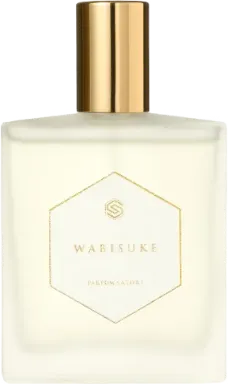
Wabisuke
An introspective masterpiece that took 15 years to perfect, capturing the essence of Japanese 'Wabi'. This neo-Japanese chypre transitions gracefully from a cold, herbal opening to a quiet, ink-stained rose, offering a serene sensory experience.
#189 · 2025-11-24
Basic Information and First Impressions
"Wabisuke" is a chypre-floral fragrance created by PARFUM SATORI, an independent Japanese house founded in 2000. Centered around the spiritual depth of the tea ceremony, particularly the quietude of a tea room before dawn, this scent beautifully translates the blooming of a silent flower into an olfactory experience.
Fifteen years after the release of "Hyouge"—a masterpiece honoring the warlord tea master Furuta Oribe—perfumer Satori Osawa finally reached her own interpretation of "Wabi." Using the scentless Wabisuke camellia as a conceptual motif, this highly personal and tranquil composition captures the interplay of light and shadow through a minimalist, subtractive aesthetic.
Perfumer Background and Behind the Scenes
PARFUM SATORI was established by Satori Osawa, a Tokyo-born creator who grew up immersed in traditional Japanese arts. Having practiced Kado (flower arrangement) and Sado (tea ceremony) since childhood, her unique cultural background informs every drop of her creations.
The inspiration for Wabisuke comes from "Akatsuki-no-chaji" (Dawn Tea Gathering), a rare ceremony held in the bitter cold of early February, illuminated only by the faint glow of charcoal. Rather than relying on a Westernized mimicry of "Japonisme," Osawa employed a thoroughly authentic Japanese perspective to distill the essence of this dawn ritual into a serene fragrance.
Detailed Scent Analysis
Wabisuke is structured as a "neo-Japanese chypre," replacing traditional oakmoss with native elements.
**Top Notes: The Sharp Chill of Dawn** The fragrance opens with a sharp, cool tension. A blend of davana and patchouli introduces a bitter, earthy, and almost metallic freshness, reminiscent of winter air and the sharp rays of a morning sun, enriched by the subtle liqueur-like complexity of davana.
**Middle Notes: A Deep Crimson Ink Rose** As the initial sharpness subsides, an intellectual, powdery floral bouquet emerges. Rose, lilac, and blue chamomile combine to express the conceptual Wabisuke camellia. It is a floral accord with the saturation turned down—often described as an "ink-stained rose"—blooming quietly on the skin.
**Base Notes: Spiritual Depth and Serene Echoes** In the dry-down, the scent transitions into a purifying blend of amber, borneol, ink, and agarwood. It leaves a smoky, balsamic trail that fades as cleanly as purple incense smoke vanishing into the air of an austere Japanese room.
Positioning and Comparisons
Compared to other rose and incense fragrances like çanoma's "2-23 Kocho," which leans modern and leathery, Wabisuke remains plant-based, clean, and deeply meditative. Against Comme des Garçons "2," which presents a metallic "urban ink," Wabisuke offers an organic, temple-like "rubbed ink." And unlike the baroque opulence of Frederic Malle's "Portrait of a Lady," Wabisuke embraces a subtractive beauty, keeping the projection intimate and unisex.
Usage and Final Thoughts
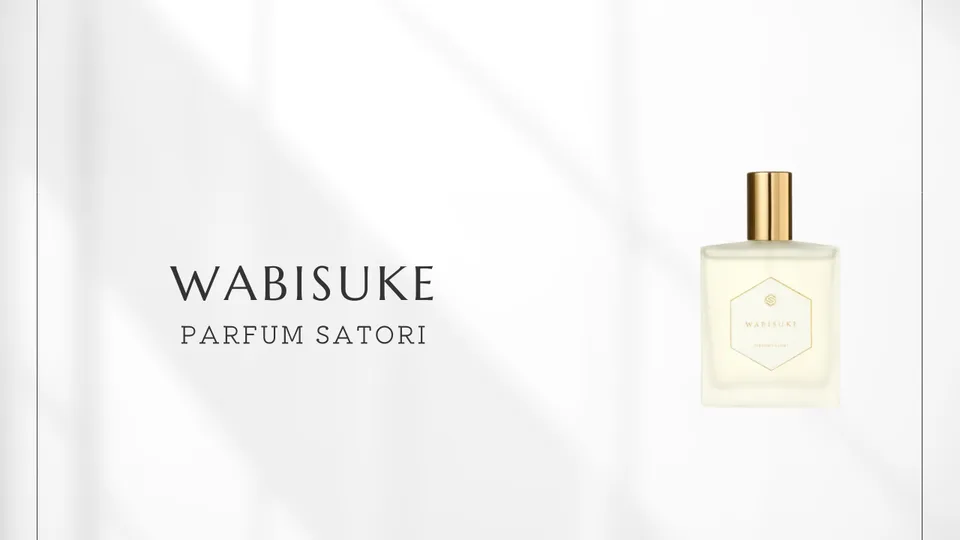
Available exclusively in Eau de Parfum, the minimalist frosted glass bottle reflects the concept of "shadows" and the diffused light of a paper door. Wabisuke shines best in the crisp air of autumn and winter. With its polite, skin-close sillage lasting 3 to 5 hours, it is the perfect companion for quiet mornings, formal attire, or moments when you need to gently center your mind.