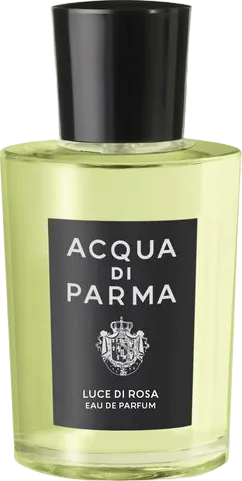
Luce di Rosa
Luce di Rosa opens with bright bergamot and pink pepper before a rose with green, spicy and honeyed facets comes forward. Vetiver, gaiac wood and cedarwood give the floral heart a calmer finish.
#539 · 2026-11-09
Fragrance Overview and First Impression
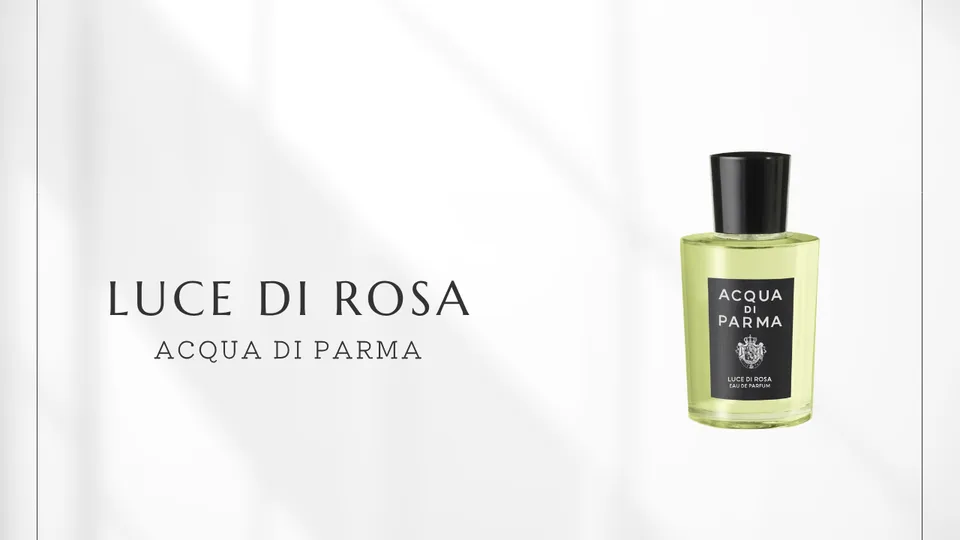
Acqua di Parma's Luce di Rosa is a rose fragrance in the Signatures of the Sun collection. The house describes its olfactive family as Floral Woody Rose. Citrus and pepper brighten the opening, while woods give the floral center a deeper finish. The result presents rose through several textures rather than through sweetness alone.
Bergamot and pink pepper make the first impression lively. Rose then becomes more apparent, bringing green, spicy and honeyed facets alongside the familiar floral softness. As the composition settles, the woods provide a calmer background. The contrast between a bright entrance and a grounded finish is central to its character.
Luce means light in Italian, and the house describes the fragrance as a rose sculpted by light. The image suits the way citrus opens the flower before greener and warmer facets become noticeable. Acqua di Parma also presents the scent as gender neutral. It offers a starting point for someone drawn to rose but curious about a floral fragrance with citrus and spice in clear view.
Creator, House and Design
Luce di Rosa belongs to Acqua di Parma's Signatures of the Sun collection. The house brings its Italian citrus language to a rose composition with a woody base. The perfumer is not publicly credited in the available official product material, so no individual creator is attributed here.
The house uses music as another way to describe the fragrance, comparing its changes to shifts between piano and forte, adagio and vivace. Bright citrus and pepper lead toward a fuller rose before the woods create a quieter ending. The musical image concerns those contrasts in sensation; it does not describe a separate note structure.
The central Bulgarian rose oil is described as obtained through water and steam distillation. Acqua di Parma highlights green, spicy and honeyed aspects of the rose, which geranium and black pepper make easier to notice. The transparent Signatures of the Sun bottle displays the coloured liquid, and its label has been redesigned. Designer Annelise Michelson made related gold plated brass bottle cap and tray objects; those objects are distinct from a credit for the fragrance or the standard bottle as a whole.
Scent Analysis
The official note list has three stages. Bergamot, Longoza Oil and Pink Pepper appear at the top. Bergamot brings citrus brightness, while pink pepper adds a light spicy movement. Longoza Oil is also named in this stage; the note list alone does not establish a more specific sensory description for it.
Rose Bulgaria Oil, Geranium and Fresh Black Pepper form the heart. The rose is floral but also green, spicy and faintly honeyed in the house's description. Geranium strengthens the leafy impression, and black pepper gives the softness of the flower a drier edge. The focus shifts from the opening's light pepper sparkle to spice within the rose itself.
Calling this rose simply sweet misses much of its character. The bright opening makes the flower feel open, but the green and spicy qualities remain present as the fragrance develops. Its honeyed side sits among those contrasting facets rather than replacing them. This interplay is what makes the floral center distinctive.
Vetiver Oil, Gaiac Wood and Cedarwood are the official base notes. They bring depth after the flower and make the finish steadier than the opening. The separate product description also speaks of soft musk nuances, although musk does not appear in the formal three stage note list. The woody materials provide the documented structure of the base.
On skin, the useful questions are whether the citrus or the rose comes forward most strongly, and how the dry woods appear later. No fixed number of minutes is needed to understand the progression from bright spice to flower and then to wood.
Comparison and Positioning
Diptyque's Eau Rose Eau de Parfum is another rose fragrance with a green dimension. Luce di Rosa opens with bergamot and pepper, then moves through geranium toward a woody base. Eau Rose Eau de Parfum sets two roses beside artichoke, chamomile and lychee. Choose Luce di Rosa for a citrus and spice entrance; choose Eau Rose Eau de Parfum if the mixture of flowers, fruit and unusual greenness is the stronger attraction.
Jo Malone London's Red Roses Cologne also centers rose and a sense of greenery. Its bouquet draws on seven roses, violet leaves and lemon. Luce di Rosa places pepper before the flower and woods after it. Red Roses is the clearer choice for the freshness of a cut bouquet, while Luce di Rosa offers a more pronounced shift from spice to wood.
Byredo's Rose of No Man's Land shares rose and pink pepper as named elements. Luce di Rosa also brings bergamot, geranium and black pepper before its woody base. Byredo's fragrance pairs Turkish rose with raspberry blossom and papyrus. The choice is between Luce di Rosa's brighter citrus and spice movement and Byredo's floral expression with fruit suggestiveness and papyrus.
Across these comparisons, Luce di Rosa has a clear place: its rose is made brighter by citrus, sharpened by spice and grounded by wood. It suits someone who wants a daytime rose with more change than a single continuous floral impression.
Buying Guide
Luce di Rosa is offered in 20mL, 50mL, 100mL and 180mL sizes. A smaller bottle may make sense for an initial trial, while a larger size is a different decision for someone who already knows how the fragrance wears. A hand and body wash and a body cream carry the same name, but they are body products rather than alternate perfume concentrations.
The main point to test is the balance of rose and citrus on skin. Some wearers find a transparent rose with little sweetness; others notice citrus more strongly and find the rose restrained. If rose is the reason for buying, allow the fragrance to move beyond its opening before deciding. Comments about quiet projection or limited persistence describe individual experiences, not a measured guarantee for every wearer. Check current prices and availability with the house for the size you want.
Wearing Experience and Occasions
Wearers have suggested spring afternoons and daytime office use. The bergamot and pink pepper opening makes daylight a natural setting to try first. A shirt or light layer fits that spring setting, and a restrained application at work leaves room to judge how far the scent travels around other people. These are practical suggestions based on the fragrance's character and user impressions, not official seasonal rules.
Other wearers enjoy it in autumn and winter. Indoors, a light knit can suit the quieter woody stage after the rose. Letting the fragrance reach its vetiver and cedarwood base gives a fuller impression than judging only the first citrus notes.
The different responses to its rose are useful when testing. One person may notice the flower's green clarity, while another finds citrus in the foreground. Comparing those first minutes with the later woody calm makes it easier to decide which part of Luce di Rosa you would want to wear again.