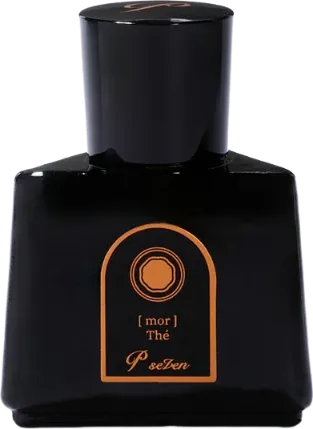
[mor] Thé
Mor Thé pairs a dry tea impression with the quiet image of ink. Jasmine and tea leaf lead to iris, borneol, and ink, followed by cedarwood, musk, and patchouli.
#535 · 2026-11-05
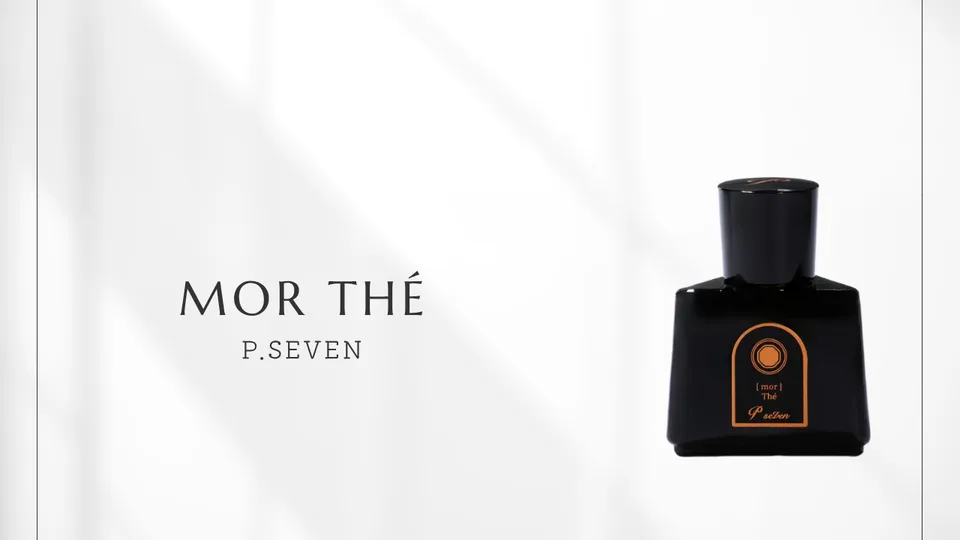
Fragrance Overview and First Impression
P.Seven's Mor Thé is an eau de parfum built around tea leaf and ink. Offered in Japan in 2025, it belongs to the ink collection alongside Mor Flor and Mor Bambu. Tea provides the entrance to a fragrance whose story then turns toward writing.
The Japanese product information places jasmine and tea leaf at the top, iris, borneol, and ink in the heart, and cedarwood, musk, and patchouli in the base. P.Seven describes the tea leaves as dry and marked by a sense of astringency. This points toward the texture of the leaves rather than a sweet tea drink.
Tea appears at the opening and ink at the center. Ink is therefore part of the stated scent structure as well as the idea behind the name. Flowers, tea, ink, and woods give the composition its calm direction; the listed stages do not specify how many minutes each impression takes to appear.
Perfumer, Brand, and Creative Background
P.Seven was founded in Taiwan in 2012. Its founder, PAN, is described as a tea master and fragrance designer. The brand's signature Taiwan Tea Perfume grew from the wish to preserve the aroma left in a tea aroma cup, a slender vessel used to appreciate tea before drinking. The individual perfumer credited with Mor Thé has not been disclosed.
Taiwan Tea Perfume evokes a small teahouse in a Taiwanese forest, where someone drinks Jin Xuan tea and then grinds ink to write. PAN developed Mor Flor, Mor Thé, and Mor Bambu from the ink impression that lingers at the end of that earlier work. What concluded the first scene became the central subject of the later collection.
For PAN, ink also carries an association with kindness and human warmth. Writing becomes time spent with one's own thoughts. These ideas give the tea and ink pairing a reason beyond the novelty of two unusual notes.
The collection uses semi-handmade glass bottles produced by Taiwan's Spring Pool Glass. P.Seven says that the process leaves small signs of handwork in each bottle. The glass connects the collection's Taiwanese cultural references with Taiwanese making.
Scent Analysis
Ink supplies the writing motif at the heart of Mor Thé. The Japanese official listing uses a top, heart, and base structure. Jasmine and tea leaf form the top. The floral impression of jasmine meets the dry, gently astringent suggestion of tea leaves. Here, astringency describes a restrained scent texture, not a claim about how the perfume tastes.
Iris, borneol, and ink occupy the heart. Iris suggests a soft powdery dryness, while borneol introduces a cool aromatic facet. Ink brings the image of a brush moving across a page into the center of the composition. P.Seven likens its rise to a single brushstroke on a quiet night.
The base lists cedarwood, musk, and patchouli. Cedarwood offers a dry woody idea, musk a softer texture, and patchouli an earthy side. Together they give another way to understand the calm impression P.Seven describes after the tea and ink.
The three stages indicate placement, not a measured timeline or duration on skin. One wearer reported finding little recognizable tea, which is a reminder to smell beyond the opening and notice the ink and woods as well. Individual impressions may differ.
Comparison and Positioning
The first comparison is P.Seven's own Taiwanese Tea Perfume, the brand's signature work. Both bring tea and ink into their stories, and Mor Thé and its two companions grew from the ink impression that lingers at the end of the earlier perfume. Taiwanese Tea Perfume opens with the woods of cedar and Taiwanese hinoki, moves into milky, sweet Jin Xuan tea, and leaves ink at the end. Mor Thé opens with jasmine and dry tea leaf and places ink in the heart. Choose Taiwanese Tea Perfume if you enjoy a shift from wood to sweet tea, or Mor Thé if you prefer jasmine and dry tea leaf layered with ink.
For its shared tea and iris theme, Mor Thé can be compared with BDK Parfums' Gris Charnel. Gris Charnel joins black tea with fig and cardamom before moving toward sandalwood and tonka bean. Mor Thé pairs tea leaf with jasmine and puts iris beside ink in the heart. Gris Charnel suits an interest in fruit and spice around tea; Mor Thé gives tea a drier, ink-centered setting.
COMME des GARÇONS' CDG 2 is a comparison for the idea of ink. It places ink among incense, mate, and magnolia, creating a different blend around the shared writing theme. Mor Thé connects its ink impression with tea leaf, jasmine, and iris. CDG 2 offers a more varied group of materials around ink; Mor Thé is the choice for the link between tea and a quiet moment of writing. Set beside these three, Mor Thé stands out for placing both tea leaf and ink at the front of its identity.
Buying Guide
The Japanese Mor Thé product is listed as a 66 mL eau de parfum at ¥22,000 including tax. Price and availability can change, so the current product page is the place to check before purchase. The ink discovery set offers 3 mL each of Mor Flor, Mor Thé, and Mor Bambu; its stated Japanese price is ¥9,900 including tax.
The three fragrances begin differently despite their shared ink theme. Mor Thé opens with jasmine and tea leaf, Mor Flor with Chinese rose and peony, and Mor Bambu with bitter orange, bamboo leaf, and hyacinth. Sampling the set gives a way to compare those floral, tea, and bamboo directions before choosing a full bottle.
Mor Thé is more likely to appeal to someone drawn to dry tea leaves and a subdued ink impression than to someone seeking a sweet tea scent. On skin, it is useful to follow the opening through the ink-centered heart and into the woody base.
Wearing Experience and Occasions
A cool autumn evening suggests a setting for Mor Thé's dry tea and quiet ink. Reading or writing alone also connects naturally with the ideas behind the collection. A calm winter interior may serve the same purpose. These are suggestions based on the scent description and creative background, not seasons specified by the brand.
A light knit over a shirt in autumn, or a heavier knit indoors in winter, fits those ordinary settings. Before wearing it to a quiet meal or museum, a skin test can help establish how much to apply around other people. Reliable general measurements of its longevity and projection have not been confirmed.
Some wearers may notice the tea less clearly than expected. Iris, borneol, and ink stand at the center of the official structure, with cedarwood, musk, and patchouli listed after them. Smelling how tea and ink balance on your own skin is the most direct way to decide whether Mor Thé suits the quieter moments you have in mind.