Colpo di Sole
Bottega Veneta's Colpo di Sole pairs angelica root with orange flower to evoke the warmth of Mediterranean sunlight. Part of a collection inspired by Venice and cultural exchange, it has drawn favorable comments for warm days outdoors.
#517 · 2026-10-18
Fragrance Overview and First Impression
Bottega Veneta's Colpo di Sole is an eau de parfum inspired by the warmth of Mediterranean sunlight. French angelica and orange blossom form the central pairing. The house describes the angelica as tranquil and links the flower to radiant sensuality. That contrast gives the perfume a calmer botanical dimension beside its brightness.
The official note structure has three levels. Angelica root oil and bergamot oil are listed at the top; orange flower absolute, osmanthus absolute and ambrette seed oil form the heart; vanilla bourbon extract, vetiver oil and EcoMusk R make up the base. Bottega Veneta calls the overall effect a relaxing radiance. The list describes the composition, though it does not prescribe a precise sequence of changes on skin.
Colpo di Sole belongs to a collection inspired by Venice and its history of cultural exchange. The house speaks of weaving together essences from different parts of the world. In this perfume, the combination of angelica and orange flower is the clearest starting point for understanding that idea.
Perfumer, House and Creative Background
Bottega Veneta connects its fragrance collection to Venice, a city shaped by encounters between cultures. The idea of weaving ingredients together recalls Intrecciato, the house's leather weaving tradition. For Colpo di Sole, the theme takes the form of a composition intended to evoke Mediterranean warmth.
Press reporting says that Matthieu Blazy, then the creative director, wanted to recall the smell of skin after a day at the beach. This account adds context to the imagery, while the official product description specifically centers French angelica and orange blossom. The two statements can be read together without turning the press account into an official note list.
The individual perfumer has not been publicly credited by the house in the available product material. The known ingredients and the stated inspiration offer a firmer basis for understanding the work than an unconfirmed personal attribution. Angelica, bergamot, orange flower, osmanthus and ambrette create the bridge between a green opening and a warmer floral impression.
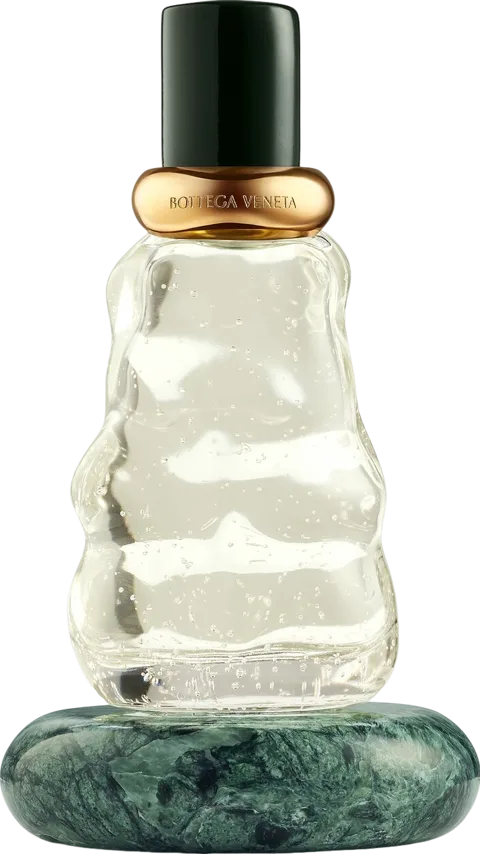
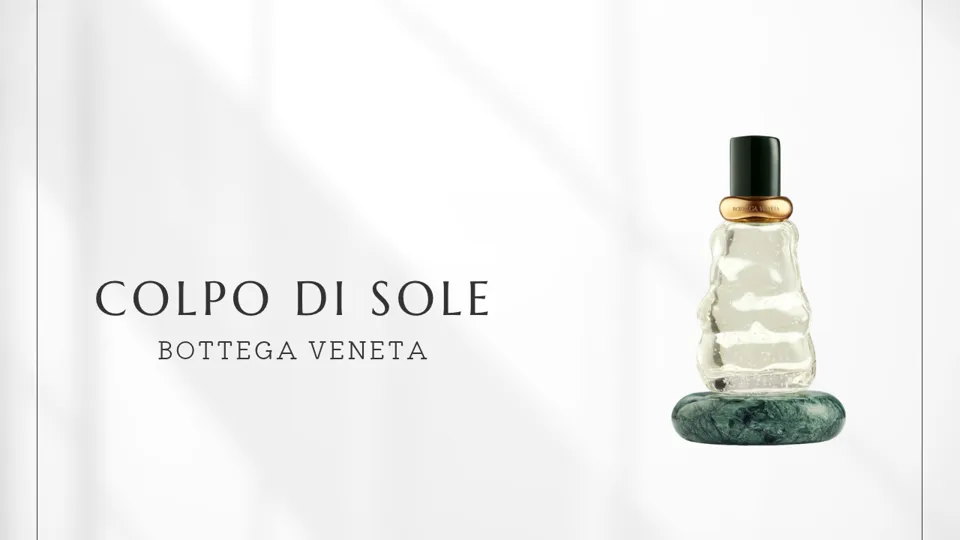
The bottle carries the collection's interest in materials. Organic curves of glass rest on a marble base, and a glassmaking process inspired by Venetian tradition recreates the bubbles associated with mouth-blown glass. The official description concerns that recreated effect; it does not establish that every complete bottle is hand-blown. Wood and natural cork also feature in the object, which weighs 1,080 grams in the 100 ml format.
Scent Analysis
Angelica root oil is the first of the listed top notes. Bottega Veneta emphasizes its tranquil character, while bergamot oil adds a citrus element. Rather than imagining a purely floral or citrus opening, it helps to pay attention to how the calm root note sits beside the brighter peel-like impression.
Orange flower absolute occupies a central place in the heart. The house associates the blossom with radiant sensuality. Its warmth gives the Mediterranean sunlight theme a floral expression, while the angelica keeps the contrast between root and flower in view.
Osmanthus absolute and ambrette seed oil share that heart. The former adds another floral material, and the latter comes from seeds. Their different textures keep the orange flower from standing alone. Together with bergamot, they are among the materials the house names when describing the perfume's relaxing radiance.
Vanilla bourbon extract, vetiver oil and EcoMusk R form the base. Vanilla suggests warmth, while vetiver brings the possibility of dry, root-like depth and the named musk material can soften the finish. The official structure identifies their roles but gives no exact schedule for their appearance or disappearance on skin.
Some wearers describe a green or sharply botanical first impression. Anyone drawn mainly by the promise of orange flower may therefore learn more from a skin test than from the note list alone. The practical question is how the flower and angelica balance for the individual wearer.
Comparison and Positioning
Diptyque's Eau des Sens makes a useful comparison because angelica root and orange flower are central points of contact. Colpo di Sole adds osmanthus and ambrette to an image of Mediterranean sunlight. Eau des Sens also uses juniper berry and patchouli and explores the bitter orange tree as a whole. The shared root and flower lead the two perfumes toward different subjects.
Guerlain's Angélique Noire is another way to examine angelica. Colpo di Sole lists oil from the root beside orange flower and osmanthus. Angélique Noire presents angelica flower with a vanilla accord, pink pepper and cedar. Comparing the two directs attention to the different parts of a plant and the materials placed around it.
TOM FORD BEAUTY's Neroli Portofino shares an orange blossom connection and Mediterranean coastal imagery. Colpo di Sole turns toward the warmth of the sun through angelica and osmanthus. Neroli Portofino uses Tunisian neroli, mandarin and lavender to suggest the air and water of the Italian coast. Someone seeking warmth may prefer to begin with the former; someone seeking a brisk coastal impression may begin with the latter.
Across these three comparisons, the distinctive point of Colpo di Sole is its meeting of angelica root and orange flower. Similar ingredients are a reason to compare the perfumes, while the roles given to those ingredients explain why the finished ideas differ.
Buying Guide
The official collection lists Colpo di Sole in 100 ml and 15 ml eau de parfum formats, alongside a refill. Japanese prices observed in October 2026 were ¥70,400 including tax for 100 ml, ¥14,300 for 15 ml and ¥50,600 for the refill. Prices and availability can change, so current details should be checked with the house. The refill volume was not specified in the official material available here.
A sample is especially useful because some wearers notice a green, botanical sharpness at the start. Try it on skin and allow time to assess both the first impression and the relation between angelica and orange flower. Bottega Veneta also advises customers to test the sample before opening the product packaging.
The 100 ml product measures 160 mm high, 121 mm wide and 117.5 mm deep, and weighs 1,080 grams. Its curved glass, marble base and recreated bubbles make the container part of the appeal. The weight makes a settled place at home more practical than carrying this format. Place it carefully on its base and keep it away from direct sunlight and heat, as the house advises.
The smaller size or a sample offers a way to decide whether the scent works on skin before choosing the larger bottle. The right purchase depends on both the fragrance and the value one places on its substantial container.
Wearing Experience and Occasions
A warm summer day outdoors is the clearest first setting suggested by wearer comments. Some specifically mention outdoor events, and daylight offers a straightforward way to explore a perfume inspired by Mediterranean sun. A light shirt suited to the weather fits that setting. This is a use suggestion based on impressions, not an official seasonal designation.
Other responses complicate the picture: some writers are interested in it for autumn, while one finds a slightly wintry quality. These reactions need not be forced into a single rule. Begin with the warmer outdoor setting, then judge how the root and flower register in the temperatures you actually encounter.
Wearers also differ on the opening. Some notice green sharpness, while others describe a calmer floral character. Projection and the way the scent remains on skin can vary as well. A skin test helps answer the question that matters more than a general label: whether angelica and orange flower meet in a way that suits you.
The marble base and bubble-like details draw the eye, but the deciding experience remains the scent itself. Testing its quiet root note, radiant flower and warm base on a day when you would wear it gives the most useful answer.