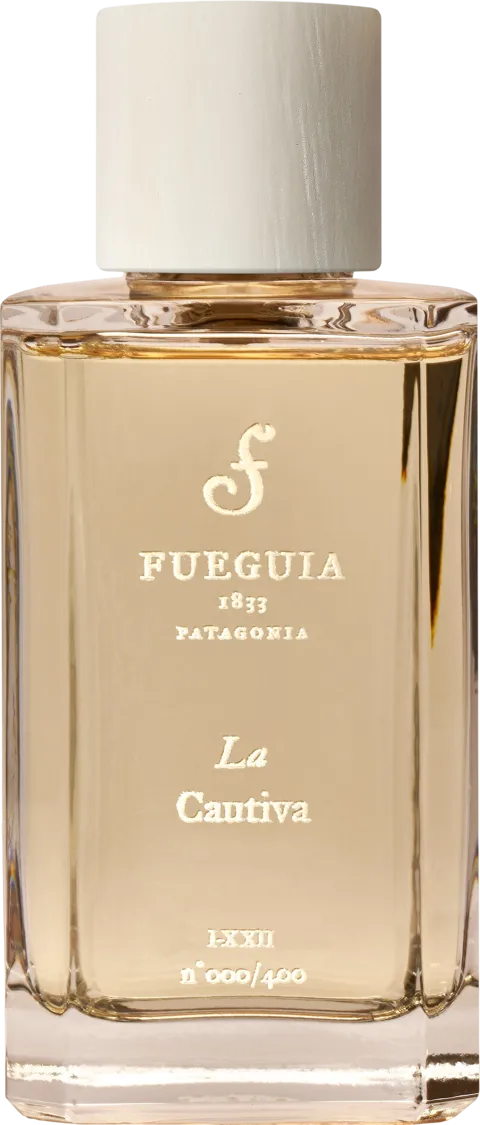
La Cautiva
FUEGUIA 1833's La Cautiva is a fruity gourmand that layers blackcurrant and vanilla over lactonic softness and musk. Its story reinterprets the idea of captivation against a historical Argentine backdrop.
#506 · 2026-10-07
Fragrance Overview and First Impression
La Cautiva was released in 2010 as part of FUEGUIA 1833's Personajes collection. The collection centers on figures and stories, and this perfume's name is tied to an Argentine historical image of captivity. The first scent cues are fruit, including blackcurrant, and the rounded sweetness of vanilla. A lactonic softness and musk sit alongside them, while the official description also identifies a fresh aspect within its gourmand character.
The standard product listing places Gourmand first and Fruit second among its scent families. That combination helps explain why the perfume can feel sweet without losing the bright edge of fruit. When sampling it, notice the balance among tartness, creamy softness, and the texture of musk. Each contributes something different to the overall impression.
The official story acknowledges older representations of violent contact between Indigenous people and settlers, as well as a civilizational opposition embedded in those accounts. It then reinterprets ‘to captivate’ as an art of mutual attraction. The perfume's inviting sweetness sits beside a name with a more difficult historical background.
Creator, Brand, and Background
Julian Bedel is identified as the founder of FUEGUIA 1833. In an interview, he described receiving a Nobel lecture by smell researcher Linda Buck from his father as an experience that helped spark his interest in scent. The official product materials supplied for La Cautiva do not credit an individual perfumer for this particular composition, so its creator relationship remains undisclosed.
Personajes is a collection about figures and their stories. Here, the older image of captivity and the reinterpretation of attraction provide the conceptual frame. That background adds another layer to a fragrance whose fruit and vanilla may otherwise seem immediately approachable.
The house identifies editions made around the same period. It also explains that the season and timing of botanical harvests can introduce variation. If you buy the perfume again, the edition printed on the product is a useful detail to compare. The brand notes that cap specifications can vary with the time of arrival, so buyers who care about the physical presentation should check the item offered to them.
Scent Analysis
The official Acorde gives three roles: Guayabo Blanco is tonic, Flor de la Noche is dominant, and Pasionaria is subdominant. These labels describe a relationship within the scent. They do not present a chronological opening, heart, and base. Together, the names point toward fruit and floral elements in the composition.
Guayabo Blanco is a name referring to white guava and offers a cue to a juicy fruit impression. Flor de la Noche means ‘flower of the night’ and is presented as the central floral note. Pasionaria is the Spanish name for passion flower. The note names do not establish the plant parts or extraction methods used in the perfume.
A separate Melodía lists vanilla, blackcurrant, musk, rose, patchouli, jasmine, and iris in that order on the Japanese official page. Blackcurrant suggests tart fruit, vanilla supplies rounded sweetness, and musk offers a soft texture. Their balance helps keep the gourmand character connected to fruit rather than sweetness alone.
Rose and jasmine suggest further floral facets, while patchouli and iris offer ways to look for a calmer texture beneath the sweetness. The official lactonic and fresh descriptions refer to the scent as a whole. Smell how these facets overlap on your skin rather than assigning every material a fixed moment of arrival.
Iris may be worth considering if you notice a dry, powdery softness. The useful question is how that possible texture relates to the fruit and vanilla. The official structure does not specify a fixed sequence in which each listed note must become perceptible.
Comparison and Positioning
Giorgio Armani's Sì Eau de Parfum offers a comparison through blackcurrant, vanilla, rose, and musk. La Cautiva emphasizes fruity sweetness with a lactonic softness and a fresh gourmand edge. Sì also lists mandarin, orange blossom, and freesia; try it if a brighter combination of citrus and flowers appeals to you. Comparing the two on skin makes the difference in floral emphasis easier to judge.
Malena, another FUEGUIA 1833 perfume, provides a comparison centered on blackcurrant. Some wearers describe Malena in greener, more leaf-like terms and La Cautiva as a sweeter gourmand. These are personal impressions rather than a guaranteed effect on every wearer. If you seek a greener fruit character, Malena is worth sampling; for rounded fruit and vanilla sweetness, begin with La Cautiva.
Lancôme's La Vie Est Belle Eau de Parfum shares vanilla, iris, and patchouli with La Cautiva, alongside a sweet gourmand character. Try La Vie Est Belle Eau de Parfum if you want powdery iris and patchouli to stand out; La Cautiva brings blackcurrant fruit, soft musk, and a fresh edge to the sweetness.
Across these three comparisons, La Cautiva's distinctive balance is tart fruit, vanilla, soft musk, and a fresh edge. Paying attention to the floral and textural details gives a more useful basis for choosing than the word ‘sweet’ alone.
Buying Guide
The Japanese official listing recorded a 30mL Perfume at ¥35,200 and a 100mL Perfume at ¥58,300. An 8mL Pura Esencia was listed at ¥58,300. A separate online-only 5mL Perfume page showed ¥4,730 and was out of stock when the source was saved on October 6, 2026. Prices, sizes, and availability can change, so check the current official listing before buying.
The Perfume ingredient label lists denatured alcohol, fragrance, and water; Pura Esencia lists fragrance. Those labels alone do not establish how the two forms differ in scent texture or wear time. Choose an available form that you can sample and a size that suits how often you expect to wear it. Edition information and cap specifications are also useful details to check when buying again or giving the fragrance as a gift.
On skin, judge how strongly the blackcurrant and vanilla register for you. Notice whether the tart side of the fruit remains clear and whether the musk feels soft. If you plan to wear the perfume in a warm or crowded setting, sampling its sweetness and reach first will help you choose a comfortable amount.
Wearing Experience and Reception
A cool evening meal or outing is a sensible setting for exploring the fruit and vanilla at a relaxed pace. Autumn and winter clothing, such as a jacket or substantial knit, offers a practical image for that setting. This is a suggestion based on the scent's character; the official product information does not give a seasonal instruction.
Wearer comments often appreciate the sweet blackcurrant, soft vanilla, and musk, although tastes differ over the sweetness and the musky facet. Reports about projection also vary. Before wearing it close to others, test how the fragrance behaves on your own skin and at the amount you intend to use.
Sweetness may feel stronger during hot daytime hours. Trying La Cautiva first in cooler conditions can help you find the balance between tart fruit, soft sweetness, and freshness. It is a useful option for someone who wants rounded vanilla with a brighter fruit character and a gentle musky texture.