Tea Storm
Louis Vuitton's Tea Storm draws on the art of Chinese tea. Bright lemongrass opens onto magnolia and rose, while a warm tea accord carries subtle impressions of hay and honey.
#497 · 2026-09-28
Fragrance Overview and First Impression
Louis Vuitton's Tea Storm takes its inspiration from a moment spent drinking Chinese tea amid the sounds of water and wind. The idea becomes a fragrance through bright plants, fresh flowers and a warmer tea accord. Although tea is the subject, lemongrass gives the opening its first burst of freshness. Magnolia and rose then add two floral textures.
The tea accord brings a woody warmth with gentle hints of hay and honey. It gives depth to the brighter materials without making the scent feel like a simple reproduction of dried tea leaves. The official key notes are lemongrass, tea accord, magnolia and Centifolia rose from Grasse. Together, they describe the main elements of the composition rather than a formal fragrance pyramid.
Perfumer, Brand and Creative Background
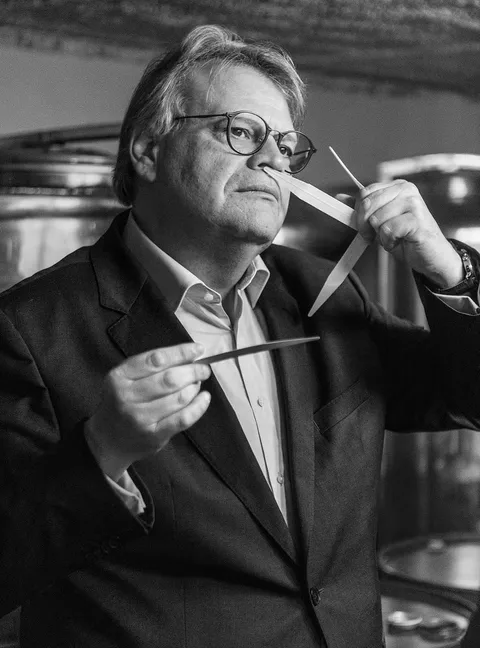
The perfumer Louis Vuitton names in connection with Tea Storm is its master perfumer, Jacques Cavallier Belletrud. Born in Grasse, he is the third generation of a perfumer family. The art of Chinese tea guided his conception of this scent.
The scene behind Tea Storm is a shared moment over tea in a landscape moved by water and wind. Cavallier Belletrud speaks of ingredients having meaning and of nature becoming culture. In the fragrance, tea suggests more than a drink: it gives the surrounding freshness and flowers a point of focus.
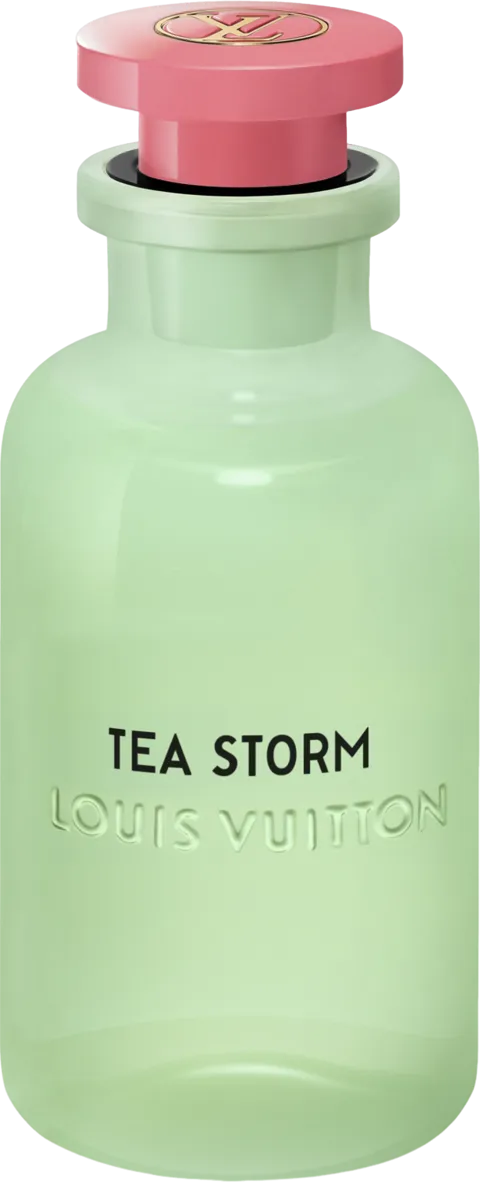
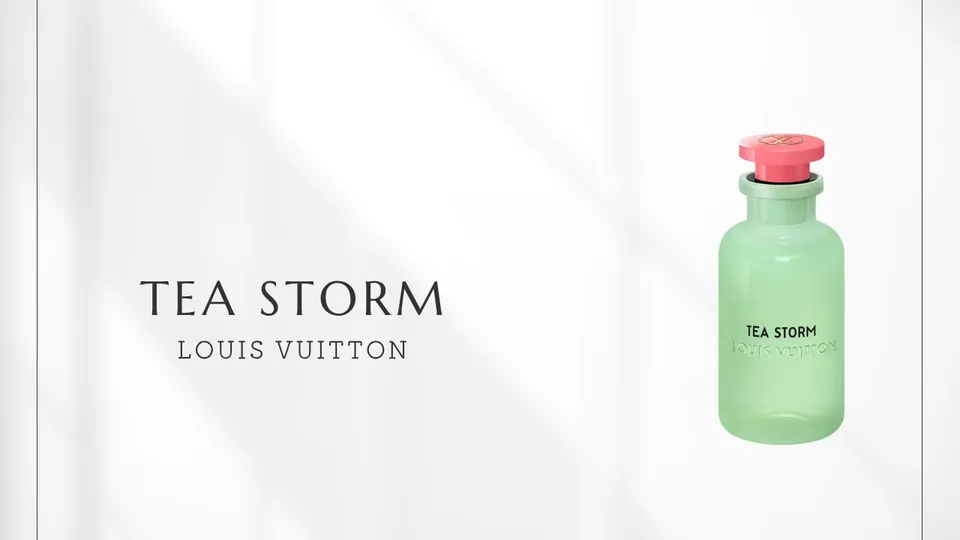
Magnolia contributes luminous freshness, while the Centifolia rose from Grasse has a softer, velvety floral quality. Louis Vuitton specifically describes carbon dioxide extraction for the rose. The house's travel heritage appears in the bottle as well. Its starting point is the apothecary-style bottle designer Marc Newson created for Louis Vuitton fragrances. For the three scents inspired by Chinese life, this shared bottle is fused with the silhouette of a Chinese snuff bottle, a small container once used for snuff. The opalescent glass shifts with the light and is paired with a coloured cap, which on Tea Storm is salmon pink.
A Closer Look at the Scent
Lemongrass gives the fragrance a crisp opening. Its lemon-like brightness has a green, grassy edge, making the first impression feel lively before the flowers come into focus. That contrast is useful when testing the scent: the opening alone does not tell the whole story.
Magnolia adds an airy, fresh floral effect. Centifolia rose from Grasse brings a gentler, velvety texture, so the flowers do not speak with the same voice. Together, they soften the transition from the sharp green opening to the warmer tea impression.
The tea accord supplies woody warmth with subtle suggestions of hay and honey. An accord is a combination arranged to create a particular scent impression. Here, the warmth gives the fragrance depth while leaving room for the brightness of lemongrass and flowers.
Louis Vuitton presents these four materials as key notes. Its description moves from lemongrass through flowers toward tea, but it does not supply a formal top, heart and base list or measured changes on skin. Allow the floral and tea facets to emerge before deciding whether the balance suits you.
Comparison and Positioning
Louis Vuitton's Imagination offers a useful comparison because it also includes a tea element. The brand describes black tea, citrus and amber in Imagination. Tea Storm instead names lemongrass, magnolia and Centifolia rose alongside its tea accord. The shared idea is tea; the clearest difference in the stated materials is Tea Storm's explicit floral presence.
Anyone considering both fragrances can use that difference as a starting point. Imagination points toward tea with citrus and amber, while Tea Storm gives flowers a larger part in its description. If fresh magnolia and soft rose sound as appealing as the tea itself, Tea Storm is the one to try on skin.
Armani Privé's Thé Yulong comes from a different house but shares a bright tea-and-citrus opening. It pairs green mandarin with green and black tea, adds restrained flowers and settles on vetiver with a dry, rooty character. Tea Storm follows its lemongrass brightness with a clear floral turn of magnolia and rose. Thé Yulong suits someone who wants crisp tea and citrus at the center; Tea Storm suits someone who wants flowers layered over the tea.
Buying Guide
Louis Vuitton lists Tea Storm as a 100 mL eau de parfum spray. The Japanese official listing shows a price of ¥50,600; price and availability should be checked at purchase. The house also describes refilling the bottle at stores equipped with its perfume fountain.
During a skin test, follow the bright lemongrass opening into the floral and tea impressions. Someone seeking a restrained, nearly flower-free tea scent may find the magnolia and rose decisive. Most wearers describe its longevity as moderate, though individual experience varies.
Wearing Experience and Occasions
Wearers mostly mention spring and summer, daytime and the office. The bright lemongrass and flowers make spring or summer daylight a sensible first setting in which to try Tea Storm. A light shirt or thin jacket fits that setting, while the tea accord contributes a quieter warmth beneath the freshness.
Some wearers enjoy the way the crisp opening meets soft flowers and calm tea. Others differ over how strongly the tea comes through. If tea is the main reason you are interested, wait until the floral phase and judge the woody warmth on your own skin. The choice becomes clearer when all three facets—green brightness, flowers and tea—have had room to appear.