Voyage d'Hermès
Cool lemon and juniper move through bitter tea into dry cedar and musk in an Eau de Toilette shaped around the alert feeling of setting out.
#475 · 2026-09-06
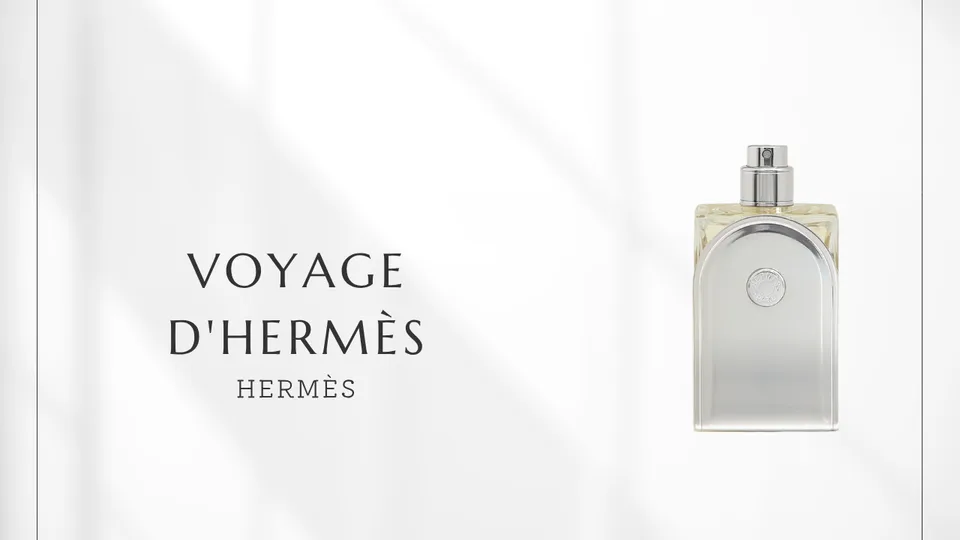
Basic Information and First Impression
Hermès Voyage d'Hermès is a 2010 Eau de Toilette composed by Jean-Claude Ellena. The house describes it as woody and fresh, and it was conceived without assigning it to a masculine or feminine category. Its subject is not a postcard from one destination. It is the alert, open feeling of leaving for somewhere not yet known.
The first impression is cool and bright. Lemon brings clear acidity, juniper berries suggest gin and dry conifer needles, and cardamom with other spices keeps the freshness taut rather than sweet. The opening feels light, but not casual or watery. A fine aromatic tension gives it shape.
Tea-like bitterness and the smell of broken green leaves gradually emerge. Floral notes remain pale and restrained, softening the green edge without becoming a sweet bouquet. Cedar and musk then move closer to the skin, leaving a clean and quietly woody trail.
That progression explains the title. Voyage is less about naming a place than about discovery, meeting, and sharing. The fragrance does not announce itself across a room; it adjusts the wearer's mood for movement.
Perfumer, Brand Background, and Creation Story
Jean-Claude Ellena served as the in-house perfumer of Hermès from 2004 to 2016. He has described perfumery as a form of writing, in which a story and the words used to tell it matter as much as accumulation of materials. His signature is selection: a small number of elements can generate many associations when enough air is left between them.
For Voyage d'Hermès he sought a fragrance held in tension. It does not specify a country, period, man, or woman. Brightness meets shadow, sharpness meets softness, and the impulse to leave meets the calm of returning. These oppositions stay inside one light composition rather than turning it dense.
The theme also connects with Hermès history. Thierry Hermès founded the house in Paris in 1837 as a harness and saddle workshop. Objects that made movement safer and more practical were therefore present at the beginning of the maison. Travel later became a broader cultural and creative theme, supported by leather craft, utility, and careful attention to materials.
In 2010, Ellena's abstract language and that practical heritage met in a fragrance. The emphasis is not the destination but the mental shift that happens at departure.
Detailed Scent Analysis
The adopted note pyramid places cardamom, Amalfi lemon, spices, and juniper berries at the top. Lemon supplies light and tartness, while juniper creates cold aromatic clarity. Cardamom and the spice accord reduce sweetness and leave a dry prickle. The opening can suggest silver light, a chilled gin glass, and the clean scent of conifer needles.
Tea, green notes, and floral notes form the middle. As citrus brightness settles, dry tea bitterness becomes easier to notice. Green notes keep the air fresh and leafy, while the floral accord rounds the edges without turning rich or sugary. The effect is a thin continuation of cool greenery rather than a conventional bouquet.
Woody notes, musk, and cedar make up the base. Cedar provides a straight, dry grain. Musk softens its hardness and brings the composition nearer to clean skin. The final impression is not warm, sweet timber; it is pale dry wood and fabric-like softness at close range.
Wear reports vary. Some people feel it move close to skin after two or three hours, while others notice it for roughly three to five hours. Projection is generally described as restrained to moderate. Begin with a normal amount and judge the cedar and musk on skin before increasing the dose.
Comparison and Positioning
Hermès Terre d'Hermès shares bright citrus and dry wood, but its mineral, earthy, and vetiver facets carry more weight. Choose Terre when flint, soil, and a stronger woody presence are the point. Voyage keeps green notes and musk lighter and closer to skin.
Bvlgari Eau Parfumée Thé Vert is a useful tea comparison. It centres transparent green tea, citrus, and quiet cleanliness. Voyage adds juniper and dry spice, making the freshness colder, sharper, and more aromatic before it reaches wood.
Penhaligon's Juniper Sling shares the gin-like coolness of juniper. Juniper Sling is brighter and more playful, with the cocktail impression in the foreground. Voyage moves through tea toward cedar and musk, so its dry wood remains quieter and nearer the wearer.
Together, the three references locate Voyage between earthy citrus, calm green tea, and sparkling gin. Its own position is the light connection between cold juniper and dry wood.
Buying Guide, Price, and Recommendation
The current Japanese official listing examined for this episode presents the Eau de Toilette in 35 mL at ¥13,860. It is made in France, carries product number V107570V0, and can be replenished with the 200 mL Eau de Toilette refill. Price, capacity, stock, and refill compatibility should be checked again on the official site when purchasing.
Philippe Mouquet designed the bottle after encountering a folding pocket magnifier. The glass body turns inside an aluminium-coloured outer frame, while the Clou de Selle saddle-stud detail serves as both visual centre and pivot. Rotating the bottle tucks the spray inside the frame and exposes it only for use, so the object was conceived for carriage as well as display.
Voyage d'Hermès Parfum followed in 2011. The Eau de Toilette stays cool, light, and dry around juniper and cedar. The Parfum turns toward juniper and milky, sweeter sandalwood in black glass, bringing more warmth and bodily presence. The choice is therefore not only about concentration: it is between daytime lightness and a warmer wooden density.
For someone drawn to cool citrus, bitter green notes, and dry woods, the Eau de Toilette is the clearest starting point. Test it on skin for three to five hours because a blotter may not reveal how quietly the cedar and musk remain.
Wearing Experience, Scenes, and Reception
Spring and early summer days are especially natural for Voyage d'Hermès. Lemon and juniper feel cool without leaving heavy sweetness, and dry cedar avoids a humid or syrupy finish. Dry days in early autumn also work well. White or ecru shirts, light knitwear, grey or navy jackets, and denim match its mobile, understated character.
Work, airports, trains, and hotels are suitable settings when the goal is to shift one's own mood without filling the surrounding space. Its restraint can be an advantage around other people. Someone looking for a large outdoor trail may find it too quiet.
Wearer impressions tend to divide along that same line. Admirers call it elegant, transparent, calm, and easy to place. Critics may find it weak or compare its dryness with paper. Associations range from forest air and lemon tea to soap and gin, fitting a fragrance deliberately left open to more than one landscape.
Do not judge it from the lemon alone. Follow the bitter tea and the dry wood on skin. The deciding question is whether the fine tension inside its lightness feels purposeful or simply too quiet.