L’Heure Bleue Eau de Parfum
Released nationwide in Japan on 28 August 2026, this floral amber moves from an airy Ozonic Accord through luminous Iris Tincture and Iris Butter into enveloping Vanilla. It shares the blue-hour theme of Guerlain’s 1912 fragrance but is not a revival or reformulation.
#466 · 2026-08-28
Fragrance Overview and First Impression
Released nationwide in Japan on 28 August 2026, Guerlain L’Heure Bleue Eau de Parfum is a floral amber fragrance inspired by the blue hour, the brief interval when the sky deepens between day and night or between night and morning. It does not recreate the 1912 composition. It is an independent fragrance that returns to the same natural phenomenon with a contemporary palette.
Its first impression is a contrast between cool transparency and soft warmth. Air seems to move through the opening, iris introduces a velvet-like touch, and vanilla brings the fragrance back toward intimate skin warmth. Cool air and warm skin, clarity and softness, remain visible at the same time.
In color, the effect moves from deep blue toward a paler illuminated blue. In temperature, it travels from cool air to body warmth. Testing a small amount on skin is especially useful when other people will be close.
Creator and Brand Background
The perfumer is Delphine Jelk, Guerlain Perfumer and Fragrance Creation Director. She joined the house in 2014 and was appointed a Chevalier of France’s Order of Arts and Letters in 2021.
Her official profile describes a creative approach that uses contrast and tension to shape rounded, warm, inviting fragrances. Iris, musk, powdery textures, vanilla, almond, and milky notes are among the materials and effects associated with her work. For this fragrance, she placed a cool ozonic opening against that warmer territory.
The composition is built around strength, softness, and intimacy existing together. Ozone opens outward, while iris and vanilla draw the fragrance closer to the body. Keeping those opposing movements active, rather than smoothing them into one temperature, gives the perfume its particular tension.
The Iris Tincture at the heart was developed specifically for this project. Guerlain chief executive Gabrielle Saint-Genis has described it as a world-first initiative and characterized its effect as bright, light, and crystalline.
Detailed Scent Analysis
The official structure is a three-stage opening, heart, and base pyramid. The opening is an airy Ozonic Accord. It suggests moving air and a widening field of view more than a literal body of water. In the interview, Saint-Genis explained that Cascalone contributes faint impressions of sea, salt, and ozone. Cascalone is production context, not an additional official display note.
The heart combines Iris Tincture and Iris Butter. Guerlain presents the pairing as a way to approach the iris flower as a whole and describes the resulting texture as velvety. In the same interview, Saint-Genis characterized the tincture as bright, light, and crystal-like. Together, the two iris materials carry the fragrance from cool open air toward the softness of fabric against skin.
The base is enveloping Vanilla. Official language connects it with sensual warmth and an afterimage in which strength, softness, and intimacy coexist. The cold openness of the beginning settles closer to body temperature without simply erasing the earlier transparency.
These stages do not switch at a fixed number of minutes. Development speed depends on skin and environment. The useful test is to follow the changing ratio of ozonic coolness, iris softness, and vanilla warmth, noting where they overlap and which texture remains longest.
The ozonic opening need not disappear the moment the heart becomes noticeable, and vanilla need not cover the transparent effect immediately. The period in which coolness and warmth coexist is where the fragrance’s tension and rounded quality can be perceived together.
Comparisons and Positioning
The central comparison is Guerlain’s L’Heure Bleue 1912. Both fragrances share the blue-hour theme, iris, vanilla, an interest in tenderness, and the memory of an inverted-heart bottle. Those common references do not make their olfactory structures interchangeable.
The currently presented 1912 structure brings together anise and bergamot, carnation and neroli, then iris, vanilla, benzoin, and tonka bean. Its spices, flowers, and resins create powdery amber warmth. It remains the choice for someone seeking the historical composition itself.
Aqua Allegoria Forte Bosca Vanilla Forte centers on Bergamot, Immortelle, Driftwood Accord, and Vanilla. Salty air and vanilla create a point of contact, while L’Heure Bleue Eau de Parfum makes its two iris materials the center of the composition.
L’Art & La Matière Iris Pallida Extrait 6 narrows its focus to Iris Butter, Almond, and Musk, creating a soft powdery effect. L’Heure Bleue Eau de Parfum places ozonic coolness before the iris and leaves Vanilla warmth at the end.
The 2026 fragrance uses an Ozonic Accord, Iris Tincture, Iris Butter, and Vanilla as its official pyramid. Cool transparency leads, while iris is wrapped in warmth. It is better understood as a present-day interpretation for someone drawn to the contrast between ozone and luminous iris.
Delphine Jelk’s fragrance is not a concentration variation or a reformulation of the 1912 perfume. The two products are intended to coexist. The choice is not which one is superior, but which temperature and texture of the same blue-hour idea a wearer wants to experience.
Buying Guide, Price, and Suitability
The fragrance launched nationwide in Japan on 28 August 2026. At launch, the official Japanese prices were JPY 12,320 for 30 mL, JPY 17,600 for 50 mL, and JPY 30,800 for a 200 mL refill, all including tax. The bottle is refillable. Price, stock, and available sizes can change, so current conditions should be checked on the official product page before purchase.
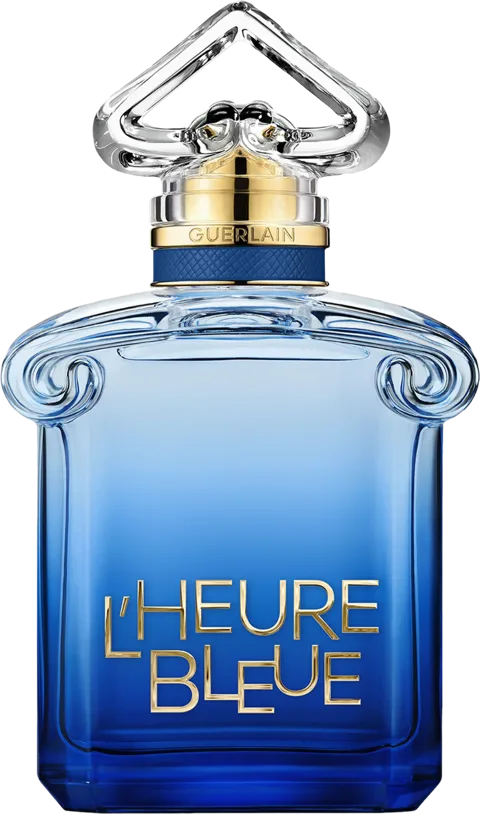
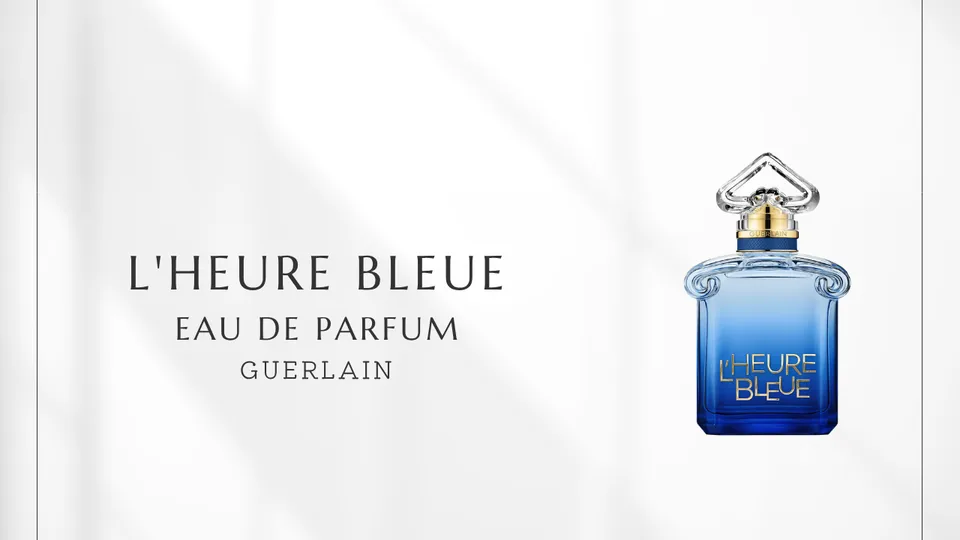
The bottle reinterprets the inverted-heart outline associated with the 1912 fragrance. A blue gradient evokes the changing sky, with gold lettering and a blue ring at the neck. The design keeps a remembered silhouette while placing a distinctly 2026 blue inside it.
It is a plausible match for someone who enjoys the contrast of ozonic coolness, soft iris, and warm vanilla. It may be less comfortable for a wearer who dislikes ozone and vanilla together. The decisive question is whether cool air and sweetness feel balanced or opposed on the wearer’s skin.
A useful trial should continue beyond the first ozonic impression. Wait for the iris to soften the center and for vanilla to approach skin warmth. Following the movement from transparent opening to warm drydown, and observing how far it travels at work or on public transport, gives a better basis for a purchase decision than a blotter’s first few minutes.
Wearing Experience and Settings
Spring and early autumn mornings or evenings are suitable starting points for exploring the temperature contrast. The blue hour occurs both around dusk and before dawn, so the concept does not make this a night-only perfume. The fragrance had just launched nationwide in Japan on 28 August 2026, leaving little evidence from a full Japanese summer. Because Vanilla remains in the drydown, begin with spring or early-autumn mornings and evenings rather than the middle of a hot summer day.
Quiet outings and open places offer room to observe diffusion. White, pale gray, and deep blue clothing, especially light shirts or soft fabric, echo the air, iris, and bottle gradient without becoming a dress code. Given the meeting-room example in an early overseas review, a small starting amount is sensible in workplaces, restaurants, and public transport.
Some wearers describe a transparent, gentle fragrance that lasts, while others dislike the combination of ozone and vanilla. One report describes eight to ten hours on skin and fragrance remaining on clothing until the day after next. It is a notably long-lasting example.
Begin with a small amount of the fragrance alone. Observe whether ozonic coolness, the two iris materials, or vanilla warmth lasts longest. Following its own sequence of ozone, iris, and vanilla makes it easier to notice how the blue-hour effect moves from cold air toward body warmth.