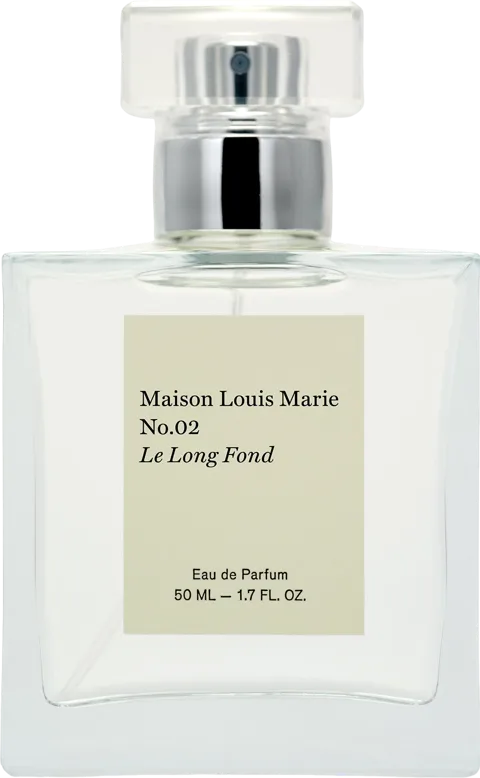
No.02 Le Long Fond
A light, skin-close woody fragrance that layers damp earth and soft white musk beneath bright, dry hinoki. Its name comes from the family nursery that remains active in Belgium and is sometimes introduced in Japan with the familiar term botanical garden.
#465 · 2026-08-27

Fragrance Overview and First Impression
Maison Louis Marie No.02 Le Long Fond Eau de Parfum is a woody fragrance built around Hinoki Wood, Cedarwood, Patchouli, and White Musk. The spray is offered in 50 mL and 10 mL sizes, while the same scent name also appears across perfume oil, candles, and body products.
In Japan, the name is sometimes introduced with the familiar term "botanical garden." The brand's original English uses "nursery," meaning a working place where young trees and plants are raised. Le Long Fond is a real family nursery in Belgium, founded by the creator's grandfather and still active today.
The first impression is bright, dry wood. Some wearers compare it with freshly cut lumber, new wooden furniture, or a hinoki bath. Yet this is not a literal single-note portrait. Cedarwood adds a dry core, Patchouli brings soil, and White Musk turns the scene back toward clean skin.
In one sentence: bright, dry hinoki made lighter with earth and soft musk. It is an approachable choice for someone who wants luminous wood at an intimate distance without a heavy emphasis on smoke or spice.
Creator and Brand Background
No individual perfumer credit is published for No.02 Le Long Fond. Founder Marie du Petit Thouars has described shaping fragrance ideas and direction before working with laboratory technicians on the components. That describes the house's working method; it does not establish this fragrance as her solo composition.
Du Petit Thouars worked in fashion editing and photography before making candles at her Los Angeles home. As requests for those candles increased, the small home practice developed into Maison Louis Marie.
Le Long Fond is the name of the family's nursery, a real place connected with the founder's childhood memories. The fragrance does not literally recreate Belgian vegetation. Instead, bright hinoki, damp earth, and soft musk express the stillness of the place and the memory attached to it.
The bottle follows the house's restrained visual language: clear rectangular bottle, a plain white label, and a dark cylindrical cap that place the number and name at the center. The outer box is described as 100% FSC-certified paper, and the brand directs customers to Pact collection points for the spray component.
Detailed Scent Analysis
The official structure is a three-stage pyramid. Hinoki Wood appears on top. At first it can suggest crisp conifer, freshly cut wood, or a new wooden desk. Some wearers also perceive an ink-like dryness or a green botanical edge.
Cedarwood and Patchouli form the heart. Cedarwood supplies the grain and structural line of the wood, while Patchouli introduces soil, roots, and a trace of dampness. Wood may lead indoors or on fabric; outdoors or in humidity, green vegetation and earth may become clearer. The image expands from one piece of timber to the ground of a nursery.
White Musk forms the base. It rounds the edges of wood and soil, settling into pale sweetness, powder, and clean skin. Some people read this calm as incense-like, while others find the final stage very quiet. The brand does not identify specific musk molecules or a formula. The point is to observe how the stated White Musk softens the woods.
The changes are gradual rather than theatrical. Focus moves from bright hinoki to dry cedar, earthy patchouli, and skin-close musk. In color, the path runs from pale wood through earth tones to translucent white; in temperature, it moves from a cool opening toward faint warmth.
Comparisons and Positioning
Comme des Garçons Hinoki shares the themes of hinoki, wood, stillness, and meditation. Its cypress, camphor, pine, incense, moss, and vetiver lead toward cold resin and smoke. No.02 Le Long Fond instead moves into patchouli earth and soft white musk. The choice is between coniferous smoke and depth, or brighter wood worn closer to skin.
5W1H 09 WOOD also uses hinoki and patchouli to show the shadows of timber. Bergamot, cardamom, black pepper, saffron, leather, and hiba give 09 WOOD greater spicy and leathery thickness. No.02 uses four stated notes and feels more transparent and quiet. One emphasizes leather and spice; the other suggests morning light in a nursery.
Aesop Hwyl likewise explores forest, conifers, and quiet time. Hwyl centers cypress, frankincense, vetiver, and darker smoke. No.02 has brighter hinoki and softer white musk, making it lighter and more intimate. Choose Hwyl for a dark night forest and smoke, or No.02 for filtered daylight and a gentle skin scent.
Across these three comparisons, No.02 occupies the position of light wood, earth, and musk rather than cold smoke, leather, or spice. It suits someone who wants to keep a clear woody impression close to the body.
Buying Guide
The subject here is the alcohol-based eau de parfum spray. It comes in 50 mL and 10 mL sizes. Prices, stock, and shipping vary by region and date, so the official product page is the right place to confirm current conditions.
The perfume oil with the same name is a plant-oil roll-on containing safflower oil, sunflower oil, and rosemary leaf extract. It is available in 15 mL and 3 mL sizes and is designed to remain close to the application point. The spray opens into the surrounding air; the oil stays nearer the skin. Neither format is inherently superior. They differ in base and distance.
The brand also suggests layering the two formats for more depth and persistence. A first-time wearer will learn more by trying each alone before combining them. Test on skin and wait beyond the initial hinoki into Cedarwood, Patchouli, and White Musk.
This fragrance suits people who want wood in everyday life without cold smoke or dense spice. Those seeking a literal hinoki bath, strong projection, or guaranteed long performance should follow the full development on their own skin before buying.
Wearing Experience and Settings
In spring, green wood and damp soil can fit new leaves and air after rain. In early summer or the rainy season, hinoki freshness and patchouli moisture may feel especially coherent. Autumn gives dry cedar, soil, and the faint warmth of white musk a natural setting. In hot, humid weather, some people may perceive the musk sweetness or the sharp opening more strongly. This is a season to check the fragrance intensity on your own skin.
Quiet workplaces, bookstores, galleries, home offices, reading, garden walks, and calm meals suit its intimate scale. White shirts, undyed linen, olive, light gray, and navy echo the natural materials and pale neutral colors suggested by the scent. It feels more at home from morning through daytime, or during a quiet evening, than in a loudly glamorous night.
Wear reports vary. Many describe close projection, while some find moderate diffusion. Longevity ranges from early fading through a musk transition after two or three hours to traces that remain all day. Skin, fabric, weather, and location can change whether wood, green plants, or earth comes forward. Fixed promises are less useful here than observing the fragrance in the wearer's own environment.
Supporters praise the clean impression of a hinoki bath, new furniture, or a log house, along with low sweetness and everyday ease. Critics can find the opening sharp, the development limited, or the final presence too quiet. The deciding question is whether the wearer wants literal hinoki or the gradual movement from bright wood to earth and soft musk.