Chergui
Named after the hot, dry wind that blows across Morocco, Chergui combines immortelle, Russian leather, and hay in a sweet amber marked by dry smoke, gentle bitterness, and powder.
#462 · 2026-08-24
Basic Information and First Impression
Serge Lutens Chergui is an Eau de Parfum first introduced in 2001 as an exclusive at the Serge Lutens salon in the Palais Royal, Paris. It now belongs to Collection Noire and is offered in 50 ml and 100 ml sprays. Its name comes from the hot, dry wind that blows across Morocco.
The official key notes are immortelle, Russian leather, and hay. Rather than bright citrus or watery flowers, they suggest plants dried by intense sun, leather marked by wind and sand, and concentrated sweetness recalling honey and resin. Its visual reference is consistently amber. Its center is warm, although some wearers notice a cool herbal or camphor-like edge at the opening.
In the shortest practical description, it is a sweet amber led by dry smoke and powder. Immortelle adds bittersweet warmth, hay supplies dry fiber, and Russian leather brings the smoky shadow, so the fragrance is not merely sweet.
Perfumer, Brand Background, and Creation Story
Chergui is credited to Christopher Sheldrake. In an interview, he said that he studied mathematics, physics, and art and originally intended to become an architect. A visit to Grasse to learn French changed his direction and drew him into perfumery.
Sheldrake spent many years at Quest International before moving into research and development at Chanel. He has spoken about the creator's freedom to decide what will finally be shown in a fragrance. That emphasis on selection helps explain the clarity of Chergui's three-material frame.
An architect's interest in space offers a useful way to understand this dense perfume. Hay, leather, and sweet resin do not fill every gap. Dryness and a cool herbal edge create an opening, leather introduces shadow, and powdery softness deepens the warm amber.
Serge Lutens supplies a story that is more specific than a general image of the exotic. A Moroccan wind lifts plants, insects, and twigs, removes moisture during the day, and leaves a sweet memory at night. Physical severity becomes olfactory concentration.
Detailed Scent Analysis
The official structure is not a top, middle, and base pyramid. Immortelle, Russian leather, and hay are presented as three key notes without an official order. That arrangement does not prescribe timing, and the way the fragrance moves on skin varies from person to person.
Immortelle can suggest dry herbs, honey, and maple-like bittersweet warmth. It connects a sun-dried floral character with the concentrated impression of sap and resin. Some skin brings out a cool camphor or mint-like stimulus near the beginning, opening a small current of air through the warmth.
Russian leather is less like a polished bright accessory than leather shaded by dry smoke and dark wood. This depth helps explain why wearers may think of tobacco or incense. Tobacco is not one of the official key notes; the impression emerges from the meeting of leather, grass, honeyed warmth, and smoke.
Hay is not the freshness of newly cut green grass. It is dry fiber, powder, and pale sweetness after moisture has been lost in the sun. It links immortelle's honeyed facet to the shadow of leather, allowing air to move through a rich amber.
Some wearers notice grass or medicinal herbs first, then leather and tobacco-like darkness, and later honey, amber, or powder. Others receive sweetness immediately or focus on an iris-like softness. The point is not to hunt for one named material but to follow the balance among dryness, honey, smoke, and powder.
Comparison and Positioning
Serge Lutens Ambre Sultan shares resin, amber, and warm sweetness. Ambre Sultan focuses more directly on the density of amber and herbs. Chergui lets hay, immortelle, and leather remove moisture and open a dry current inside the sweetness. The choice is between concentrated resin and a broader landscape of grass and honey.
Dior Tobacolor shares a honeyed, tobacco-like, smoky amber direction. Tobacolor brings a brighter impression resembling plum or peach. Chergui has more hay, powder, leather, and resinous shadow, making its sweetness feel drier. One is a more radiant tobacco with fruit; the other is grass and leather dried by wind.
Chanel Cuir de Russie shares smoky leather, amber warmth, and floral softness. Cuir de Russie suggests polished classical leather with white flowers and a dressed-up character. Chergui places leather beside hay, honey, and desert dust. The decision is between formal leather and leather embedded in a landscape.
Together, the three comparisons clarify Chergui's position. It is not only dense amber, fruity tobacco, or polished leather. It is for someone who wants sweetness intensified by drying, expressed through grass, honey, smoke, and powder.
Buying Guide, Price, and Recommendation
Chergui began in 2001 as an exclusive at the Serge Lutens salon in the Palais Royal, Paris. Export opportunities appeared during the 2000s, and it was reported to have joined the regular French and international collection in 2009. The current Collection Noire Eau de Parfum is offered as 50 ml and 100 ml sprays.
An official Japanese document from 2023 also recorded a 25 ml oil fragrance. Its container and method of use differ from the current sprays. Bell jars, earlier sprays, and the current rectangular bottle show changes in presentation and distribution. The timing and nature of any formula changes between older and current bottles have not been published, so appearance and age alone should not be used to predict strength.
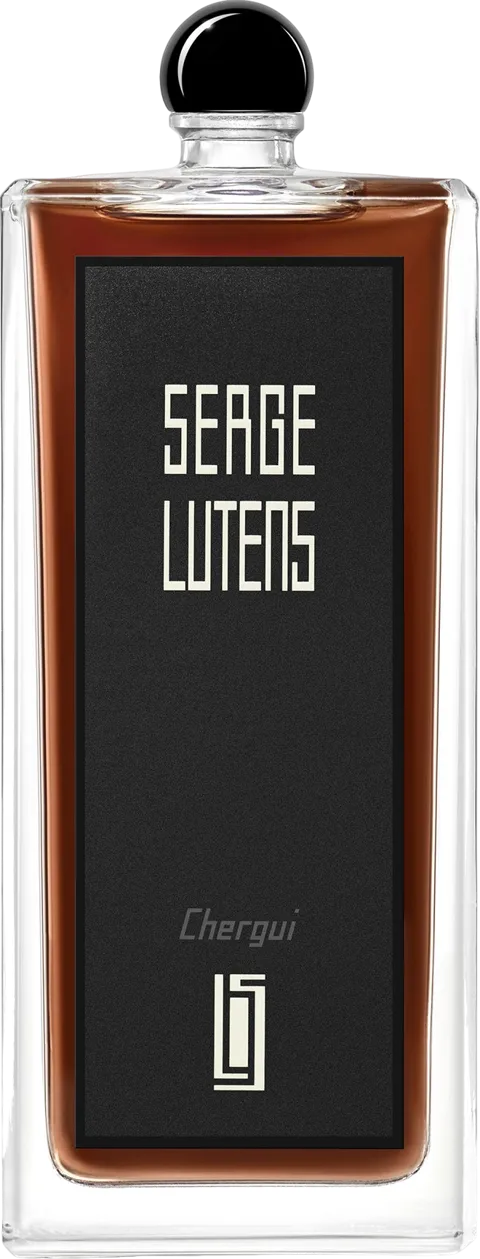
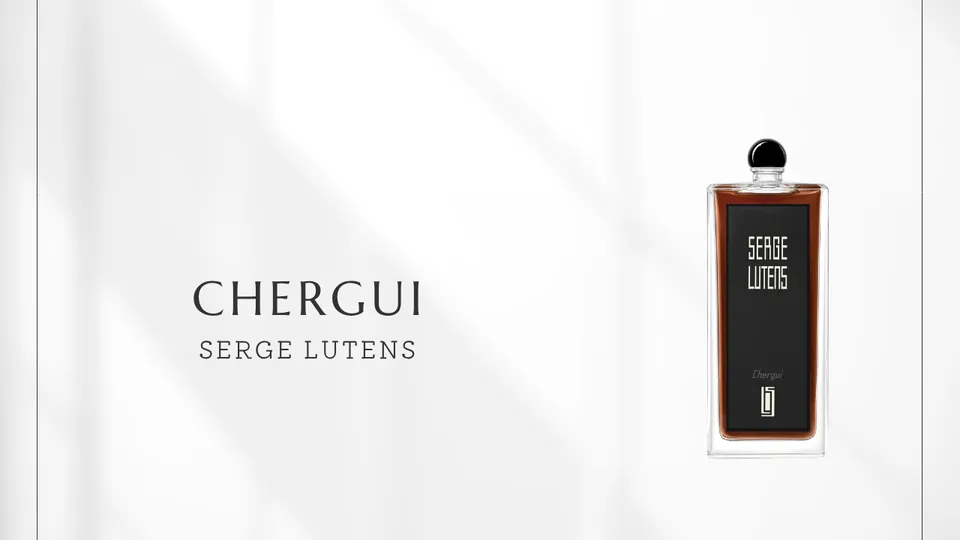
The current bottle is a clear rectangular block with a black cylindrical cap and a white label framed in black. The house describes the design as minimal, linear, angular, and uncompromising, allowing the richness of the fragrance to stand forward. The exterior is quiet and nearly colorless; the amber-colored liquid supplies the visible warmth.
Price, size, and availability vary by region and date. Check the current official listing before purchase. A full skin test is preferable before choosing a large bottle. Expectations based only on honey or tobacco can miss the powder of hay, medicinal-herbal edge, and darker leather.
Wearing Experience, Scenes, and Reputation
Autumn and winter make the amber, leather, and hay easier to follow. Some people enjoy the way it opens in dry heat, but Japanese midsummer humidity can make sweetness and powder feel heavier. If worn on a hot day, begin with a very small amount outdoors. Evening reading, a quiet dinner, or a small gathering suits a fragrance best understood at close range.
Coats, knitwear, and subdued colors fit its texture. In workplaces, restaurants, and public transport, one spray is a sensible starting point because projection can be strong. Community experience trends from moderate to long longevity and moderate to strong projection, yet individual reports range from becoming quiet after about two hours to remaining present for more than ten.
Positive responses mention honeyed tobacco warmth, dry hay and leather, a long trail, and an enveloping autumn-winter character. Critical responses mention powder, medicinal herbs, camphor, or hay-like roughness. Both attraction and discomfort grow from the same meeting of dry plants and sweet resin.
Do not decide from a paper strip at the opening, where the hay may appear sharp. Apply a small amount to skin and wait at least twenty minutes, preferably checking again several hours later. Notice whether dry grass deepens into honeyed amber or whether powder and leather remain in front. The story of the Moroccan wind is completed differently on each wearer.