Capri
19-69 Capri is an eau de parfum moving from bitter orange, juniper, and spice into green flowers, musk, and orris. Its island scene is shaped by cliffs and sea air as much as Mediterranean light.
#450 · 2026-08-12
Basic Information and First Impression
Capri by 19-69 is a 2017 eau de parfum inspired by the Italian island. It does not smell like sweet orange juice or a placid beach: bitter peel and mandarin leaf arrive with juniper and two peppers, followed by flowers and a clean musk finish.
The brand describes the fragrance as edgy, fresh, light, and comforting. Its brightness comes with dry vegetation, warm stone, and the chill of sea air. Red, blue, and white—colors drawn from the film *Contempt*—give the scent a sharper frame than the usual Mediterranean postcard.
Official sizes are 9 ml, 30 ml, and 100 ml. At the time of research, the brand listed them at €25, €75, and €185 respectively. The Japanese launch price recorded in 2020 was ¥23,000 before tax for 100 ml; that is a historical price, not a current retail quote.
Perfumer, Brand Background, and Creation Story
French perfumer Amélie Bourgeois composed Capri. She is also known for fragrances including Rouge Smoking for BDK Parfums and Suma Oriental for Une Nuit Nomade. Here, bitter citrus and dry spice give way to a green floral heart and a quiet musky base.
19-69 was founded by Swedish artist and product developer Johan Bergelin. The name refers both to his birth year and to the freedom, tolerance, and counterculture associated with the late 1960s and early 1970s. The house often begins with a period, place, or cultural memory and translates it into scent.
Capri takes inspiration from Jean-Luc Godard's 1963 film *Contempt*, shot on the island. Villa Malaparte, olive groves, blue sky, afternoon wind, flowering orange trees, and sun-warmed rock all belong to its setting. The film's red, blue, and white reappear as citrus heat, cool sea air, and pale flowers with musk.
Detailed Scent Analysis
**Top**
Bitter orange, mandarin orange, mandarin leaf, and sweet orange open the fragrance, joined by juniper berries, chamomile, pink pepper, Sichuan pepper, and cardamom. Peel and leaf matter more than juice. Juniper and pepper restrain the sweetness and leave a dry, brisk spice.
**Middle**
Osmanthus, galbanum, ylang-ylang, and jasmine emerge as the citrus softens. Galbanum keeps the green bitterness of cut stems and leaves, while jasmine and ylang-ylang temper the opening without becoming lush or heavy.
**Base**
White musk and ambroxan settle beside angelica and orris. The finish is clean, lightly powdery, and still dry rather than sweet. Longevity and projection vary by skin: some wearers find it almost cologne-like, while others report that it lasts well in heat, so it is worth waiting for the floral and musky stages before applying more.
Comparison and Positioning
Acqua di Parma Arancia di Capri also pairs the island with orange, mandarin, cardamom, and musk. It moves from sweet orange and lemon toward caramel and musk, giving it a rounder, more relaxed character. Choose Arancia di Capri for sweet juice; choose Capri for dry peel, leaf, and bitter green notes.
Diptyque Oyédo sharpens yuzu and green mandarin with thyme and raspberry. Capri begins with a similar citrus edge, then continues into osmanthus, ylang-ylang, and white musk. Oyédo keeps the citrus in focus, while Capri offers a longer transition from bitter orange to flowers and musk.
Within the same house, Yes Please! emphasizes cucumber, rosemary, thyme, lemon, and woody amyris. It favors cool herbs and dry wood; Capri favors bitter orange and pale flowers.
Buying Guide, Price, and Recommendation
The 9 ml, 30 ml, and 100 ml bottles contain the same eau de parfum. Since opinions on longevity differ, the smaller sizes offer a practical way to follow the fragrance from bitter citrus through musk before committing to 100 ml. Check the official store or an authorized retailer for current prices, stock, and regional availability.
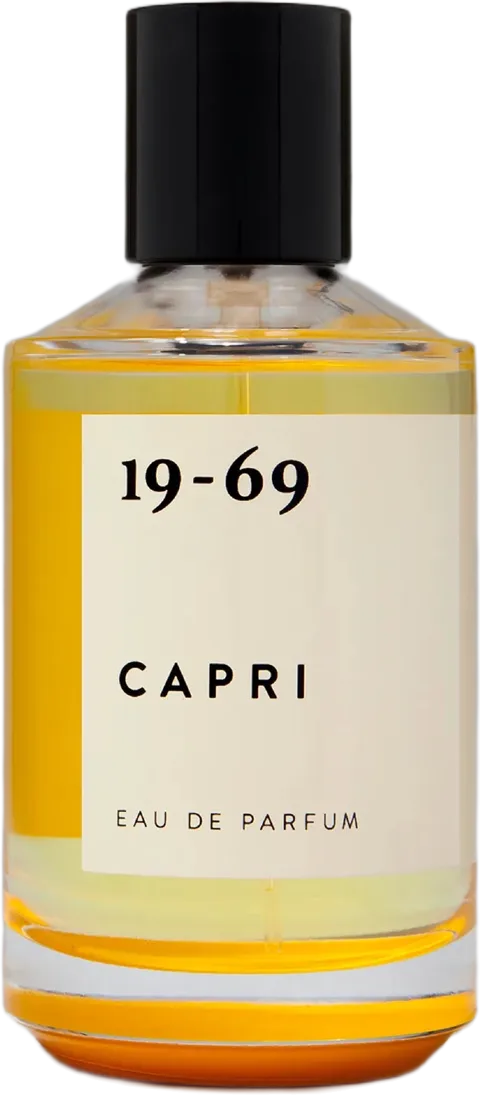
The clear rectangular bottle holds yellow-orange liquid beneath a white label and black cylindrical cap. The glass is painted and screen-printed in Italy, then finished by hand, so small variations are part of the object. It suits people who want citrus with bitter peel, juniper, pepper, and galbanum rather than a consistently juicy orange.
Wearing Experience, Scenes, and Reputation
Late spring through early autumn, especially during the day, is the easiest setting. Start lightly in midsummer and wait for the orange peel to soften into flowers and musk before adding more. A white shirt or light linen works naturally with its contrast of warm citrus and cool sea air.
Positive impressions often mention an orange grove, grapefruit-like tartness, pepper, galbanum, and an ambroxan trail. More divided reactions concern the shift toward soap or body cream and the fragrance's light projection. Bergelin's own scene also includes a white linen suit, a red sports car, Brigitte Bardot's blue headband, Aristotle Onassis's yacht, and ice clinking beside lemon and sparkling water—small sounds and colors that keep this Capri from becoming a generic resort scent.