Pimento leaf
Natural essential oil from allspice leaves, rich in eugenol, used as a powerful spicy base note and cost‑effective eugenol source in carnation accords, oriental bases, and bay‑rum‑style compositions.
Spicy
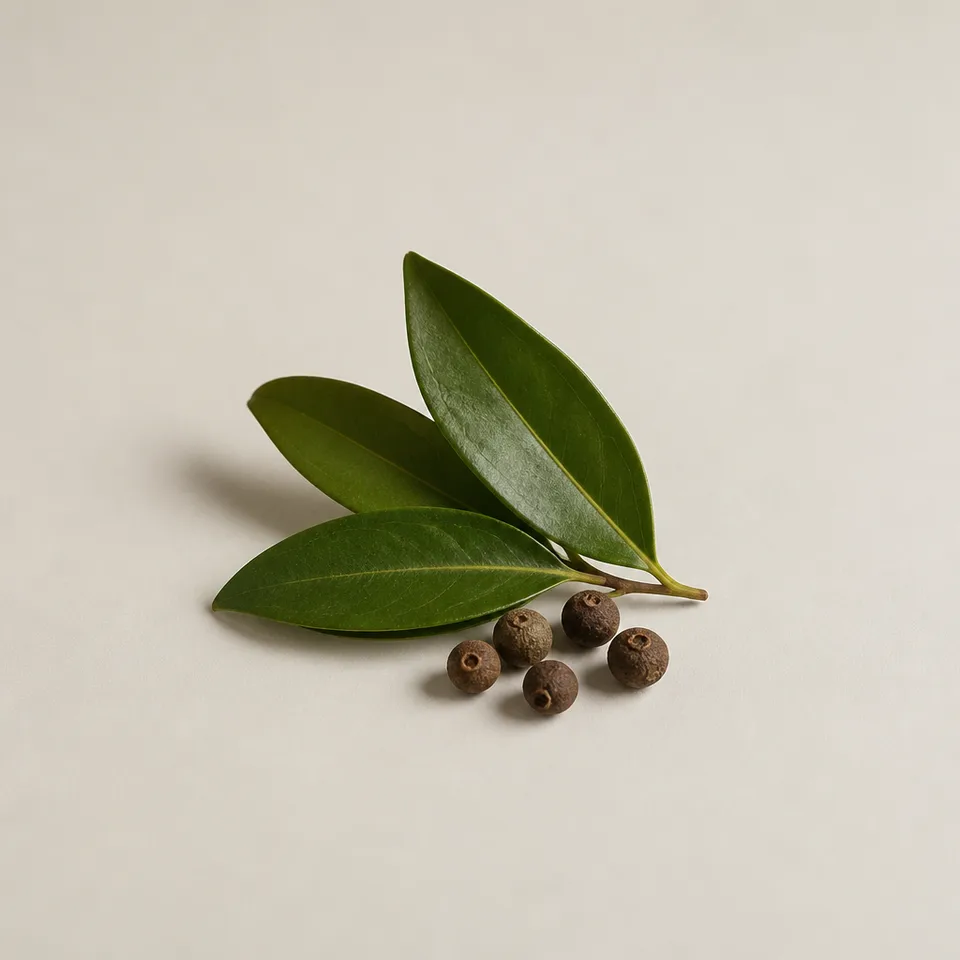
Pimento leaf
Pimento leaf is the **essential oil obtained from the leaves of allspice trees**, primarily *Pimenta racemosa* and related *Pimenta* species, by steam distillation. Each dried leaf yields roughly 0.7–2.9% of a brownish‑yellow essential oil known as pimento leaf oil. It is a **natural perfumery material**, not a synthetic aroma chemical or proprietary accord. The oil is rich in **phenolic components**, especially eugenol, which can reach very high proportions compared with the better‑known berry (allspice) oil. Pimento leaf oil is used in fragrance, cosmetics, and flavor applications, where it acts both as a perfuming agent and a flavoring ingredient in small doses. Because it contains IFRA‑restricted constituents such as eugenol and methyl eugenol, its use is subject to strict concentration limits in finished products.
Scent profile
Pimento leaf oil has a **warm, spicy‑aromatic odour** dominated by clove‑like eugenolic facets, often described as more raw, pungent and less nuanced than the berry oil. Leaf oil is characterized by a higher eugenol percentage (about 80–96%) and a correspondingly flatter, more linear profile compared with the terpene‑rich allspice berry oil that smells closer to the culinary spice blend of clove, cinnamon and nutmeg. Perfumery sources describe it as a **base‑to‑heart note**: spicy, slightly medicinal, with leafy‑green and warm, clean qualities that recall West Indian bay and traditional bay rum preparations. The secondary constituents (such as methyl eugenol and minor sesquiterpenes) support a dense, structural spice impression rather than an airy top‑note effect, which makes the material read as a strong eugenol “driver” more than a complex gourmand spice.
Perfumery use
In perfumery, pimento leaf oil functions mainly as a **cost‑effective natural source of eugenol** and related phenolic spice tone. It is classed as a **base note** spice and used in small amounts to construct carnation accords, oriental bases, and spicy‑floral or fougère compositions that need warm backbone without relying solely on synthetic eugenol. Compared with pimento berry oil, the leaf material is chosen when a straightforward clove‑type structure is required or budget is constrained, while berry oil is preferred where the full allspice complexity is desired. The oil also appears in traditional **bay rum‑style aftershaves and hair lotions**, where its antibacterial and warming aromatic properties are valued. IFRA and RIFM restrictions on eugenol and methyl eugenol tightly cap its dosage in fine fragrance and cosmetic products, so pimento leaf is typically used as a precise accent or structural modifier rather than a high‑volume ingredient.