Miracle Berry
A West African fruit from *Synsepalum dulcificum* known for miraculin, a taste-modifying glycoprotein rather than a defined perfumery odor material.
Aromatic
About Miracle Berry
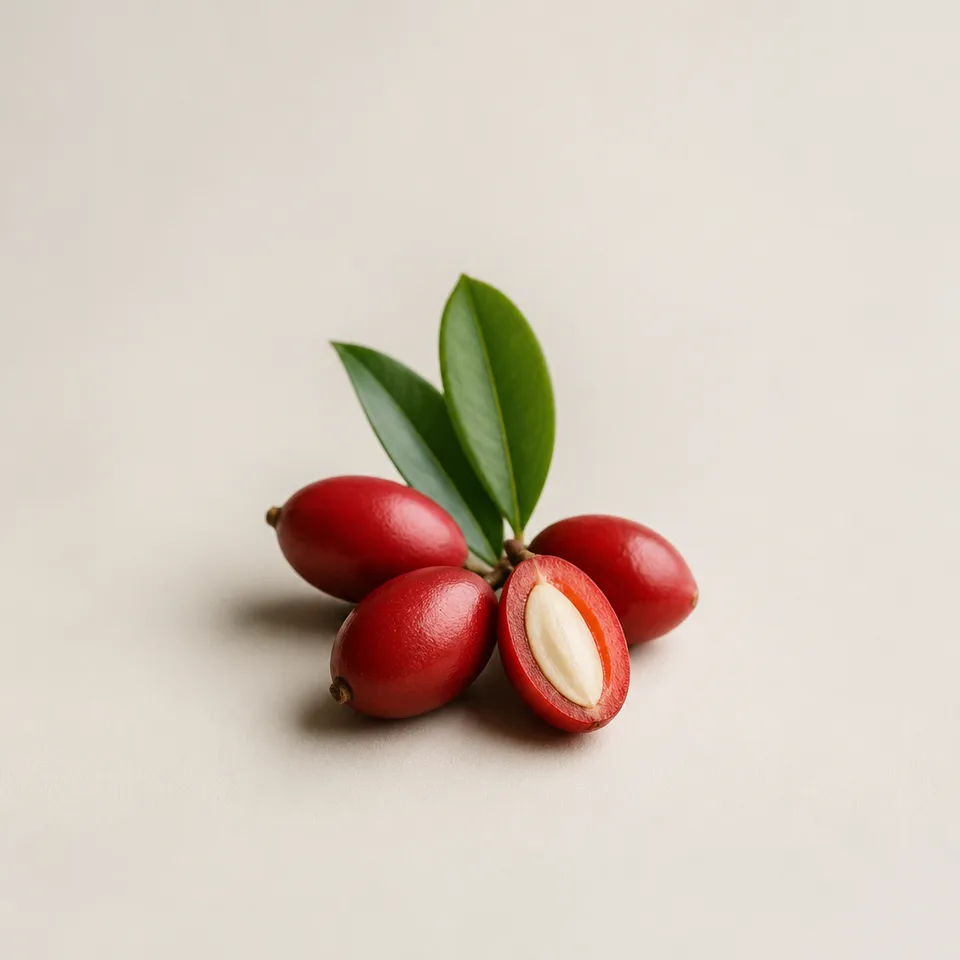
Miracle Berry is the edible fruit of *Synsepalum dulcificum*, an evergreen shrub native to West Africa and placed in the Sapotaceae family. It is not a perfumery captive, synthetic aroma chemical, or aroma-material name used for a defined odor molecule; in fragrance contexts, the name refers to the fruit’s taste-altering reputation rather than a standard odorant profile.
Scent Profile
On its own, the fruit is described as only mildly sweet or nearly flavorless, with no established perfumery odor profile in the sources reviewed. For an encyclopedia entry, the most accurate way to classify it is as a natural botanical material with a *taste-modifying* effect, not as a scent ingredient defined by a characteristic olfactory note.
Use in Perfumery
Because miracle berry is known for making sour foods taste sweet after consumption, it is more relevant to flavor and sensory science than to perfume formulation. I could not verify any conventional perfumery uses, extraction norms, or fragrance-building roles from the provided sources, so it should not be presented as a reconstructed accord or a standard aroma chemical.
Did You Know?
Its active protein, miraculin, binds to taste receptors and alters perception in acidic conditions, with effects often lasting around 30 minutes to two hours.