Madras Wood
A trade-name woody accord used as a base-note styling element; publicly available sources do not establish a single botanical or molecular identity.
Woody
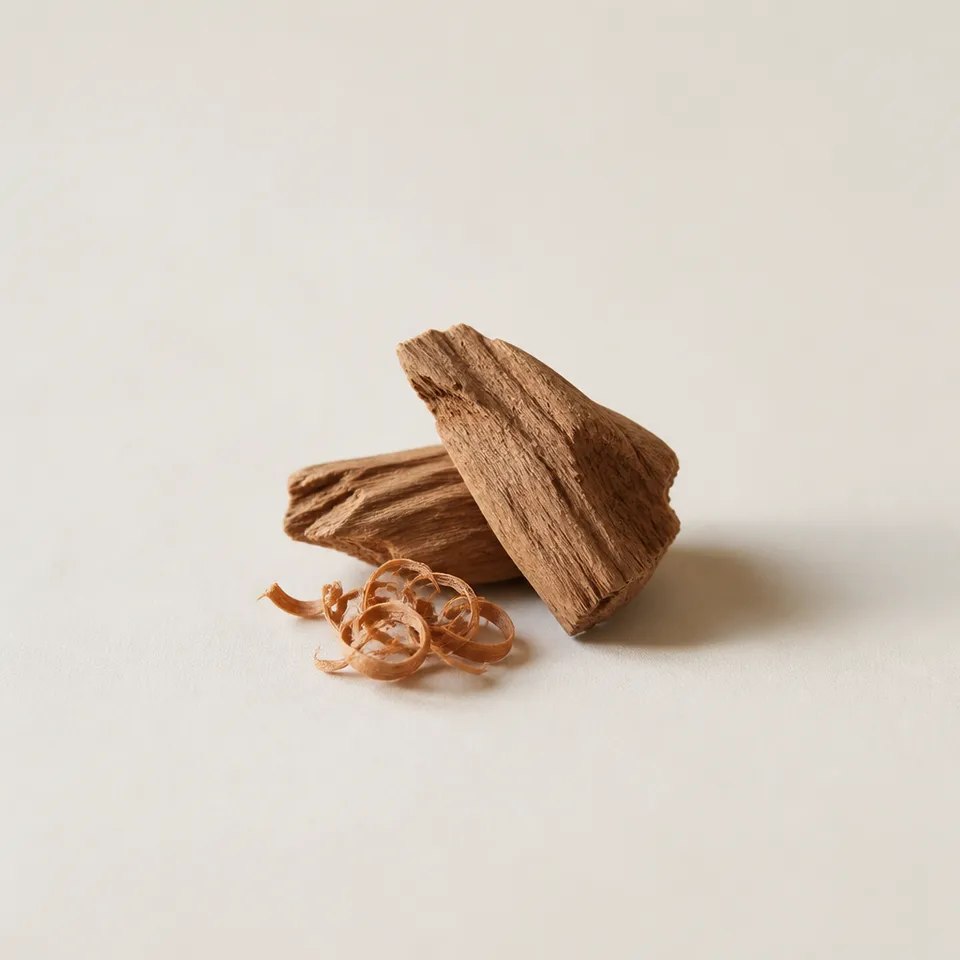
About Madras Wood
Madras Wood is presented in fragrance retail descriptions as a **woody** note used in the base of Elizabeth Arden White Tea Eau de Toilette, but the publicly available sources do not identify it as a specific botanical, isolated molecule, or formally published captive material. Because of that limited documentation, it is best treated as a trade-name **perfumery accord** or marketing note rather than a verifiable natural raw material.
Scent Profile
The name suggests a dry, polished wood impression. In context with a woody-floral composition, it likely functions as a soft structural base that supports musks, amber facets, and the fresher tea-citrus top and floral heart. A separate historical source on Red Sanders Wood from the Madras region describes a warm woody, faintly aromatic odor, which may help explain why “Madras” is associated with a red-wood style nuance, but that source does not establish a direct identity for the perfume note.
Use in Perfumery
In perfumery, Madras Wood appears to be used as a base-note accent that adds woody depth without dominating the composition. It fits the broad woody family, where woods, resins, mosses, and similar materials are commonly used to build lasting structure and diffusion. Available evidence supports its use as a stylistic descriptor in finished fragrances, not as a defined raw material with disclosed composition.