Gurjum wood
Natural woody-balsamic base note from *Dipterocarpus* resin, used as a highly tenacious fixative and extender for woody and oriental accords.
Aromatic
About Gurjum wood
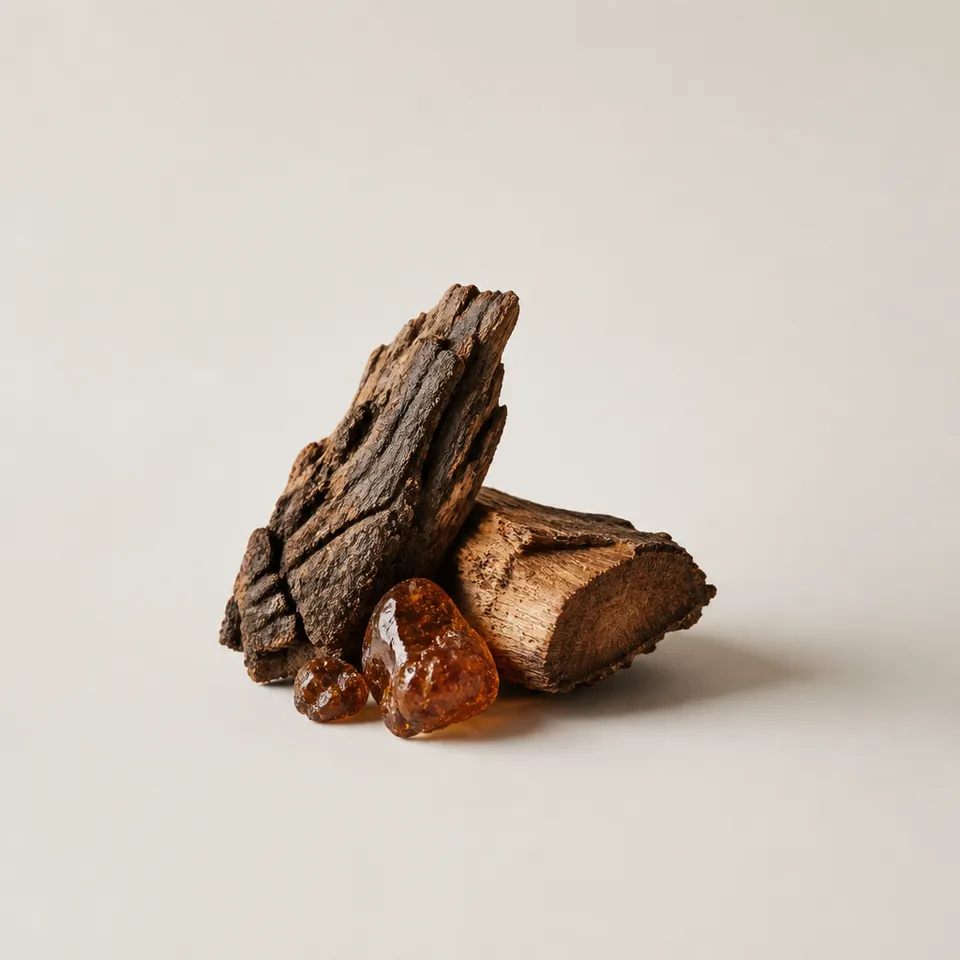
Gurjum wood in perfumery generally refers to **Gurjun (Gurjum) balsam oil**, a natural woody-balsamic material obtained from trees of the *Dipterocarpus* genus, especially *Dipterocarpus turbinatus*, in the Dipterocarpaceae family. The material is a pale yellow to amber liquid produced by tapping the tree’s oleoresin and then steam-distilling the balsam to yield an essential oil rich in sesquiterpenes such as α‑gurjunene. It is classified as a **natural perfumery material** and a **base note** with high tenacity, commonly used as a fixative and odor extender in woody and oriental fragrances. IFRA’s transparency list includes several forms of gurjun balsam (extract, oil, rectified oil, oleoresin) as fragrance ingredients, and current summaries indicate no specific IFRA restriction for standard perfumery use categories. In industry it is sometimes called East Indian copaiba balsam, though this is a trade analogy rather than a botanical relationship. Gurjun balsam has also been used historically in varnishes and lacquers as well as in aromatherapy and traditional medicine, but in fine fragrance its value lies primarily in its mild yet very persistent woody-balsamic odor and its ability to modify, stretch, and smooth other materials such as patchouli, sandalwood, vetiver, and tobacco accords.
Scent Profile
Gurjum wood in perfumery generally refers to **Gurjun (Gurjum) balsam oil**, a natural woody-balsamic material obtained from trees of the *Dipterocarpus* genus, especially *Dipterocarpus turbinatus*, in the Dipterocarpaceae family. The material is a pale yellow to amber liquid produced by tapping the tree’s oleoresin and then steam-distilling the balsam to yield an essential oil rich in sesquiterpenes such as α‑gurjunene. It is classified as a **natural perfumery material** and a **base note** with high tenacity, commonly used as a fixative and odor extender in woody and oriental fragrances. IFRA’s transparency list includes several forms of gurjun balsam (extract, oil, rectified oil, oleoresin) as fragrance ingredients, and current summaries indicate no specific IFRA restriction for standard perfumery use categories. In industry it is sometimes called East Indian copaiba balsam, though this is a trade analogy rather than a botanical relationship. Gurjun balsam has also been used historically in varnishes and lacquers as well as in aromatherapy and traditional medicine, but in fine fragrance its value lies primarily in its mild yet very persistent woody-balsamic odor and its ability to modify, stretch, and smooth other materials such as patchouli, sandalwood, vetiver, and tobacco accords.
Use in Perfumery
Gurjum wood is used to add a distinctive texture or contour to a composition. Its effect varies with dosage and surrounding materials.