Flint
Flint is a mineral effect suggesting sparks, dry stone, and cool hardness, creating space while restraining sweetness.
Mineral
About Flint
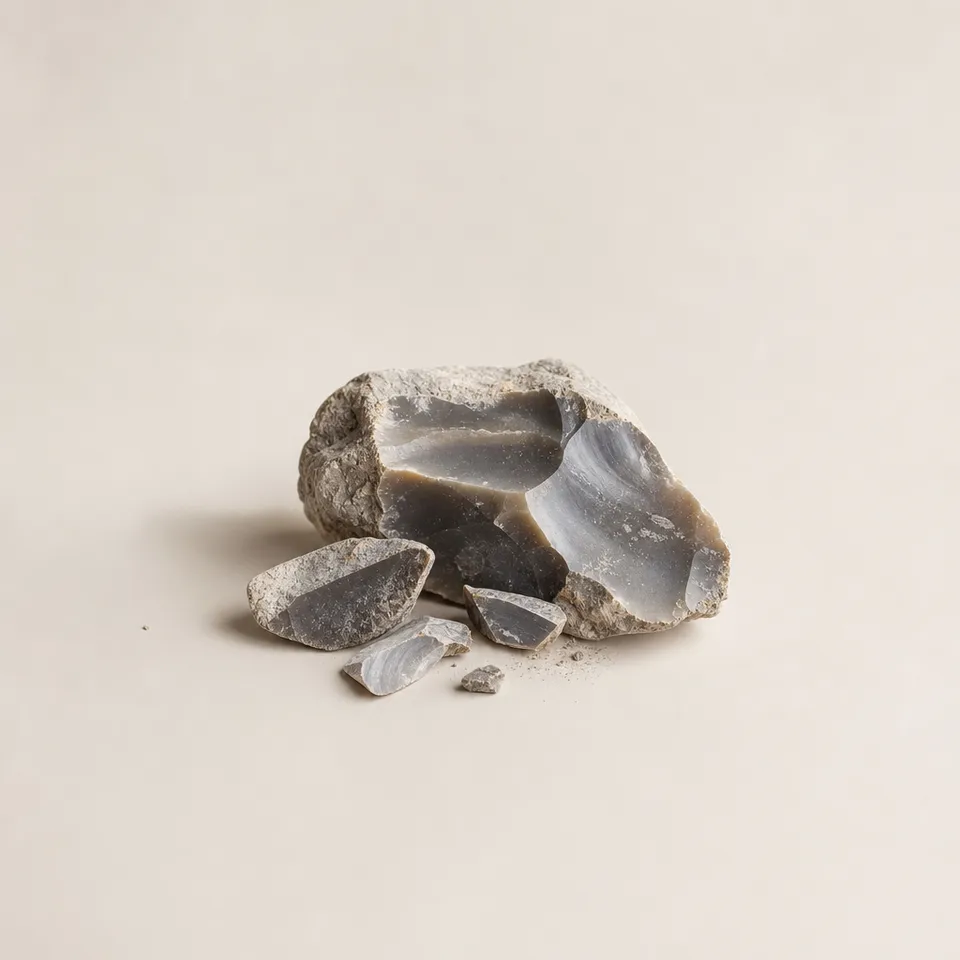
Silex is the French word for flint. In perfumery, stone is not distilled for an essential oil; the idea is constructed as an abstract mineral accord suggesting sparks, dry rock, metallic coolness, or dust.
Scent Profile
Flint effects may recall a cold stone surface, a wisp of smoke after striking a spark, graphite, or sun-dried ground. They reduce sweetness and juiciness while adding hardness, silence, and space. Depending on the formula, the effect can lean smoky, metallic, earthy, or sharply dry.
Use in Perfumery
A flint accord can bridge bright citrus with cedar, vetiver, and patchouli. Pepper intensifies the spark-like edge, while cedar produces an architectural outline of dry wood and stone. The effect is especially useful when a perfumer wants freshness without conventional watery or clean-musky softness.
Did You Know?
Mineral notes are perceptual constructions rather than one botanical raw material. Accordingly, one perfume's flint may suggest rain-wet rock, while another emphasizes smoke, iron, graphite, or dry soil.