Dry Amber
A less syrupy amber accord emphasizing dry resin, pale woods, incense, powder, and warm persistence rather than dense vanilla sweetness.
Amber
About Dry Amber
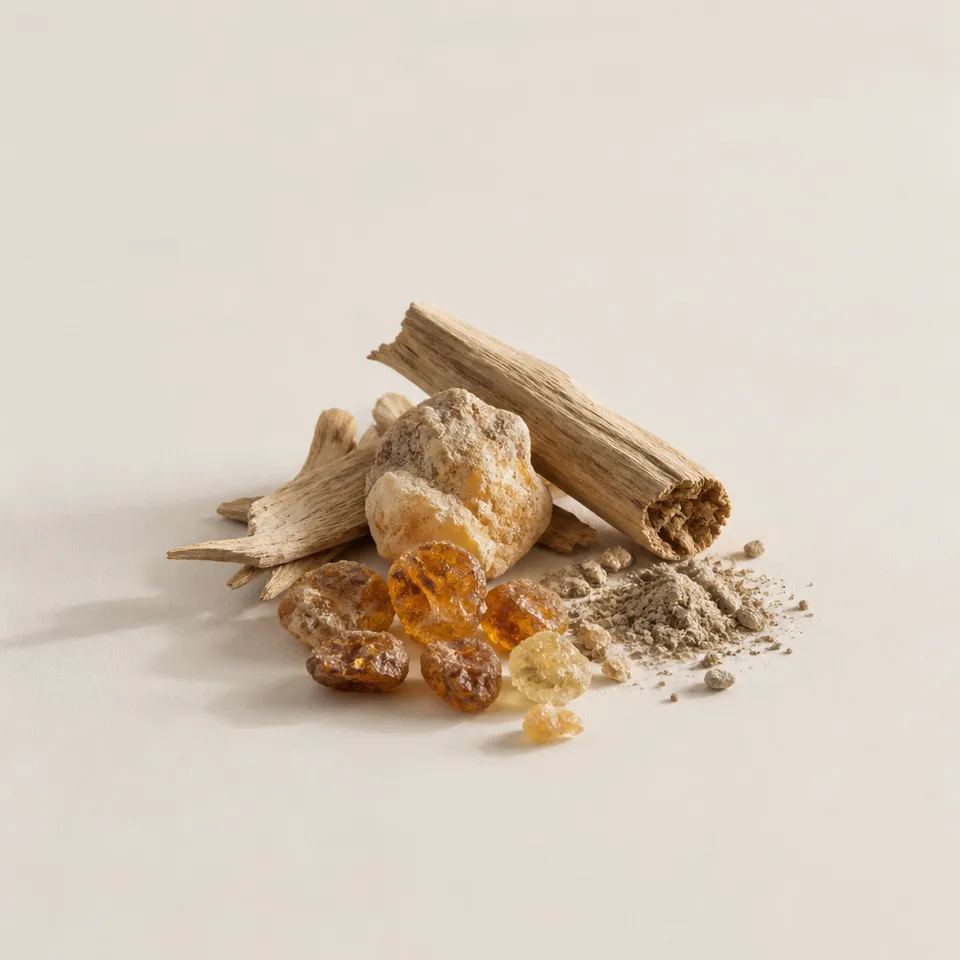
Dry Amber is a sensory variation of an amber accord that suppresses overt syrupy sweetness and emphasizes dry wood, powder, or resinous warmth. In perfumery, amber is not fossilized resin; it is traditionally a composed accord involving materials such as labdanum, benzoin, and vanilla. “Dry” describes the finish, not a single standardized ingredient.
Scent Profile
The profile keeps amber’s warm enveloping shape while reducing moist vanilla or honeyed density. It may suggest dry resin, pale woods, incense, mineral warmth, or powder. Depending on the formula, it can appear bright and clean, dark and smoky, or softly musky, but it should retain a less sticky impression than a lush sweet amber.
Use in Perfumery
Dry Amber gives brown sugar, peach, coconut, and other gourmand notes a stable base without making the whole structure cloying. It works with precious woods and musk to create warmth, diffusion, and persistence. Its compositional value is contrast: sweetness remains readable above it, while the dry amber texture keeps the drydown polished and spacious. A note name records an intended olfactory effect; it does not necessarily declare that one raw material appears unchanged in the formula. The exact balance remains formula-specific, and perceived sweetness, greenness, diffusion, and persistence can change with dosage and surrounding materials. Unless the supplier or brand publishes the information, no botanical species, extraction route, chemical structure, or manufacturing process should be inferred from the name.