Clove Leaf
Clove leaves yield a sharp, warm spice with a dry woody edge.
Spicy
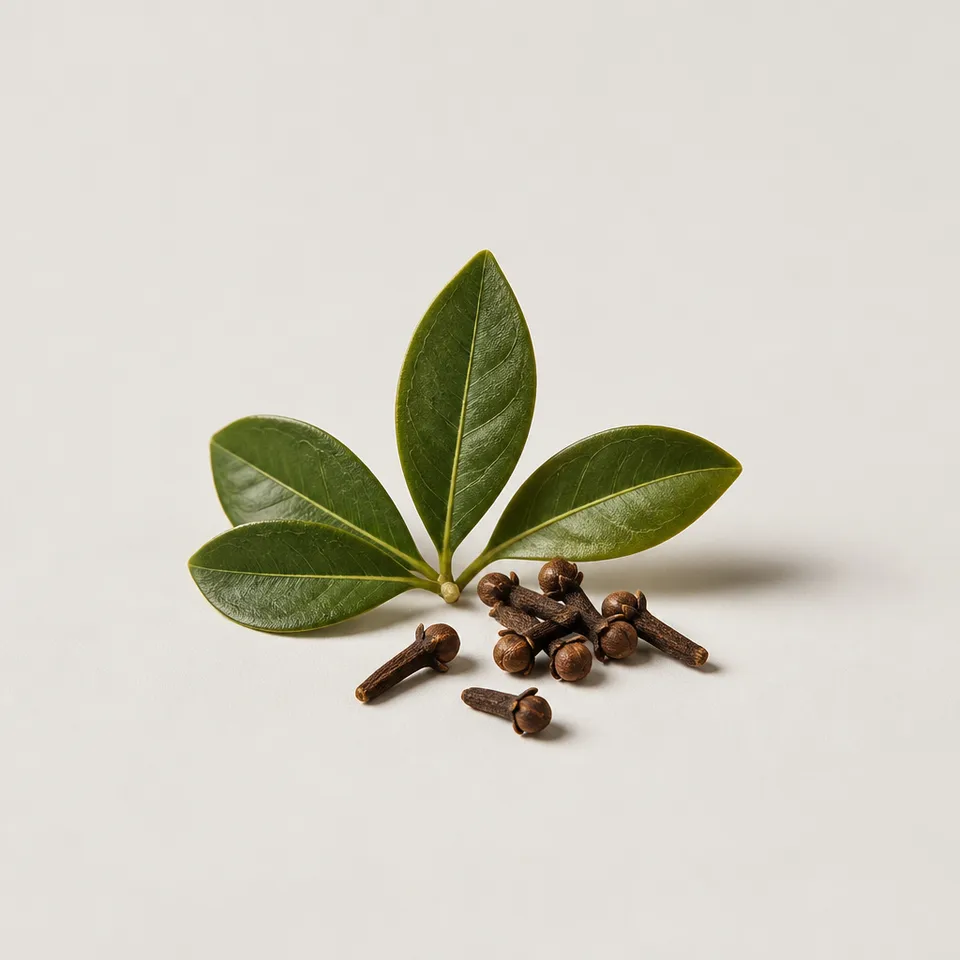
About Clove Leaf
Clove Leaf oil comes from the distilled leaves of Syzygium aromaticum, the tree that also supplies the familiar culinary spice. The cloves used in cooking are unopened flower buds, so leaf oil represents a different part of the same plant. Leaves, buds and stems each yield oils with related but distinct characters.
Scent Profile
The oil has a sharp, warm spicy smell with a slightly woody edge. Compared with bud oil, it can feel more acrid and more strongly phenolic, a quality that may suggest a medicinal sharpness. Its high proportion of eugenol, a key component of clove’s characteristic smell, gives it a clearly recognisable presence even within a more complex blend.
Use in Perfumery
Clove Leaf brings spicy depth to woods, leather accords and rich resinous compositions. It can also provide a dry counterpoint to sweeter materials, or sharpen a combination of other warm spices. Despite the word “leaf,” its defining quality is closer to clove spice and dry wood than to the watery freshness of green foliage.
Did You Know?
The plant part named on a clove oil is useful information: leaf, bud and stem are not interchangeable descriptions. Their shared origin explains the family resemblance, while the different parts account for changes in sharpness, warmth and texture.