Chinese magnolia
A luminous floral heart-note accord evoking magnolia blossoms associated with Chinese traditions, characterised by creamy white-petal facets and light, lemony freshness, built from magnolia-related materials and supporting synthetics rather than a single standardised extract.
Floral
Chinese magnolia
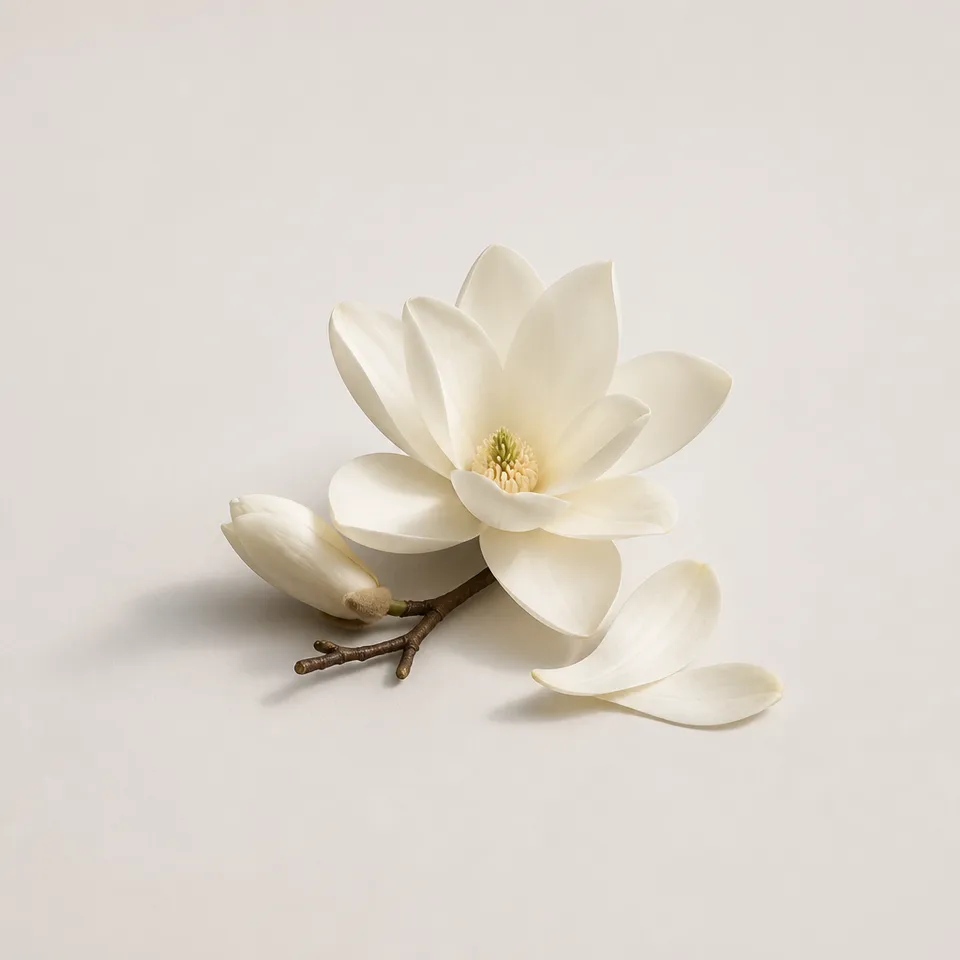
In perfumery, **Chinese magnolia** usually refers to the olfactory impression of magnolia blossoms associated with China, rather than a single botanically defined species, and is treated as a **floral middle note accord** built around magnolia materials and supporting synthetics. Some magnolia species and cultivars are historically prized in Chinese gardens and traditions, and their fragrant buds have been mentioned as used in perfumery since at least the Han Dynasty, but modern fine fragrance generally works with reconstructed magnolia accords rather than a standardised “Chinese magnolia” extract. Commercial ingredient libraries and perfume education sources therefore describe magnolia from China as a delicate, creamy-floral material with lemony and green nuances, positioned among luminous white florals. It is distinct from a **food or beverage note**, though it may allude to tea traditions when paired with osmanthus or jasmine in contemporary compositions.
Scent profile
Described as **soft, fresh and elegant**, Chinese magnolia carries a creamy white-flower body layered with **light citrus** facets, often specifically waxy lemon and subtle pear-like fruitiness. Education sources on magnolia note a floral, fresh and voluptuous character whose opening feels more citrus than floral, with green nuances and a gradually emerging solar, vanilla-tinged sweetness. Ingredient descriptions for magnolia from China echo this: a delicate floral note with slightly citrusy, green and fruity undertones, smooth and airy rather than indolic or animalic. The overall impression is luminous, clean and graceful, combining a silky petal creaminess with transparent freshness, sometimes supported by jasmine or tea-like facets to reinforce its association with Chinese olfactory traditions.
Perfumery use
In fragrance structure, Chinese magnolia is typically used as a **heart note** that can also sparkle into the top, bridging citrus openings and richer white-floral or woody bases. Perfumery education sources note magnolia’s role in both top and heart positions, lending curve, roundness and a feminine, solar aura to floral compositions. As a note, Chinese magnolia pairs well with citrus, green and light woody elements, adding refinement and “quiet luxury” to modern florals and soft musks. Because a single defined natural extract is not standardised under this name, Chinese magnolia in contemporary perfume practice should be understood as a **reconstructed accord**: a blend of natural magnolia fractions, other florals and citrusy or creamy synthetic aroma chemicals designed to evoke magnolia blossoms as culturally linked to China, without implying a specific captive molecule or regulated essential oil.