Banana Leaf
A reconstructed green, sappy tropical foliage accord evoking banana leaves, built from leafy and unripe-fruit aromatics rather than sweet banana esters.
Green
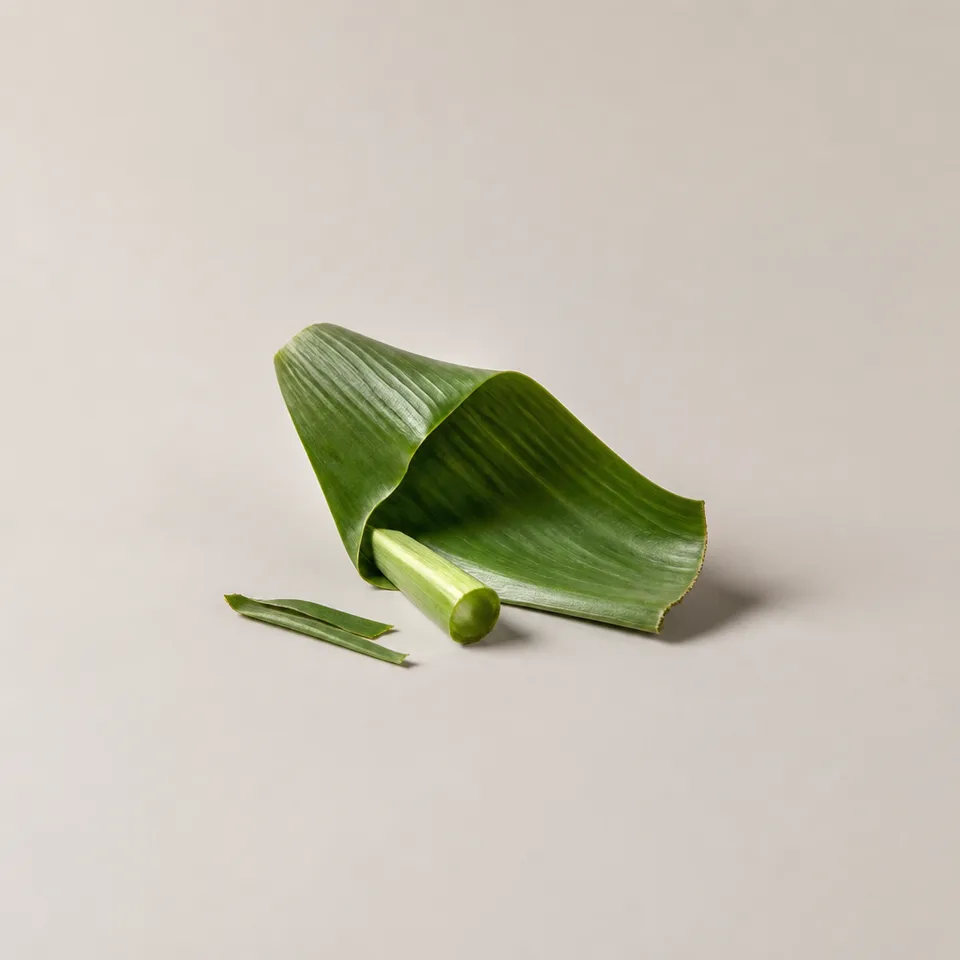
Banana Leaf
**Material type:** In perfumery, **banana leaf** is primarily treated as a **reconstructed green accord**, not a routinely used natural extract. Online note databases describe banana leaf’s odor profile as a **green and sappy, fresh note**, placing it within the broader “green foliage” family rather than a gourmand banana-fruit effect. While banana plants (*Musa* spp.) can yield essential oils from various waste parts, published analyses focus on peel or mixed-plant material, and there is little evidence of a standardized, commercially available banana leaf essential oil for fine fragrance use. Instead, perfumers emulate the impression of broad, watery tropical leaves using blends of green aldehydes, acids, and other leafy aromatics.
Scent profile
Perfumery descriptions characterize banana leaf as **green, aqueous, and sappy**, more reminiscent of a wet greenhouse or tropical foliage than of banana fruit itself. The effect is usually built from **leafy, cut-grass–type molecules** and unripe-fruit nuances rather than esters like isoamyl acetate, which define the sweet banana pulp note in flavor and fragrance. Green aldehydes such as **trans-2-hexenal** are documented as having a **green, leafy, herbal fruit smell** and can contribute “leafy” and even “banana-like” facets in compositions. Other listed green materials, for example **3-hexenoic acid**, are described as **intensely green, vegetative, reminiscent of freshly crushed leaves and unripe bananas**, with a damp, chlorophyll-rich impression that aligns closely with how banana leaf accords are perceived. Together, these materials shape a profile that is fresh, slightly humid, and softly tropical rather than overtly fruity.
Perfumery use
In formulas, banana leaf is used as a **stylistic green-tropical accent**, often in the top or early heart of a composition, to suggest the visual image of large, glossy leaves and shaded humidity. Note lists in contemporary fragrances place banana leaf alongside **aquatic, floral, or woody structures**, where it adds transparency and a “rainy” freshness rather than sweetness. Because the note is typically an accord, perfumers rely on **green modifiers** (e.g., 3-hexenoic acid) that supply realistic crushed-leaf and unripe-fruit tones and blend well with citrus and florals. Classic “banana” esters such as isoamyl acetate, widely cited as the main banana odorant in the fruit, are more aligned with edible banana effects and can read as confectionery or solvent-like at higher dose, so they are usually minimized when aiming for a leafy, non-gourmand banana leaf impression. Overall, banana leaf serves as a nuanced, modern green note that bridges tropical imagery and airy freshness without relying on overtly sweet fruit facets.