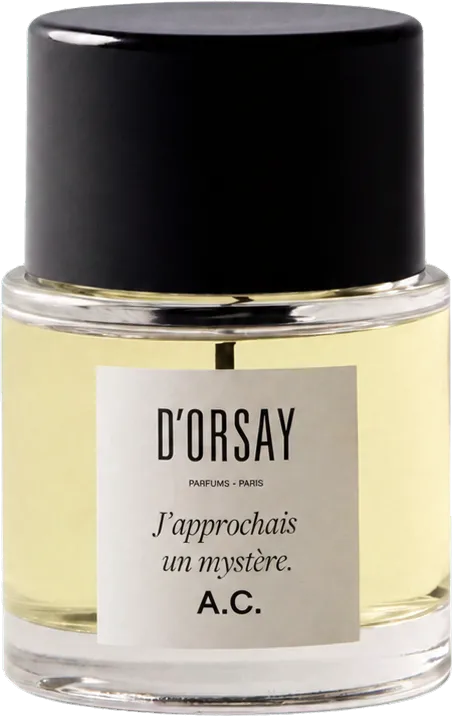
A.C.
D'ORSAY's A.C. is a woody eau de parfum that connects cool fig and pepper leaves with two kinds of cedarwood. Its pepper leaf accord recalls the 1911 Chevalier, while vanilla and sandalwood soften the base.
#528 · 2026-10-29
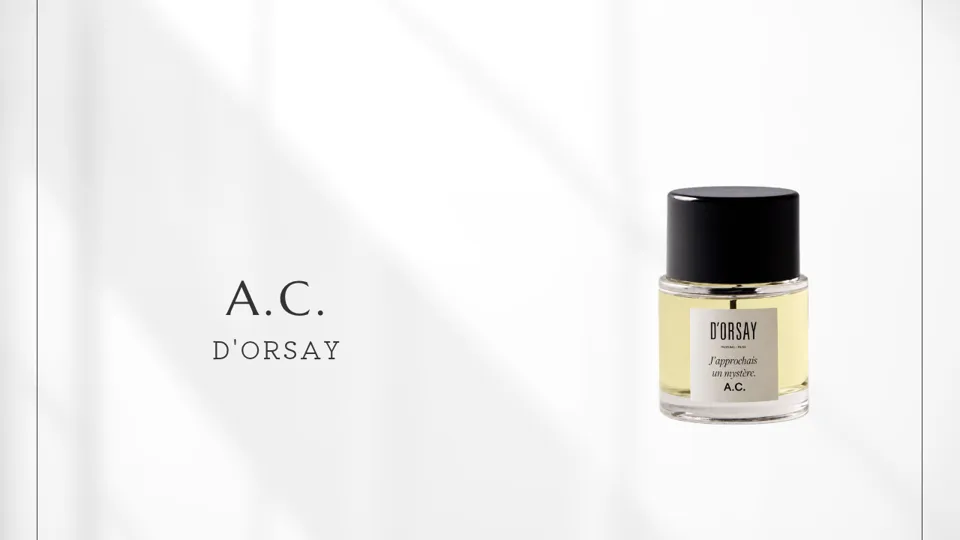
Fragrance Overview and First Impression
D'ORSAY's A.C. opens with fig leaf and pepper leaf before moving toward two cedarwoods. It is a woody eau de parfum with a cool, green entrance and a firmer wooden center. Anyone expecting the sweetness of ripe figs may be surprised by how clearly the published pyramid specifies the leaf instead of the fruit.
Behind the fragrance stands Chevalier, a D'ORSAY creation from 1911. A.C. is its contemporary reinterpretation: cool, abstract spice replaces the earlier work's prominent lavender facet, while a pepper leaf accord remains a point of connection. The fragrance carries that historical detail through a distinctly leafy opening.
The house describes A.C. as gender neutral. Its transparent bottle and engraved magnetic cap belong to a design used across D'ORSAY's perfumes, rather than an ornament unique to this scent. The restrained bottle provides a fitting setting for a composition built around leaves and wood.
Perfumer, House, and Creative Background
A.C. was composed by Anne-Sophie Behaghel. She describes cedar and leaves as the simple elements of the scent and evokes the stature of a tree. That image follows the composition's central movement from foliage to wood.
According to an official interview, she had in mind a film director born in the countryside. His face, smile, and sincerity reportedly marked him as someone who lived close to nature, and she wanted to capture that presence. Standing in nature, he seemed to her as beautiful and majestic as a tree. That image led her to a simple composition centered on cedar and leaves.
The history of D'ORSAY includes Alfred d'Orsay, whom the house describes as having made a scent for two people to share in 1830. Its present fragrance names join fragments of love messages to secret initials. The two letters A.C. reportedly stand for that film director's initials, and his real name has not been disclosed. A.C. also appears in the Legacy collection, where historical scents are interpreted in a contemporary style.
Scent Analysis
The top notes are fig leaf and pepper leaf. Fig leaf directs attention to cool greenery rather than ripe-fruit sweetness. Pepper leaf adds a brisk spice to that foliage; it should not be mistaken for a claim that crushed peppercorn dominates the opening. The house identifies its pepper leaf accord as a defining part of A.C.'s character.
Atlas cedarwood and Virginia cedarwood form the heart. Together they take the green start toward a drier, more substantial wood impression. The two names identify notes in the published structure; they do not establish where ingredients in this particular bottle were harvested.
Vanilla and sandalwood are the stated base notes. Vanilla gives warmth without making the published structure a fruit dessert, while sandalwood offers a smoother wood texture beside the cedars. One wearer describes a green bitterness at first and a stronger vanilla impression later. That is a personal experience, rather than a fixed timetable for everyone.
Top, heart, and base describe the official pyramid. They do not guarantee a particular minute when one material gives way to another. Waiting beyond the first cool impression lets the relationship between leaves, cedar, and the warmer base become clearer on the skin.
Comparison and Positioning
Diptyque's Philosykos is a useful comparison because both fragrances explicitly include fig leaf. Philosykos also portrays sap and wood as part of a broader fig-tree picture. A.C. joins its fig leaf to pepper leaf, then centers two cedars. Choose Philosykos to explore more of the fig tree; choose A.C. for cool leaf spice and a clearer cedar line.
Hermetica Paris's Figfever also uses fig leaf, but places it in the heart with cardamom, cinnamon, and blackcurrant. A.C. puts fig leaf and pepper leaf together at the top and gives cedar the central role. Figfever suits an interest in fruit and warm spice; A.C. puts cool foliage before wood.
Pepper leaf offers another comparison with Pierre Guillaume's STÆLIOS. That fragrance combines Ashanti pepper leaf with davana liqueur, violet wood, and Russian leather. A.C. keeps the relationship between fig leaf, pepper leaf, and cedar more direct. STÆLIOS takes the leaf toward liqueur and leather; A.C. stays focused on foliage and wood.
Across these comparisons, A.C.'s character is its cool spice and cedar. It is the most focused choice here for someone curious about both fig leaf and pepper leaf while seeking a woody center rather than ripe fruit or leather.
Buying Guide
D'ORSAY lists A.C. as an eau de parfum in 50 mL and 90 mL sizes. Before choosing a bottle, test whether its leafy, cool opening appeals to you. The word fig may suggest a sweet fruit scent, but the official opening specifies fig leaf and pepper leaf, with cedar at the heart.
The house advises spraying the wrist and allowing the fragrance to dry without rubbing. Give the cool spice some time before deciding: the cedar and the warmer vanilla and sandalwood base are part of the same composition. Try it on skin to see whether the leaves remain most prominent or the softer base becomes more noticeable.
In Japan, the 2026 official prices are ¥27,500 for 50 mL and ¥36,300 for 90 mL, tax included. Prices and availability can change, so check the official site for current information before buying. The two listed volumes are size choices for A.C.
Wear, Settings, and Impressions
A cool daytime outing in autumn is a reasonable first setting for A.C.'s green leaves, cool spice, and cedar. This is an editorial suggestion drawn from the composition, since the product page does not prescribe a season or hour. A shirt or light knit suits that ordinary, cooler-weather setting.
On a hot day or in close company, begin by checking how far the scent carries from your wrist. Its cool opening may stand out first, while the balance of cedar and vanilla can change the impression later. Testing it before an outing gives a better sense of the amount you enjoy wearing.
Wearers' accounts differ. One describes green bitterness softened by vanilla; another perceives sweet wood and little fig. Reports of longevity also vary, so a fixed duration would be a poor promise. The useful question is which part of the published leaf-to-wood structure comes forward on your skin, and whether that is the part you want to wear.