M.D.
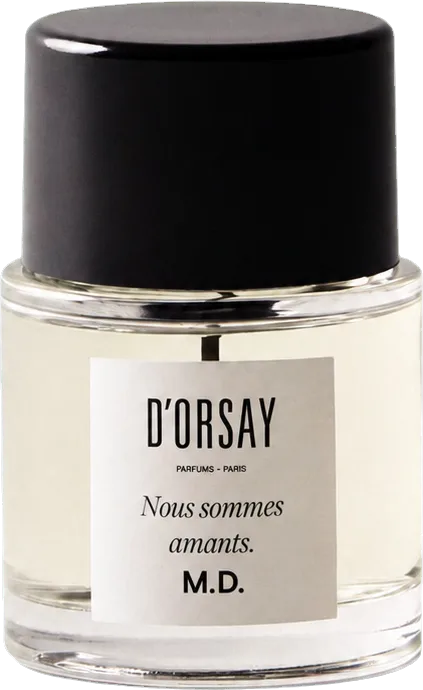
D'ORSAY's NOUS SOMMES AMANTS. M.D. opens with cool black pepper and juniper berry before palo santo, sandalwood, and cedar bring smoky and creamy woods together. Inspired by a unisex reinterpretation of the 1976 Nomade, it expresses intimacy through contrasting textures.
#511 · 2026-10-12
Fragrance Overview and First Impression
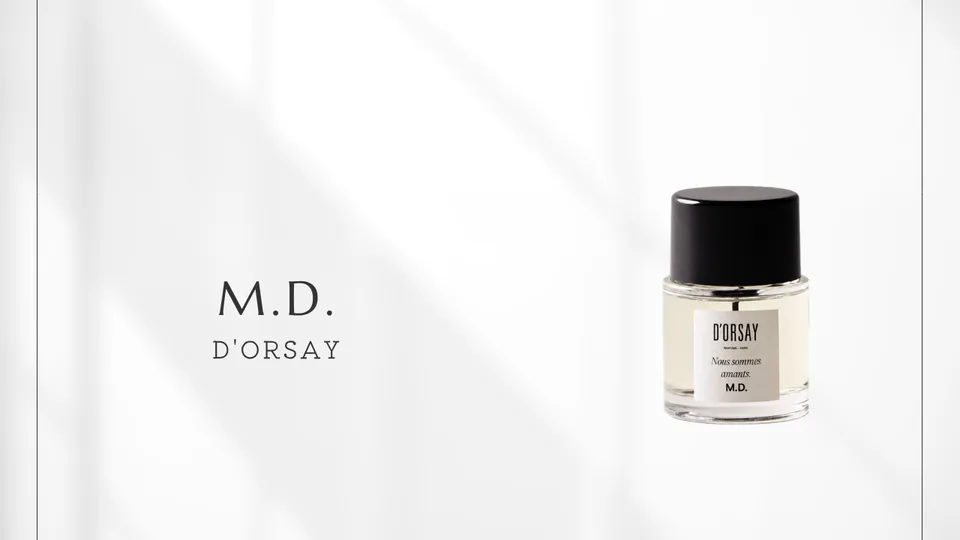
D'ORSAY's NOUS SOMMES AMANTS. M.D. is a unisex woody-spicy eau de parfum built around cool spice and creamy wood. Black pepper and juniper berry give the opening a sharp, lively edge. A smoky impression of palo santo sits behind that brightness, while sandalwood and cedar bring a smoother woody texture. The contrast is part of its identity: the composition brings cool and warm sensations together rather than leaving them as separate ideas. Perfumer Bertrand Duchaufour describes the meeting of head, heart, and base as a monolithic accord whose notes merge.
The phrase NOUS SOMMES AMANTS. means “we are lovers.” D'ORSAY pairs suggestive phrases with a person's initials in its fragrance names. The initials M.D. leave room for imagination; the official collection description does not identify a person behind them. The house presents this scent as a unisex reinterpretation of Nomade, a fragrance created for men in 1976. That year belongs to the earlier work, while the newer perfume has no confirmed worldwide launch year in the supplied official material.
Perfumer, House, and Creative Background
Bertrand Duchaufour made intimacy, described as the feeling of skin against skin, central to this fragrance. The earlier Nomade used caraway and sage to express aromatic warmth. In NOUS SOMMES AMANTS. M.D., he rebuilt that warmth around palo santo. Caraway and sage belong to the account of the earlier fragrance; they are not part of the five notes in the current official pyramid for M.D.
Duchaufour says that a note of hot milk, interpreted with a molecule called sulfurol, crosses the core of the palo santo. This is his description of the accord's texture, not an extra stage in the official note pyramid. The image helps explain why a smoky wood can also seem pale and creamy. His description of a monolithic accord suggests that the bright opening, smoky center, and smooth base should be considered together.
The house traces its story to a scent Alfred d’Orsay conceived for himself and Marguerite Blessington in 1830. That story of a fragrance made for two people gives context to a name that holds an unidentified person's initials. The transparent bottle and engraved magnetic cap follow a design shared by D'ORSAY's unisex fragrances, rather than a shape created solely for this perfume.
Scent Analysis
The official structure has a top, heart, and base. Black pepper and juniper berry sit at the top. Together they suggest a cool, sharp burst of spice: pepper gives the opening a dry edge, while juniper berry contributes a clearer aromatic freshness. These are sensory descriptions of the official notes, not a timed account of how long each stage lasts on skin.
Palo santo occupies the heart. Its smoky woody nuance adds depth beneath the bright opening and gives the fragrance its center. Duchaufour's image of warm milk helps explain the softer side of that woodiness. The scent can be considered through both impressions at once: a dry hint of smoke and a pale, rounded texture.
Sandalwood and cedar form the official base. Sandalwood is the guiding thread in D'ORSAY's description, lending a creamy, enveloping feel. Cedar supports the woody structure beside it. The result places the cooler spice and smokier heart against a smoother foundation. The pyramid names the principal notes and their roles, while Duchaufour's account emphasizes how closely they blend.
Comparisons and Positioning
Amouage's Opus XVI Timber offers a comparison through palo santo, sandalwood, cedar, and juniper. NOUS SOMMES AMANTS. M.D. centers on cool spice meeting creamy wood. Opus XVI Timber also lists cypress, frankincense, and vanilla, making it a candidate for someone interested in resinous and sweeter elements alongside the woods. Shared notes give a reason to compare them, while each composition needs to be judged on its own skin.
TOM FORD BEAUTY's Ébène Fumé shares black pepper and a palo santo theme. Ébène Fumé presents palo santo as an accord and also features ebony wood, cistus resin, pine tar, and leather. Compare the smooth wood of M.D. with the resin and leather elements in Ébène Fumé if those textures shape your choice. The overlap names the starting point for a trial; it does not establish that the two perfumes smell alike throughout wear.
Diptyque's Orpheon shares juniper berry and cedar with M.D. Palo santo's smoky aspect and sandalwood's creaminess sit at the center of the D'ORSAY fragrance. Orpheon also includes tonka bean and jasmine, giving it a softer, powdery direction. A person drawn to the contrast of spice and wood might begin with M.D.; someone seeking powdery softness might also try Orpheon.
Buying Guide
The Japanese official product page lists the eau de parfum at ¥27,500 for 50 mL and ¥36,300 for 90 mL. The English official page listed 10 mL and 90 mL options, showing that the selection varies by region. Prices, stock, and available sizes can change, so check the relevant official shop when deciding what to buy. The supplied official pages do not establish another concentration of the same fragrance.
Try the fragrance on skin before choosing a bottle. The black pepper and juniper berry opening alone cannot show how the palo santo relates to sandalwood and cedar. Likewise, a preference for creamy wood alone may not predict how comfortable the cooler spice feels at the start. If you want both a brisk edge and a smooth woody center, it gives you a clear reason to test it. Compare it with the other fragrances above if resin, leather, or powdery softness matters more to you.
Wear, Settings, and Impressions
Autumn and winter casual settings appear as suggestions in outside material, and one wearer describes choosing the perfume for everyday use and evenings out. These are limited observations rather than an official season rating. A substantial knit on an ordinary outing can suit the contrast between brisk spice and warm wood. For an evening in a jacket, the smoky palo santo and smooth sandalwood may be the parts to notice. Your own setting and skin will decide whether that balance feels right.
One wearer called its woodiness light yet deep. That personal description fits the idea of a sharp beginning over a fuller woody center, but it remains one person's impression. D'ORSAY does not give a measured wear time or projection figure in the supplied product description. During a trial, notice both the first burst of spice and the way the woods feel later. The clearest reason to choose NOUS SOMMES AMANTS. M.D. is the way cool spice, smoky palo santo, and creamy wood join in one intimate impression.