Poom Poom
A bright rose-and-kiwi eau de parfum with soft woods, musk and vanilla. Maison Matine describes its name as “a fizzy, high-energy blast.”
#483 · 2026-09-14
Fragrance Overview
Poom Poom by Maison Matine pairs kiwi and rose in an eau de parfum released in 2021. Described as floral, woody and musky, it combines bright fruit and flowers with a softer base of woods, musk and vanilla, and is intended for wearers of any gender.
Maison Matine describes the name as “a fizzy, high-energy blast.” Its playful sound suits the bright fruit and flowers at the centre of the fragrance.
Kiwi provides a familiar starting point for imagining the fragrance, but rose is present from the opening. The attraction lies in that combination: a fruity floral that can fit an ordinary outing, with enough woody softness to make the later scent worth exploring too.
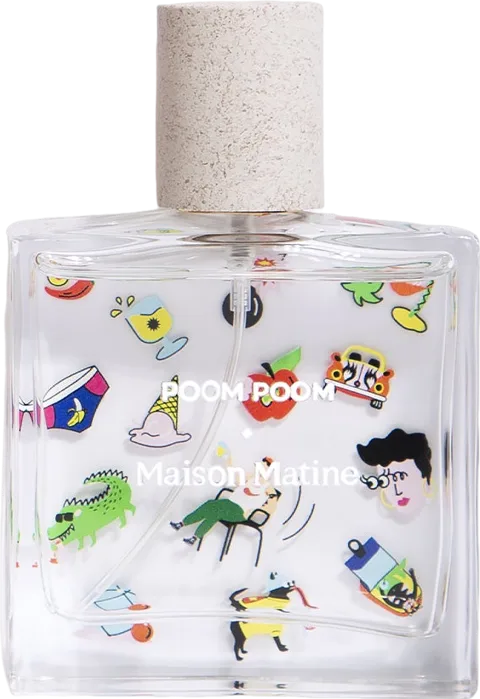
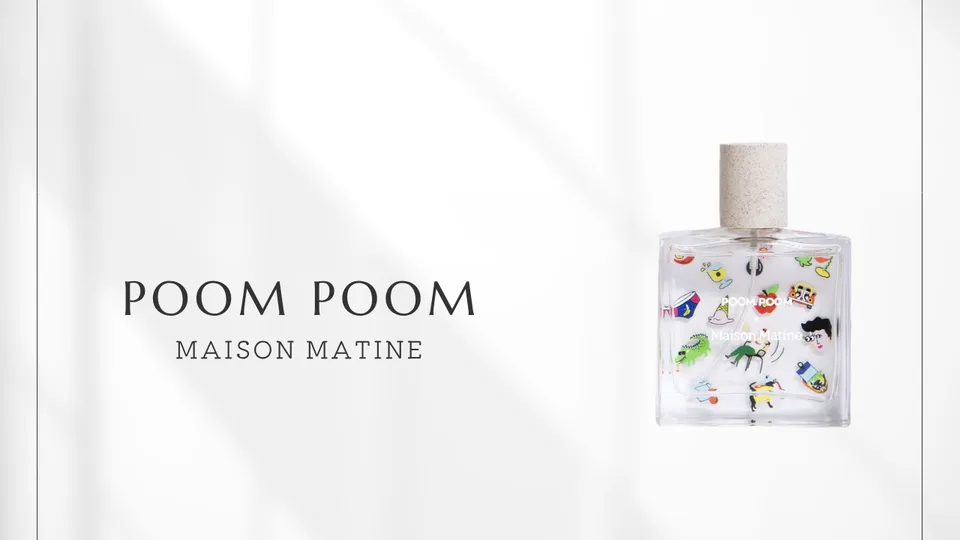
The wide, rectangular bottle has a pale, speckled cylindrical cap and a scattering of colorful little pictures. Mathilde Purseigle’s illustration invites a closer look at figures suggesting animals, people, fruit, drinks and music, giving the bottle a playful character of its own.
Perfumer, Brand and Creative Background
The perfumer is Rémi Barbier, who grew up in the countryside of Provence. He recalls thyme, rosemary, pine and cistus among the aromatic, woody and resinous smells of his childhood.
After studying chemistry, Barbier undertook an internship with Jean-Claude Ellena, where contact with raw materials helped draw him towards perfumery. He went on to train at ISIPCA in Versailles and is presented by Only Fragrances as its Chef Parfumeur. Travel and trail running are also sources of inspiration for him.
Maison Matine was founded in 2019 by former colleagues Marie and Arthur, who wanted to create perfumes that felt right for them. Freedom of creation, diversity and the collaboration between scent and illustration are central to the brand.
Poom Poom belongs to Refresh, a three-fragrance collection developed in 2021 around the emotions of a period marked by restrictions. Its story looks towards meeting family and friends, taking holidays, enjoying parties and spending time together at restaurants and terraces. These are everyday pleasures as much as special occasions, and they give the bright fragrance and lively bottle a setting in which to imagine wearing them.
Scent Analysis
The top notes are rose, mandarin blossom, orange and kiwi. Mandarin blossom refers to the flower of the mandarin tree, so flowers are part of the opening alongside the fruit.
Kiwi suggests sweet-tart fruit, with orange adding brightness and rose contributing a softer floral character. The house itself presents the fragrance through the combination of rose and kiwi, making those two notes a useful starting point for understanding it.
The middle notes are orchid, peony, freesia and rose. Together they suggest a fuller floral impression as the fragrance develops, rather than fruit remaining the only focus.
Rose appears in both the top and middle notes. The floral impression introduced at the beginning therefore continues into the heart, alongside the other flowers.
The base notes are musk, sandalwood, ebony and vanilla. Ebony evokes a dark wood; with sandalwood it brings a calmer woody character, while musk supplies softness and vanilla adds sweetness.
If the bright fruit and flowers appeal at first, the later woods and musk are also worth noticing. The scent left on skin after some time is part of deciding whether Poom Poom belongs in an everyday fragrance routine.
Comparisons and Positioning
Jo Malone London’s English Pear & Freesia Cologne pairs ripe pear with white freesia and a deeper woody note of patchouli. Poom Poom also contains freesia, so both compositions bring fruit and flowers together. The choice is between Poom Poom’s kiwi and rose and the juicier pear-and-white-flower direction of English Pear & Freesia.
Diptyque’s Eau Rose Eau de Toilette combines Damask and centifolia roses with a lychee accord, extending the picture beyond petals to the leaves and stems of the plant. It shares the fruit-and-rose idea with Poom Poom, but gives the rose itself more space: lychee and two roses rather than kiwi surrounded by several flowers.
Byredo’s Mojave Ghost Eau de Parfum offers a third point of comparison through flowers and woods. Magnolia, powdery violet and sandalwood create a softer, more powdery floral texture than Poom Poom’s bright kiwi and rose.
Ripe pear with white flowers, lychee with rose, or powdery flowers with wood: these are comparisons of the houses’ published note structures, not claims that the fragrances smell alike in wear. They make Poom Poom’s own pairing of kiwi and rose easier to place.
Buying Guide
Poom Poom is an eau de parfum at a stated concentration of 20%, available in 15 ml and 50 ml sizes. The smaller bottle has the same concentration, so the choice can be based on frequency of use and portability.
Japanese retail prices are ¥8,800 for 15 ml and ¥16,500 for 50 ml, including tax. The smaller size may suit occasional use or carrying in a bag; the larger bottle may make sense for a fragrance worn regularly. Check the seller for current prices and availability before buying.
Wearers looking for bright fruit and flowers may find it appealing, while someone expecting kiwi alone should also consider the presence of the floral heart and musk. Both the opening and the scent after some time on skin matter when deciding whether the fragrance suits a personal preference.
Wearing Experience and Occasions
Spring and summer daytime outings are particularly inviting occasions to try Poom Poom: a walk with friends or time at a terrace, perhaps with a simple white shirt and jeans. Its bright fruit and flowers suggest an easygoing daytime mood.
Wearers have praised the fresh fruit and clean floral impression, though some notice more flowers than kiwi, and not everyone enjoys the soapy association. The same familiar brightness can be appealing or less welcome depending on personal taste in flowers and musk.
Reports of longevity vary. Start with a small amount, give it time and notice how the sweetness and diffusion develop on your own skin, especially when spending time close to other people.
An interest in kiwi may prompt the first trial, but enjoying the scent that remains later is what can make Poom Poom an everyday choice.