Tiffany & Co.
An American jewelry house founded in New York in 1837, extending precise craft in gemstones, light, and objects touching the skin into fragrances of clarity and contour.
United States

About Tiffany & Co.
Tiffany & Co. has designed not only the value of a gemstone but also the acts of selecting, presenting, and giving it as part of New York culture. In fragrance, the meeting of cool light from metal and stone with warm skin becomes a polished contour of florals, citrus, woods, and musk.
History
Charles Lewis Tiffany and John B. Young opened a stationery and fancy-goods store in New York in 1837. The company issued its Blue Book mail-order catalogue in 1845, bringing jewelry directly to a wider clientele. Gem sourcing, evaluation, design, and craftsmanship developed it into a defining American house, while its distinctive blue and boxes became cultural signs in their own right. A sustained fragrance business emerged in the late twentieth century and is now operated under license with Coty.
Philosophy & Signature Style
A stone is not judged by size alone. Cut, light, color, and setting are integrated to create beauty. Fragrance follows a comparable discipline: ingredients are not a list of luxury claims, but florals such as iris are precisely balanced with citrus light, musky skin, and woody shade. New York directness coexists with the private emotion of a gift. Scent can therefore be understood as crafted adornment worn on the body, without pretending to reproduce jewelry literally.
Iconic Fragrances
- *Eau de Parfum* — Mandarin, iris, musk, and patchouli create clear light on skin with a jewel-like polish.
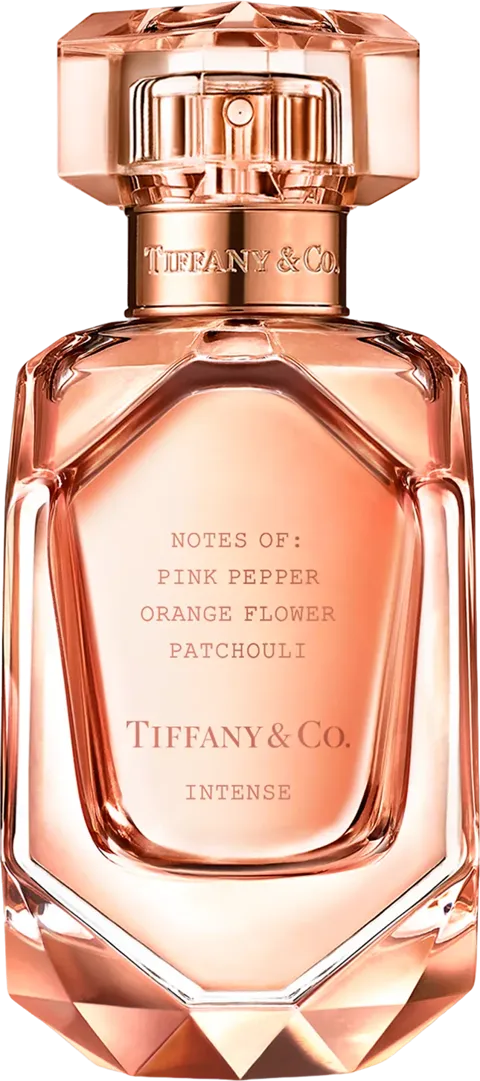
- *Rose Gold Eau de Parfum* — Fruit, rose, and musk join the warmth of metal with contemporary brightness.